
08:07
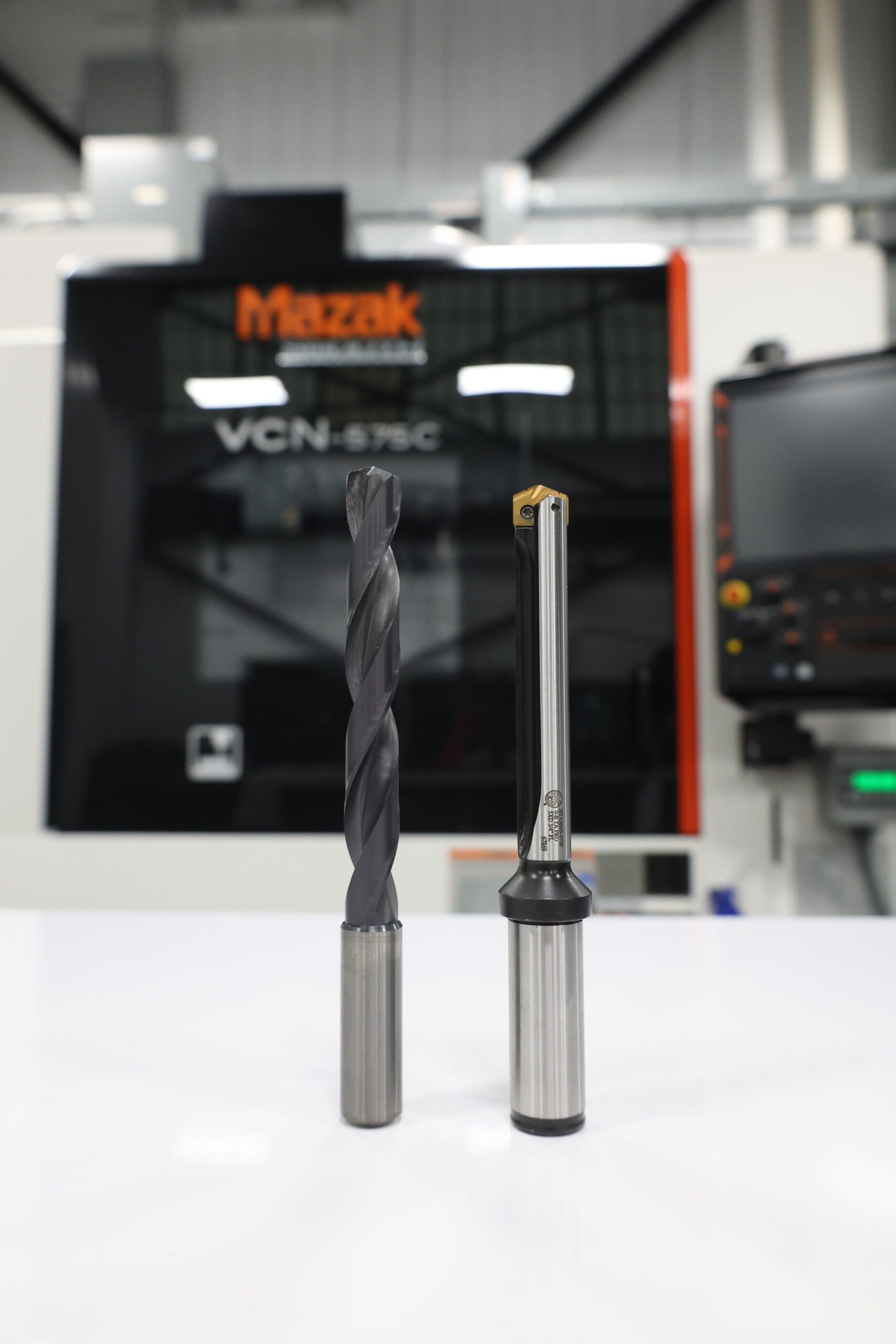
From industry publications to social media to talk on the shop floor, the conversation currently surrounding the manufacturing industry is rising carbide costs. This conversation is forcing shops to take a closer look at their holemaking operations and find ways to navigate these rising costs without sacrificing productivity or quality.
However, even as alternatives to solid carbide tooling are evaluated, the focus should not be solely on tooling cost, but on where carbide adds the most value and where it might be overused. While the initial cost of a drill is often the first consideration, there are many factors to weigh amid current market conditions. These include tool diameter in terms of cost per hole and material, tool life, changeover time, machine uptime, and inventory burden. So, the question ultimately becomes ‘when do indexable drills make more sense than solid carbide?’
Answering this requires examining productivity. While solid carbide drills may run faster, especially for small diameters, productivity isn’t just about speed. Replaceable insert drills are more productive because they allow quick tool changes—screwing in a new insert—keeping the machine running. Solid carbide tools need removal, resetting, and regrinding, and they tie up more inventory money. Less capital is tied up in small carbide inserts than in solid drills. So, choosing between them isn’t just about cutting speed; understanding what productivity truly means can improve shop floor efficiency.
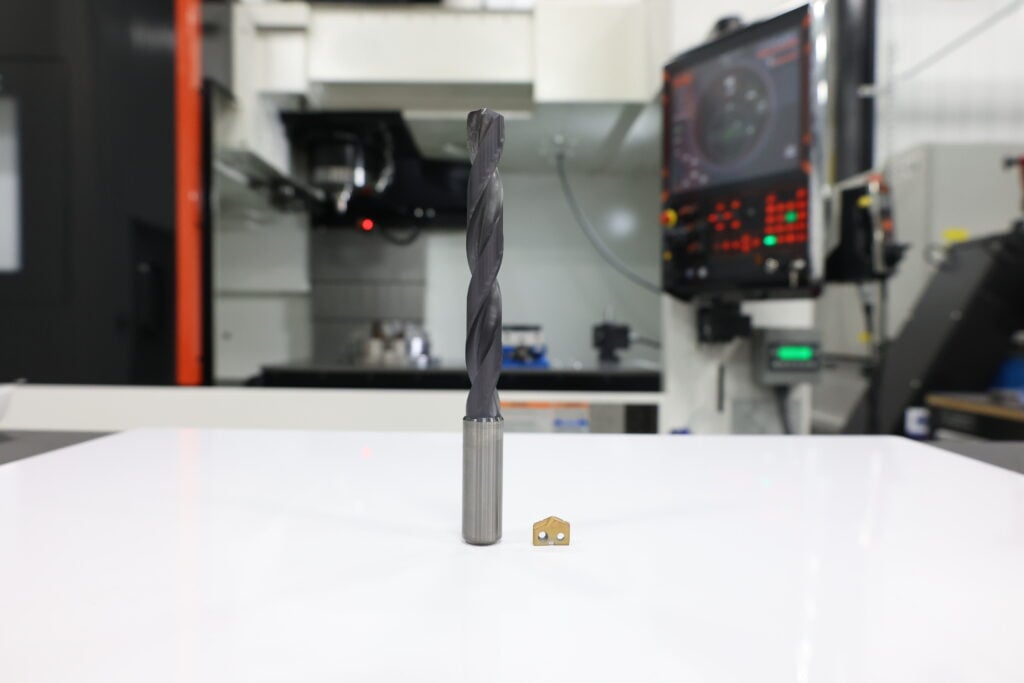
Aside from productivity, there are other key areas where replaceable insert drills create the most value. One of the strongest arguments for replaceable insert drills is their suitability for longer-length applications, because the body is steel with carbide only at the cutting edge. Ultimately, as length increases, replaceable insert drills become more attractive. This is also true for certain diameters. Holes that are half an inch and up are where replaceable insert solutions start to make more practical sense. While solid carbide can still excel here, the economics begin to shift. Lastly, larger, deeper applications heavily favour replaceable insert drills. In applications over one inch and 7XD and up, replaceable tip systems are highly competitive on both cost per hole and penetration rate; the tool can be run close to, if not at, the same penetration rates as solid carbide. Nevertheless, the attractiveness of replaceable insert drills really depends on the end user’s priorities. For smaller runs, shops may focus more heavily on initial purchase price, while larger production environments shift the focus to cost per hole.
The question of performance may still be a concern when comparing drill types, but advances in replaceable-tip technology have helped close the performance gap. Not only are there custom body diameters that better support the tool and create less insert overhang, more closely replicating what a solid carbide drill does, but there are also options for body-specific holders where the insert is fully supported throughout the cut. The steel holder design also provides more flexibility, with a wide range of inserts available, from ISO-specific geometries to super cobalt inserts to custom insert geometries. That same flexibility carries over to custom tooling, where replaceable insert drills can also compete in step drill applications. Whether the operation calls for chamfering or counterboring, special replaceable insert bodies can be designed to produce a variety of forms while reducing reliance on solid carbide tooling.
Still, there are applications where solid carbide has the edge. At smaller diameters, shops may prioritise speed and simplicity, making the economics of a replaceable-tip system less compelling. Additionally, if rigidity is of extreme importance or penetration rates can’t be compromised, solid carbide might still be the better option. Ultimately, there are advantages and disadvantages to both solid carbide and replaceable insert drills, but as the price of carbide continues to rise frequently, the question remains: how can shops get ahead and justify their carbide usage?
There’s no one-size-fits-all solution to the challenges the manufacturing industry faces, but carbide strategy matters more than ever. Rising carbide costs are not simply a purchasing problem; they are a manufacturing cost issue. Shops that respond effectively will evaluate holemaking based on total cost, productivity, and smart carbide allocation. While replaceable-tip drills are not a universal replacement for solid carbide, they become compelling when carbide prices rise.