🎧Turnkey solutions clear the way for higher productivity
0:00 / 0:00
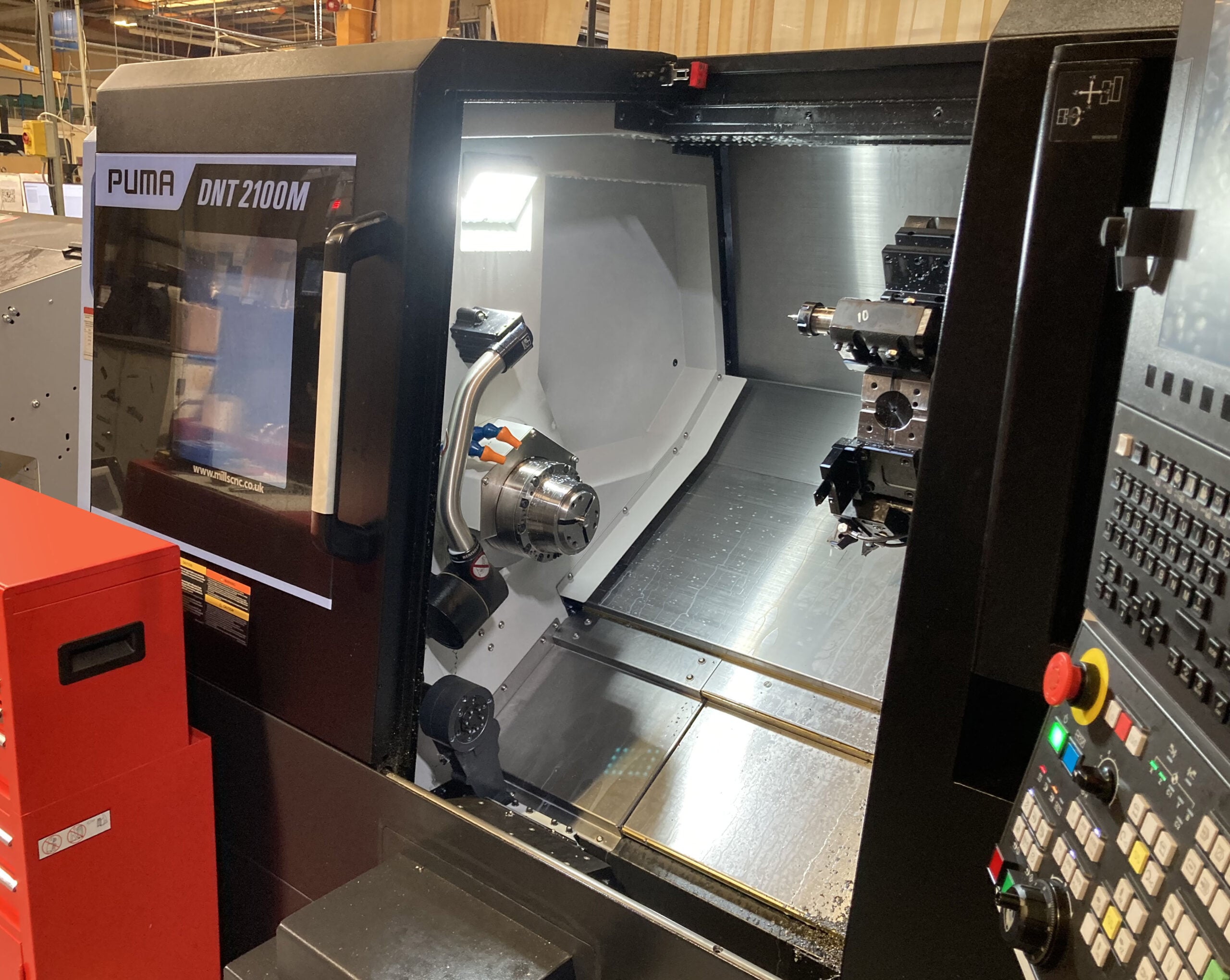
B Hepworth & Co, a specialist in bespoke marine, rail and defence windscreen systems, has invested in two DN Solutions multi-tasking lathes from Mills CNC — each central to automated manufacturing cells.
B Hepworth & Co Ltd, based in Redditch, produces advanced windscreen wiper systems and assemblies for demanding global markets, including marine, rail, defence and natural resources. With demand at an all-time high and an ageing turning resource increasingly reliant on subcontract machining, the company approached Mills CNC — the UK and Ireland distributor of DN Solutions and Zayer machine tools.
Commercial Director Edward Eddy explains: “Some of our existing lathes had, in truth, reached the end of their useful lives. Purchased in the late 1970s, the machines were prone to breakdown, and the staff who could get the best from them had either left or were close to retiring. As a consequence, we were having to sub-out an increasing volume of turned-part work to third-party suppliers.”
Working closely with Mills CNC’s Turnkey and Automation Solutions Department, B Hepworth agreed to replace four older standalone lathes with two automated turning cells. One cell is built around a new box-guideway Puma lathe; the other centres on a long-bed Puma sub-spindle, Y-axis lathe. Both were installed in December 2025 and are equipped with the latest FANUC 0iTP control and integrated with HydraFeed X-Files-s bar feeders. The larger cell also features HydraFeed’s ‘Return Speed’ workpiece extraction system, which automatically removes finished parts through the sub-spindle and transfers them to a high-capacity storage magazine.
The cells machine small batches of typically up to 30-off, of small-diameter, variable-length components used in B Hepworth’s pantograph and pendulum wiper systems. Parts are produced from mild steel, stainless steel, brass and occasional exotic materials, and are characterised by tight tolerances (±0.2mm), intricate features including splines, threads, keyways and tapers, and fine surface finishes down to Ra 0.2µm.
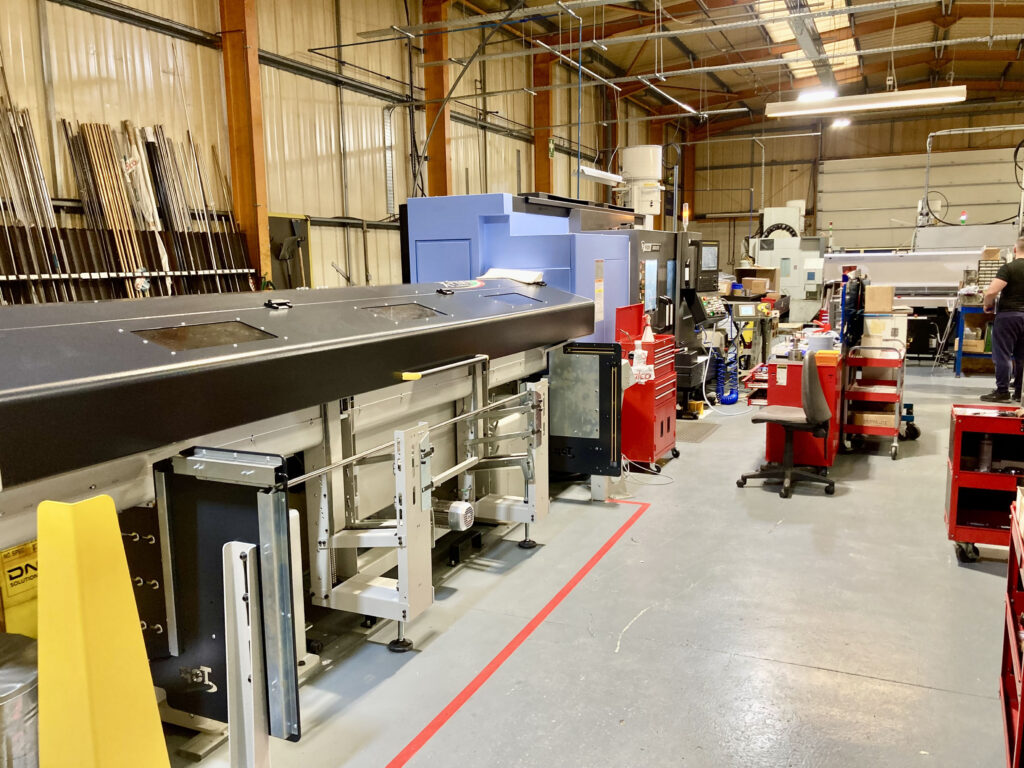
Says Edward Eddy: “The objective with both cells was to improve process efficiencies and achieve continuous, lights-out, unattended production as far as possible. We decided to integrate each Puma with a high-speed bar feeder — one configured for smaller batch quantities, the other for larger volumes combined with automated parts extraction.”
Early results
Both cells have been operational for several months and are already delivering measurable benefits: outsourcing costs have been reduced, part quality and repeatability have improved, and customer lead times are being met more consistently.
“Our two automated turning cells represent a significant upgrade on what we had before — but there is still work to do,” says Edward Eddy. “We are working closely with Mills CNC to further optimise the bar loading and workpiece extraction capabilities of both cells, to push towards full lights-out running overnight and over weekends.”
The goal is to achieve seamless batch processing of different length parts in a single set-up with no manual intervention. “We’re not quite there yet,” Eddy acknowledges, “but what we have already achieved is light years ahead of where we were. Mills CNC is a partner we can count on, and the investment has helped us raise our game. By significantly increasing throughput and output, we are now in a much better position to meet our customers’ lead times and quality expectations.”