
08:07
Asingle cardiac pacemaker contains up to 40 miniature components. A modern passenger aircraft uses an estimated three million fastening elements. One wind turbine requires up to 15,000 screws. These statistics demonstrate the universal importance of small parts. Small-part machining is growing at pace, driven by relentless miniaturisation across industries where failure is simply not an option. The companies best positioned to serve this market are those that have invested deeply in precision tool technology. Walter, the Tübingen-based cutting tool specialist, is one such company, and its portfolio of solutions for small-part machining represents some of the most technically refined tooling available today.
A Market Defined by Demand
Production of small parts under 40 mm is a rapidly growing segment in turning and milling, driven by product miniaturisation in aerospace, medical, automotive, electronics, defence, and watchmaking. These sectors demand small components with tight tolerances, high surface quality, and strict material specifications for biocompatibility, corrosion, or thermal performance.
In medical technology, small-part production is critical, involving dental implants, orthopedic joints, surgical tools, and catheter components from tough materials like titanium alloys and stainless steels. Aerospace parts, such as fuel-system connectors and fasteners, must endure extreme conditions over many flights. Automotive high-volume production also faces economic pressures in machining small parts.
Swiss-type sliding-headstock turning centres are highly sophisticated, operating at 10,000 to 15,000 rpm and performing multiple operations like turning, milling, holemaking, threading, and grooving in one clamp across up to ten axes. Selecting the right cutting tool partner is essential.
The Carbide Cost Equation
The rise in carbide raw-material prices, driven by supply-chain issues, geopolitical factors, and demand from tooling and battery sectors, is reshaping small-part machining economics. Increased costs of tungsten, cobalt, and rare-earth elements mean higher expenses for manufacturers using standard or large-diameter carbide tools.
Small tools counter this trend as their material volume is much less, making the cost impact of rising carbide prices smaller. Manufacturers shifting to optimized, application-specific small tools may see a reduction in consumable costs, even with higher raw material prices. This can significantly lower the cost per part for companies with continuous Swiss-type turning centres, showing that smart tool choice affects overall costs.
The Precision Demands
Small-part machining isn’t just scaled-down standard machining; it presents unique technical challenges. Tolerances are often in the microns, with ±0.01mm common and ±0.001mm possible with proper equipment. Geometries easy at 100mm diameter become complex below 5mm, requiring ingenuity.
Thermal management is crucial, especially at high spindle speeds in Swiss-type machining and micro-milling, where heat impacts micron-level tolerances. Precise control of chip formation and vibration is essential to prevent re-cutting, surface damage, and out-of-spec parts. Every process aspect must be carefully engineered.
Tools must be specified carefully, as factors like geometry, coating, substrate, and corner radius interact with material more as dimensions shrink. A geometry suitable for 20mm components may cause problems at 3mm.
Walter’s Armoury for Small Part Machining
Walter’s investment in small part machining solutions highlights the sector’s technical complexity and the significant opportunity it offers. The company’s range includes turning, grooving, milling, holemaking, and threading—covering all operations of a sliding head lathe or micro machining centre.
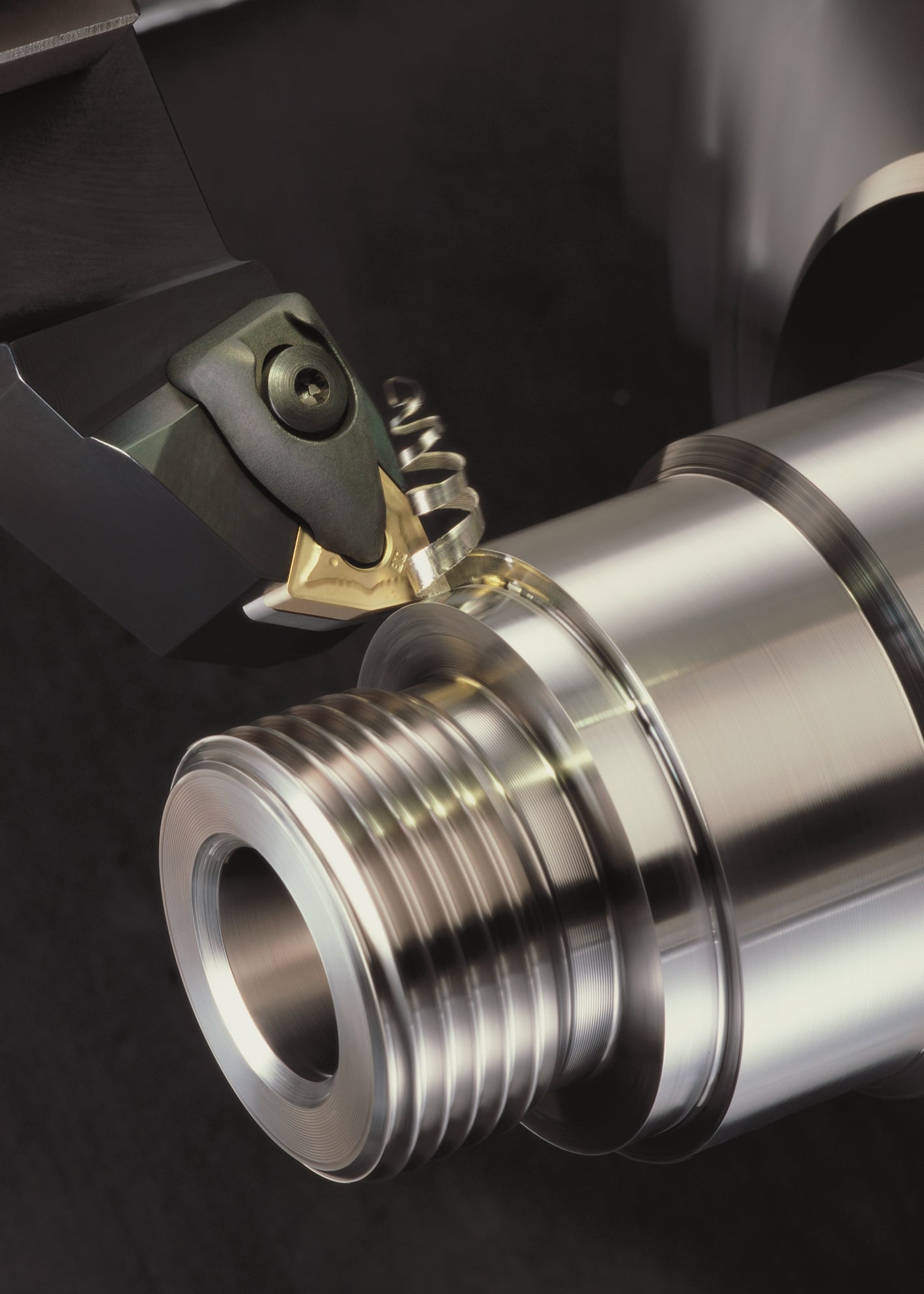
Walter’s Tiger‑tec® Gold WPP20G, designed for Swiss-type lathes, provides wear resistance and edge stability for precise small-part turning, especially on steel at high speeds. Its positive rake angles, sharp edges, and small radii reduce cutting forces on delicate pieces and promote short chips, enabling smooth automated processing.
The Walter Xill‑tec® range offers precision for milling fine features, while the MD266 Supreme showcases Walter’s dedication to miniature milling. It efficiently handles complex contours, pockets, grooves, and non-linear geometries, reducing cycle times and ensuring consistency, often without multiple tool changes.
Holemaking at small diameters relies on concentricity, drilling strategy, cooling, and swarf removal. Walter’s DB133 Supreme micro drill is designed for these tasks, with geometry and substrate that ensure precision and reliability. When spindle speeds exceed 40,000 rpm, coolant filtration of 3 to 5 µm is vital to protect internal channels and extend tool life, a support Walter’s application engineering team can provide.
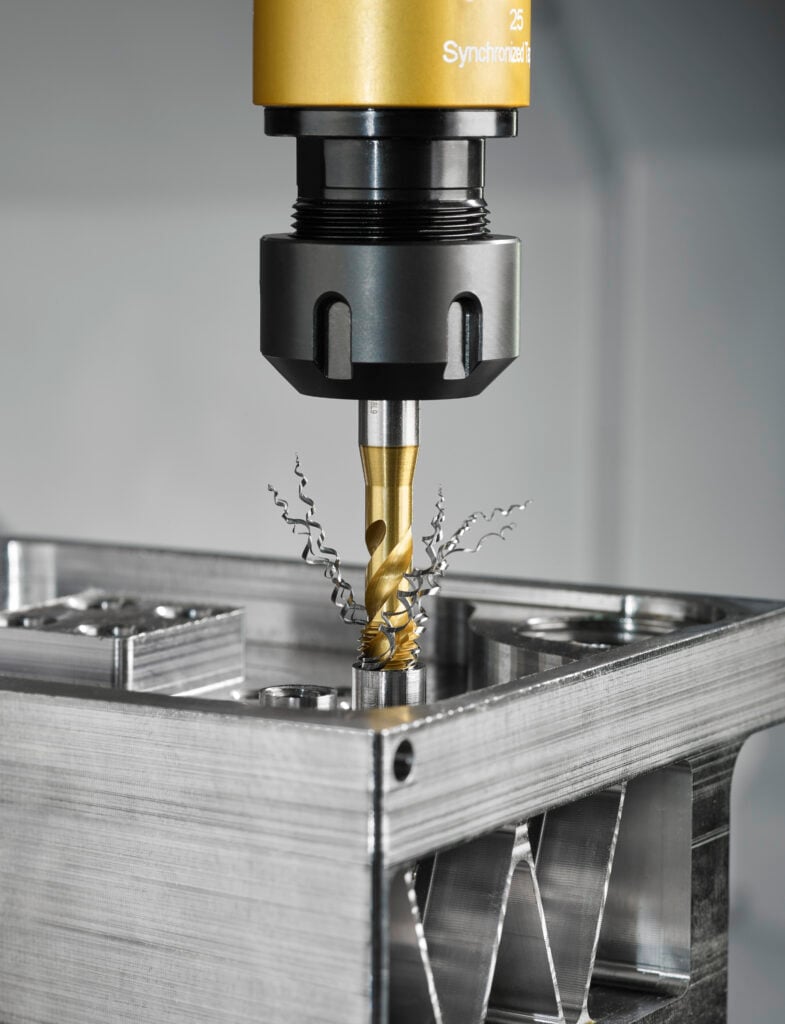
In threading, process reliability is crucial. A tap failure in a small bore can ruin a valuable component. Walter’s TC620 Supreme cutter is designed for speed and security, combining operations and reducing the risk of tool breakage—especially important when threading small parts.
Materials, Sectors and the Future of Small Parts
The material landscape in small part machining is diverse and demanding. Titanium alloy Ti6Al4V remains the top choice for implants and aerospace parts due to its strength, biocompatibility, and corrosion resistance. However, it is difficult to machine, generating high temperatures and demanding tool coatings and geometries. Stainless steels like 1.4301 and 1.4401 dominate food processing and medical device applications. Aluminium alloys are increasingly used in automotive and aerospace small components as lightweight design becomes more important.
Looking ahead, AI is beginning to transform process monitoring and quality assurance in small part production, while digital twins create virtual models of physical components and manufacturing processes to identify and eliminate errors.
Sustainability is also reshaping material choices. For manufacturers navigating this complexity, the value of a cutting tool partner with genuine expertise in small part machining cannot be overstated.
Walter’s combination of application-specific grades, precision geometries, modular tooling systems and engineering support positions the company as a first-choice partner for companies committed to precision at the smallest scale. In a sector where a micron of dimensional error can render a component unusable and where the cost of failure is measured not just in scrap but in the safety of the patients, passengers and operators who depend on these components, getting the tooling right is no longer a secondary consideration. It is the foundation on which everything else is built.