

08:07
Additive manufacturing continues to transform medical implant manufacturing, where engineers can now realise increasingly novel prosthetics and components. Despite high costs and compliance that stymie growth, new tech means Britain’s medical device firms have many opportunities – especially if the business environment can improve. By Will Stirling
The design and manufacture of medical devices is never a dull sector that plods along. It’s highly innovative, fast-moving, uses embedded digital technology, is an early adopter of new manufacturing technologies, and can be highly profitable. New material development and adoption are a particular forte, especially where the component is integrated with the human body.
Today, like all subcontract sectors, operating conditions dominate the sector. “Broadly, members continue to talk about the pressures created by costs: high energy, labour, freight, packaging and compliance costs, combined with a market that is still often driven by unit price rather than whole-pathway value,” says Jonathan Evans of the Association of British Healthcare Industries. “That is making UK manufacturing a tougher proposition, particularly when we consider the NHS is effectively their only UK customer (excluding export markets).”
These pressures are now feeding through into investment decisions, with manufacturing showing the most pronounced decline in companies planning to increase or maintain UK investment compared to last year, Jonathan adds (see Pulse of the Sector survey in the footer). In recent years, new technologies have made a huge difference to how medical devices (MedDev) are made, reducing risk and increasing profits for companies willing to invest. A great example is the growing use of additive manufacturing (AM) for manufacturing medical implants.
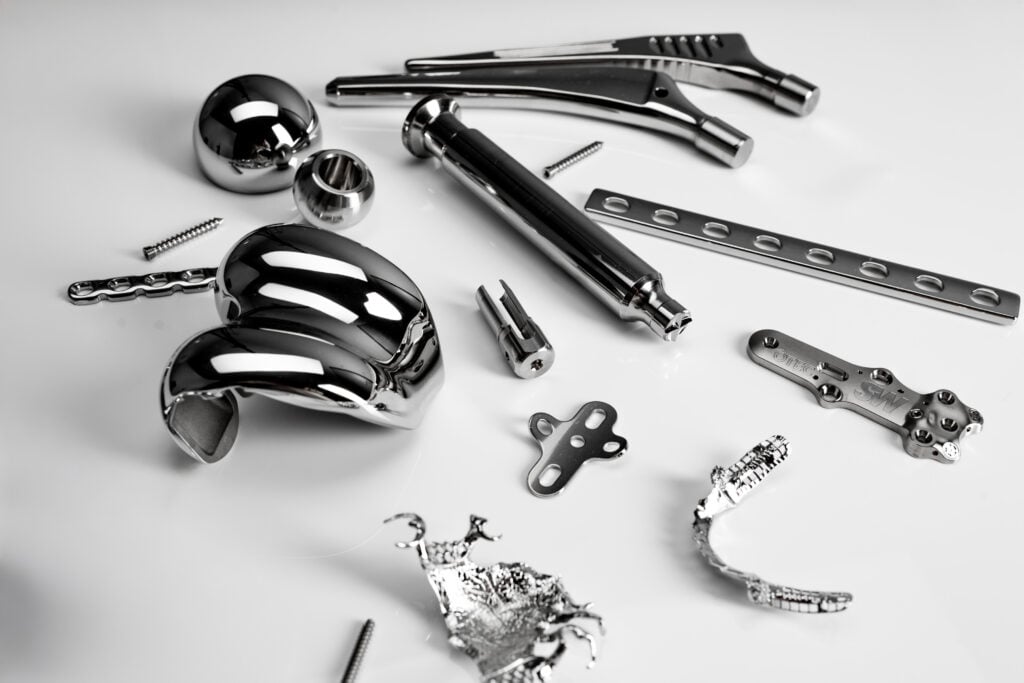
A key driver behind the adoption of additive manufacturing (AM) in orthopaedic, particularly for hip, knee, and spine implants, is the ability to produce porous structures that promote better osseointegration, allowing bone to grow into the implant. This leads to improved clinical outcomes and often removes the need for bone cement. Compared to traditionally machined implants, AM-produced titanium implants offer superior biological integration and performance.
Such porous, lattice-like structures cannot be manufactured using conventional machining methods, at least not economically. AM enables complex geometries, such as honeycomb-like designs, essential for enhancing implant functionality.
Renishaw has over 15 years’ experience in developing and producing additively manufactured medical devices. In 2015, it opened a dedicated ISO 13485–compliant facility, enabling the company to produce and sell more than 100,000 dental devices and 1,000 medical implants, including craniomaxillofacial implants and joint replacements. The primary goal was to understand regulatory requirements while developing expertise in customisation, software tools, and efficient workflows for rapid production.
The facility was also a demonstration factory for global dental and medical device manufacturers. It proved that AM technology could meet strict regulatory standards, leading several companies to adopt Renishaw’s AM machines. Eventually, the facility risked being seen as a competitor to its own medical OEM customers, so Renishaw shifted its strategy and ceased manufacturing medical parts directly.
But it accelerated the adoption of accredited AM medical device manufacturing. Today, many big MedDev OEMs’ portfolios include AM and porous implants. What were once premium-priced components – due to their advantages, high development costs and low piece rates, advances in technology are cutting costs per part. Early, single-laser machines required long production cycles. The RenAM 500 Q Ultra machine uses four lasers and patented Tempus technology to reduce cycle times and costs and, like similar machines, enables mass manufacture of AM porous implants, lowering the cost per component. They have cut cycle times to roughly a quarter of what they once were, enabling scalable and profitable manufacturing. They also produce fewer supports around the component, cutting waste.
Sylatech – helping injured children to reconnect
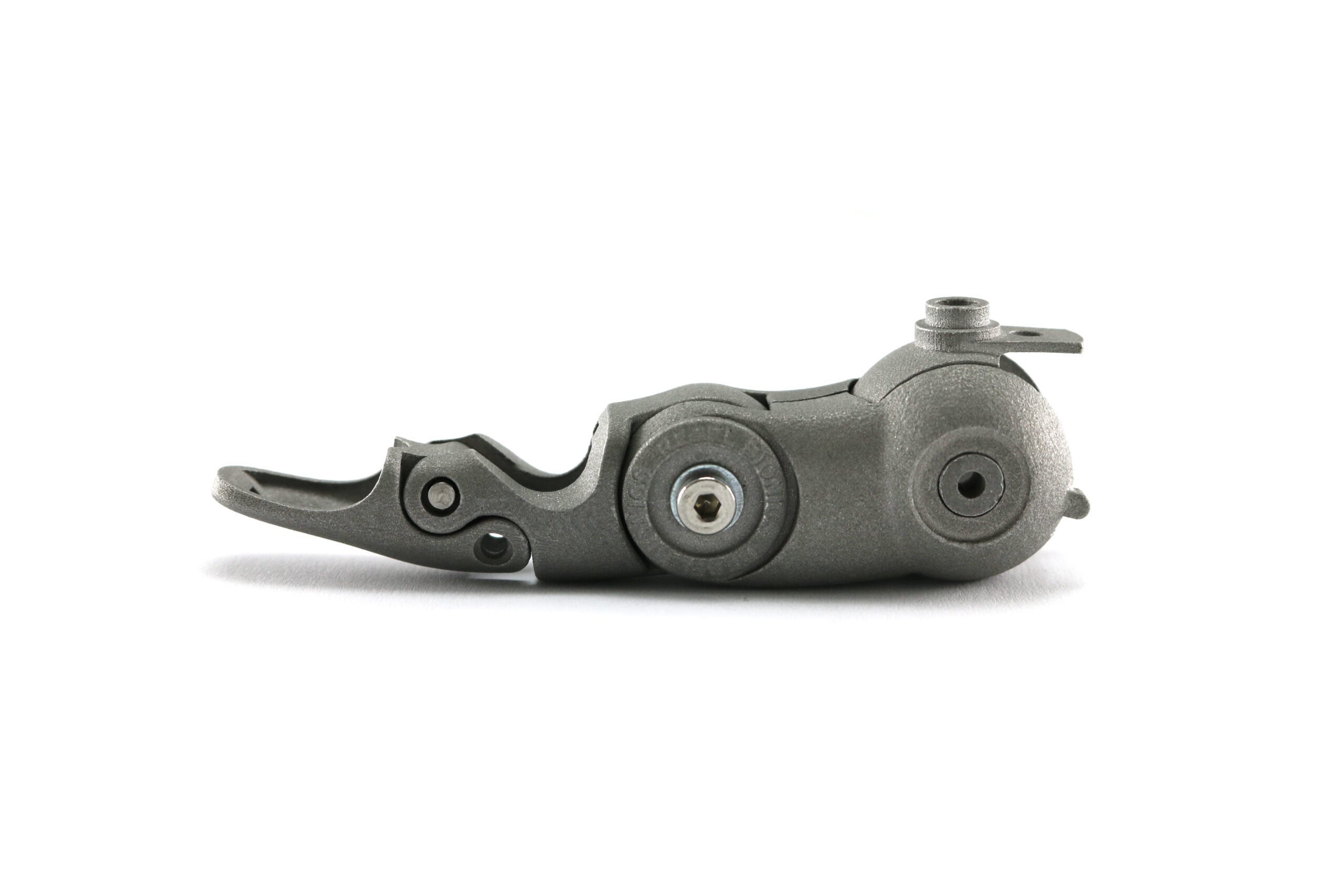
3D printing has been adopted by a specialist investment casting and engineering firm, Sylatech. A multi-part thumb has been designed by renowned prosthetic hand designer Ted Varley, for use by children who have lost a hand due to injury, congenital conditions, or other medical reasons. The clever prosthetic should give the user an enhanced quality of life, help regain confidence, and increase their independence. Again, AM is chosen for flexibility and complex geometries, but higher speeds are lowering costs.
“Our Hybrid Additive Manufacturing fuses the design freedom of 3D printing with the precision and strength of casting, enabling intricate metal components, from thin-wall structures to internal channels, that traditional methods can’t achieve,” says Gordon Gunn, commercial director at Sylatech.
Surface polishing becomes an art form
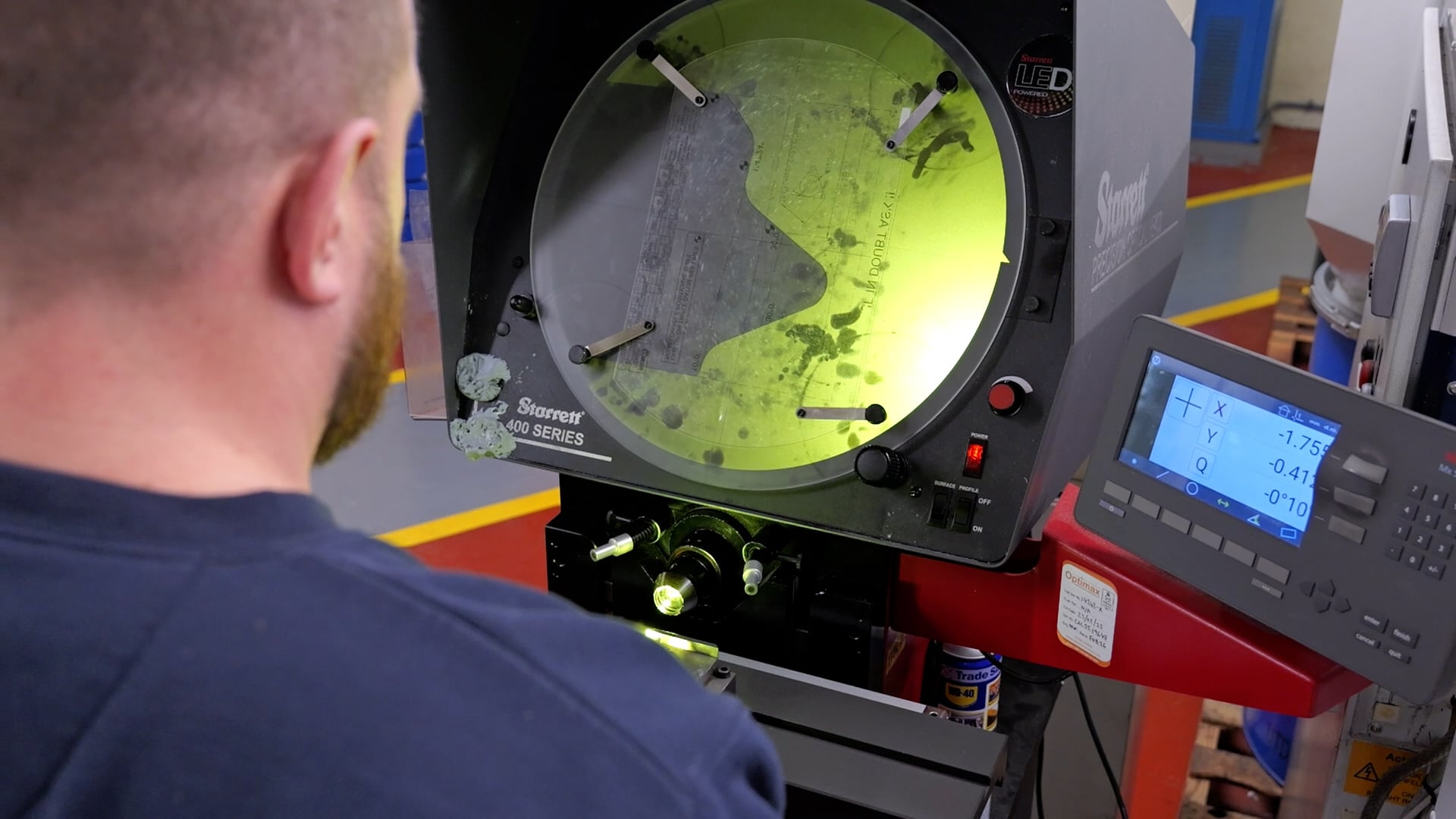
Implants like replacement knees and hips demand super-fine polished surfaces to prevent bacterial growth. Finishing processes can include deburring, fine grinding, edge honing / radiusing, smoothing, and polishing. Meanwhile, subcontractors need to keep production rates high.
Companies are increasingly automating these processes in large batches to sustain high output while achieving super-fine tolerances by using drag finishing machines. Fintek supplies a range of finishing machines from OTEC and provides a subcontract finishing service. The OTEC drag finishing machine polishes multiple knee joints in one batch, achieving surface smoothness values to Ra 0.01μm (ultra-smooth, to you and me).
“Using robots can require a big space, and you have to programme each knee individually,” says Jamie Philips at Fintek. “The footprint of a drag finishing machine is just 150cm by 110cm, where you can polish 15 knees at a time. It’s a very small area and a very quick process. The bowls [containing the polishing material] can be changed quickly, and all three steps needed for polishing can be done in one machine.”
Miniaturisation in plastics
Another trend in medical technology is miniaturisation. Injection moulding machine company ARBURG has developed several medical device technologies for the manufacture of plastic moulded parts. At ARBURG’s 2026 ‘Technology Days’ open house, a moulding system showed how shot weights of just 0.016 grams can be achieved in a reliable process that uses a production cell based around an electric Allrounder 270 A machine.
At these tiny sizes, the engineering is impressive. This machine is equipped with a size 5 micro-injection module. A four-cavity mould from Toolcraft and a hot runner from Günther Heißkanaltechnik were also optimised for micro injection moulding. Together with a clean air module and a linear robotic system, this package delivers a flexible turnkey solution for producing micro components. For processing the plastic, in this case POM, for the smallest shot weights, an 8mm injection screw is combined with a second screw for melting. Four microfilters, weighing just 0.004 grams each, are produced in a cycle time of less than 10 seconds. Sprue-free (waste-free) processing means it is efficient with materials. To prevent static charging, the parts are blown with ionised air via Arburg’s gripper component. An ionising bar on the conveyor belt prevents renewed recharging. It’s a very smart, automated cell for making tiny microplastic parts that need to be this small to work.
Regulation and R&D
Amid the bountiful innovation, regulation in MedDev remains a significant design and manufacturing issue.
ABHI members regularly highlight the cumulative burden of compliance, and more recently, the practical implications of post-market surveillance requirements, technical documentation, and the resources needed to maintain portfolios in the market, says ABHI’s Jonathan Evans. “For some businesses, this is now influencing decisions on product range, investment, and where future manufacturing is located. That said, the Medicines and Healthcare products Regulatory Agency’s recent consultation on indefinite recognition of CE marking, alongside its broader focus on international reliance, is a positive signal and a welcome direction of travel for the sector.
And Evans adds that while the UK remains a strong environment for research and development, companies consistently report it is a more challenging place to scale manufacturing, citing costs and slower adoption as key barriers.
For more information about the state of the UK MedDev sector, see ABHI Pulse of the Sector survey https://www.abhi.org.uk/resource-hub/file/21534