🎧Automated processes to combat skill shortage
0:00 / 0:00
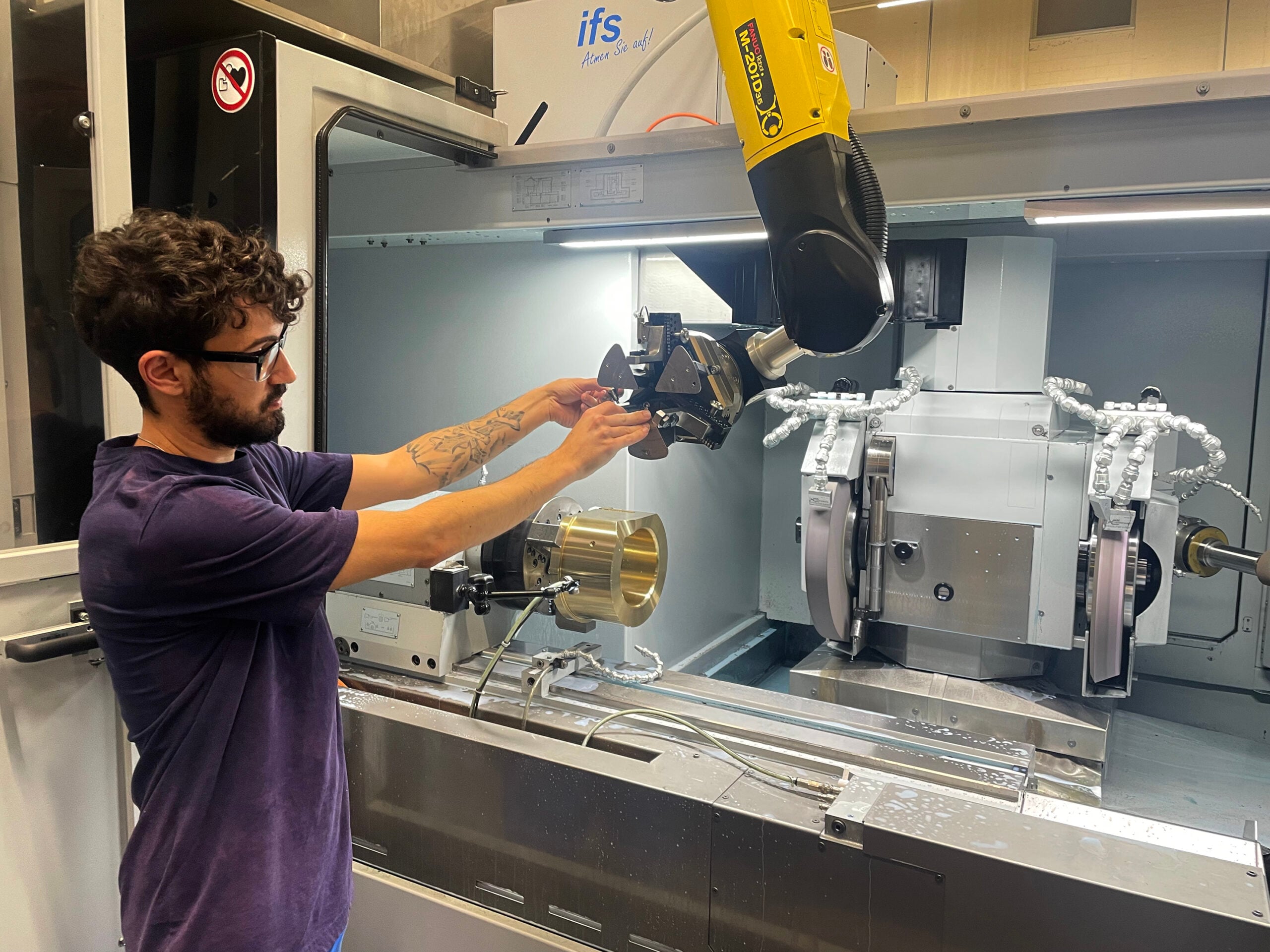
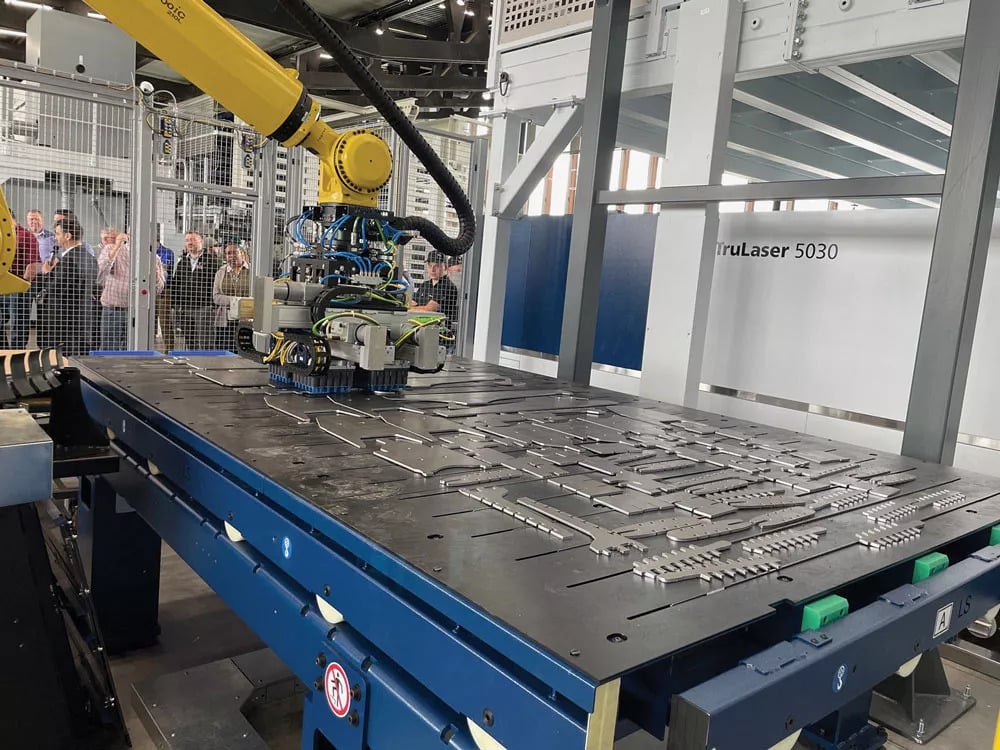
To resolve bottlenecks, gear pump manufacturer Maag has invested in a KELLENBERGER K1000 cylindrical grinding machine, precisely tailored to the workpiece and workflow. It includes a pallet changer and a robotic arm that is available ikelln the UK from DF Precision Machinery.
Maag leads in manufacturing gear pumps for industries like polymer, chemical, petrochemical and food, exporting worldwide. It has numerous patents, and produces over 2,000 pumps annually.
In 2022, strong orders challenged the company’s workload management. Most machines were either over or undersized for various workpieces, causing long wait and processing times.
Thomas Lutz, Head of the Cylindrical Parts Department recalls: “We were working in three shifts, doing overtime – even on weekends – to meet delivery deadlines. We even outsourced machining.” For Production Manager Kristian Osrecak, it quickly became clear that the high costs of outsourcing and the administrative effort were not sustainable solutions. The acquisition of a grinding machine that precisely matched the workpieces, combined with a custom-tailored automation system, was intended to put an end to that.
Osrecak explains that they were well equipped for grinding, with machines from three major manufacturers at their Oberglatt plant and two KELLENBERGER machines at their Rozzano centre.
Convincing concept
“The most convincing concept in terms of machine and automation ultimately came from KELLENBERGER” says Thomas Lutz. “What also impressed us was the clean and structured execution of the project by KELLENBERGER.”
Highest precision
The KELLENBERGER K1000 features hydrostatic guideways on all main axes, ensuring maximum form accuracy for grinding tasks involving interpolating axes. The CNC-controlled B-axis of the grinding head is also hydrostatic, making it wear-free. It is equipped with a direct drive, a water-cooled high-torque motor, and an angular encoder with a resolution of 0.1 arcseconds.
The KELLENBERGER K1000 is optionally available with centre distances of 1,000/1,600mm and centre heights of 200, 250, or 300mm. Of the more than 30 different grinding head configurations with external and internal grinding spindles available, Maag selected a configuration with two external grinding spindles and one high-frequency internal grinding spindle with a maximum speed of 42,000rpm.
“The machine and automation were tailored to our wishes and specifications,” explains Thomas Lutz. “Our workpieces have specific machining requirements due to the high precision demanded. For example, we needed two measuring probes to monitor the runout of the rear face and the diameters of the bores during machining.”
Quick and easy programming
Like all KELLENBERGER machines, the KELLENBERGER K1000 is equipped with the innovative BLUE Solution control software specially developed by KELLENBERGER for sanding, which is easy and logical to use for all operators – even inexperienced ones. The operating elements are clearly arranged on the touchscreen and can be quickly identified and selected. The user receives maximum support when entering data.
The clearly structured interface, divided into the three main areas –Setup, Programming, and Production –and the three secondary areas – Diagnostics, Settings, and Functions –makes setting up the machine for a new production process easier than ever. The BLUE Solution software includes modules for non-circular and thread grinding, as well as a regrinding cycle. For more complex grinding tasks like thread grinding, the BlackCam version is used.
At Maag, they initially used the BLACK CAM software. “Programming with the BLUE Solution was more challenging and time-consuming,” says Kristian Osrecak. “Combining the machine with automation was complex, and it took time to sort out the details.” “We entered much data for various machining steps — from radius grooving to complete machining of the bearing faces, including width, collar width, radius, and diameters. This was for about 80 to 100 parts, in batch sizes from 4 to 40, and required two measuring devices into the control system.”
Thomas Lutz agrees: “Many factors influence the result during machining. With such a complex system, the correct interaction between the machine, automation, grinding media, and clamping devices is crucial. Everything has to work in harmony for us to achieve the high quality required for our parts. During the setup phase, however, we received excellent support from KELLENBERGER.”
In the meantime, the KELLENBERGER K1000 is running around the clock in three shifts. Two employees take turns operating the machine, and the third shift runs unattended. “As hoped, the automated KELLENBERGER K1000 has drastically increased our productivity. The backlog and the overtime hours are a thing of the past,” Thomas Lutz and Kristian Osrecak agree.