01:04
🎧When precision is non-negotiable
The NSH Group, with its NILES-SIMMONS brand, has worked with Sandvik Coromant to jointly develop the world’s first fully transparent solution for complete machining of complex titanium components with internal machining, using complete software integration of sensor controlled tools into the machine control system.
When manufacturing high-value components for the aerospace industry, such as landing gear and turbine components, there is a set of core pillars essential for production. These include precision in machining – without compromise, process safety and component quality that must be consistent and reliable, efficiency and sustainability through resource-optimised technology from the start and also confidence in performance, product, and process – at all times.
To meet these demanding requirements even under challenging manufacturing conditions – such as machining complex materials, working in closed environments without visual monitoring, and achieving ambitious geometries with internal features – more was needed than what the existing market for machining centres and process solutions could provide. In collaboration with its long-standing partner Sandvik Coromant, NILES-SIMMONS, which is available in the UK through McDowell Machining Technologies, has therefore developed an innovative integrated machine, tool, and process solution that offers a new level of transparency and reliability, setting new industry standards. This solution is the result of extensive development work and strategic collaboration, combining experience, expertise, progress, and innovation.
Precision Inside the Part,Where Manufacturers are Blind
Aerospace components have evolved faster than the machining strategies used to manufacture them. Materials that are difficult to machine, such as titanium, inconel, and high-strength alloys that were once considered exotic, are now standard. Their strength and weight benefits come with significant machining penalties: high heat, rapid tool wear, narrow stability windows and increased vibrations.
Landing gear and turbine components often involve extensive and hard-to-reach internal machining of workpieces, which generally does not allow visual inspection of the cut during operation and frequently exhibits unpredictable behaviour deep inside the bore. Therefore, what is needed is a solution that provides 100% digital transparency and control over the machining process, while enabling automated, real-time correction of machine responses to changes in cutting conditions or critical process parameters to meet the high demands on quality and reliability.
In addition, there are very tight tolerances, which are essential given the safety relevance of the components. Economic and sustainability considerations in manufacturing are also crucial, since both the components themselves and the tools and machine elements required for manufacturing are highly cost-intensive, while the machining of a single component typically takes several days. Scrap, failures, and machine damage are not an option, financially unacceptable and can escalate quickly. Manual interventions destroy consistency and cycle time, so machining minimal disturbances and corrections is the key to reducing cycle times and ensuring quality. This is the gap the industry has not been able to close—until now.
The Concept
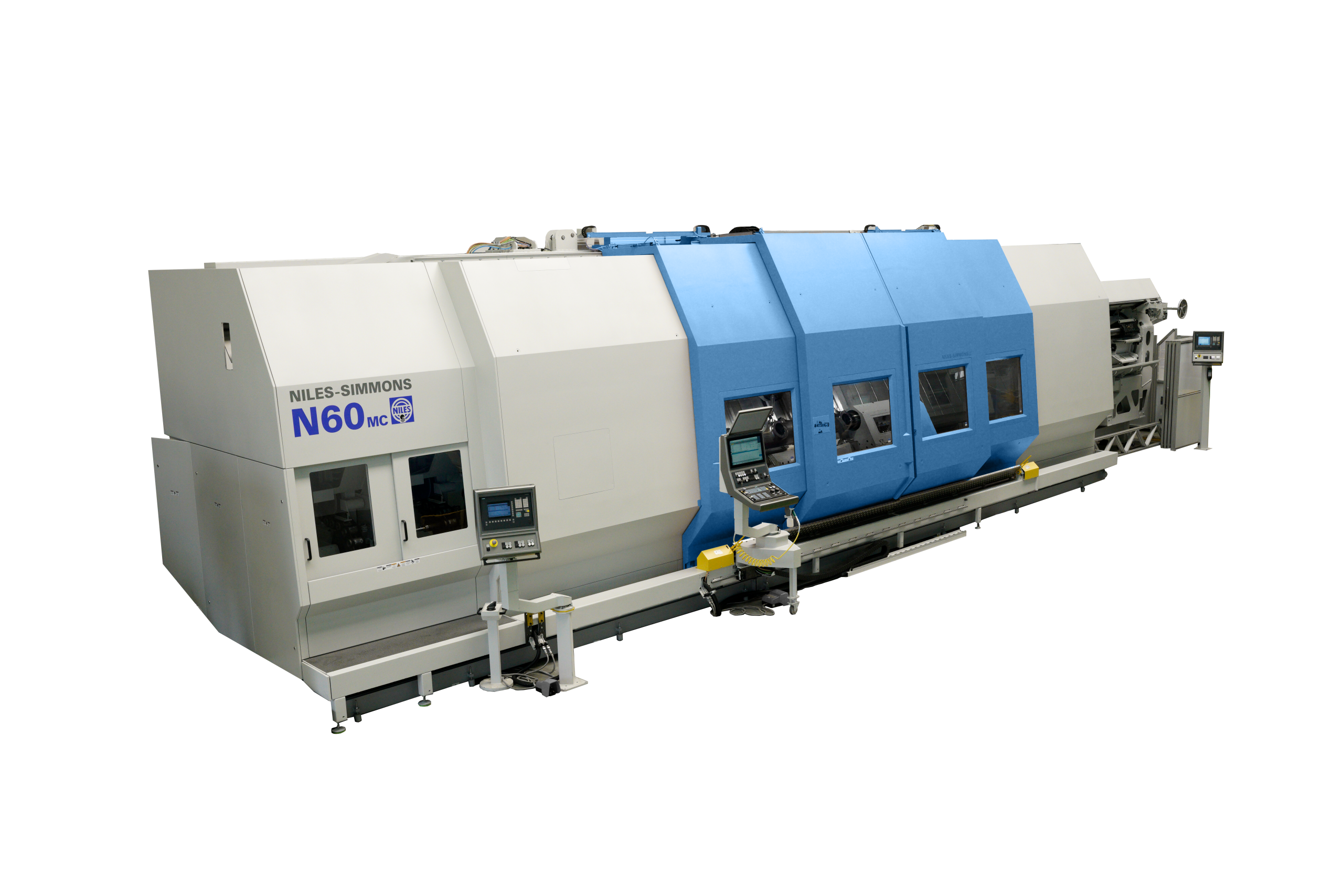
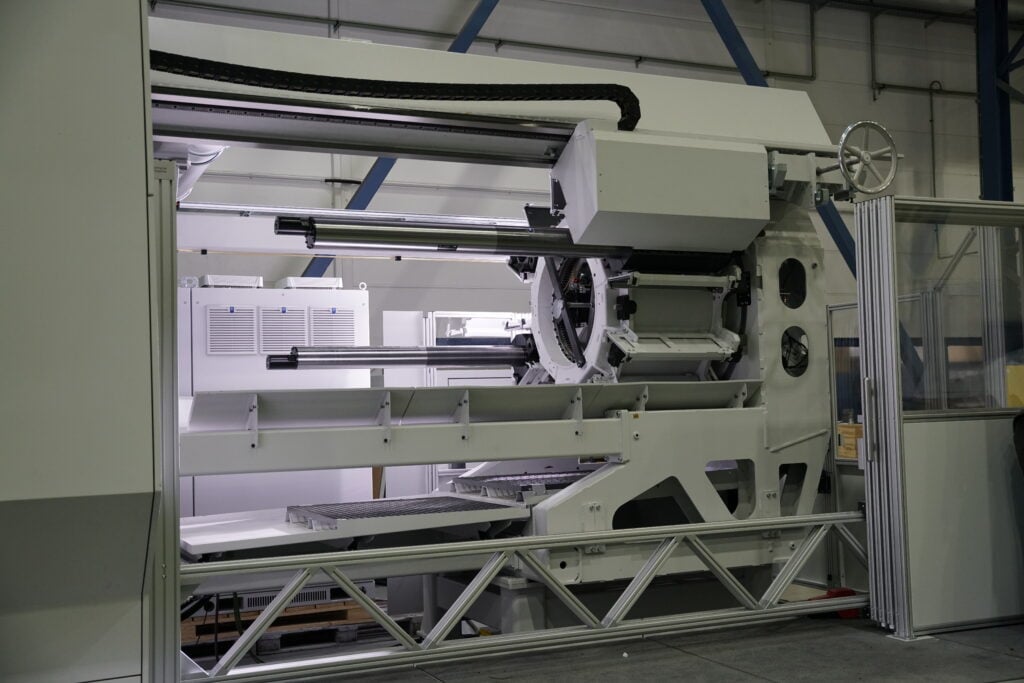
The NSH Group, with its NILES-SIMMONS brand available from McDowell Machining Technologies, and Sandvik Coromant jointly developed the first integrated machining ecosystem that connects tool-tip sensor intelligence directly into the machine control system. The core of the concept is the NILES-SIMMONS TURN-MILL N60 MC machining centre from McDowell Machining Technologies, with a machining length of up to 7.5 meters, the sensor-controlled Sandvik Silent Tools™ Plus with next-generation electronics, and the CoroPlus® Connected software. The result: a closed-door machining process that can monitor, react, and protect itself inside the part, in real time.
The tools and the associated monitoring and response software have been fully integrated into the machine control system via a PLC interface developed and programmed in-house, specifically by NSH. This ensures maximum safety and transparency throughout the entire machining process.
Why This Is Different
Integrating the tool sensors fully into the PLC enables real-time monitoring and correction of the process directly during the cut. In contrast to conventional process monitoring, such as drive data monitoring, information is now captured live within the tool – at the actual point of operation, and visualised in real time. This significantly increases accuracy, reliability, and safety throughout the entire process, even without direct visual inspection by the operator.
Instead of guessing what is occurring, the system is aware—because it measures conditions that previous systems couldn’t. At the forefront, measuring inside the bore.
Instead of simply capturing and displaying data visually, the integration into the control system now enables process-specific limit values to be set for parameters such as tool load, vibration, deflection, or temperature. When these limits are exceeded, the control system automatically triggers an alert. The stop-and-retract function – an emergency withdrawal of the machine — activates automatically in case of overload or breakage. This allows for real-time responses to excessive cutting loads, helping to prevent damage or scrap.
In addition to the challenges of process monitoring, the machine equipment was further adapted specifically for the machining of complex internal geometries and materials, to ensure a process that is safe, quality-compliant, and above all, resource- and cost-efficient.
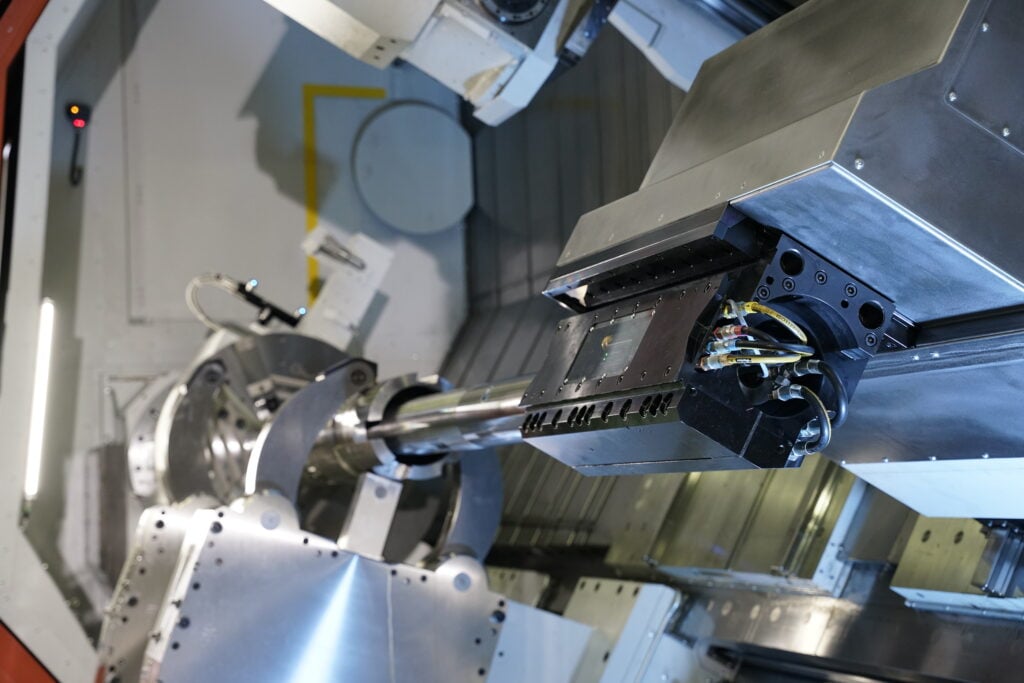
The NILES-SIMMONS TURN-MILL machining centre was fitted with boring bars featuring a C8 tool interface with ATC (Automatic Tool Change). Through the machine’s tool changer, tools from the left-side chain magazine with 96 pockets can be automatically loaded into the right-side mounted boring bar. This ensures that the necessary tool configuration is always available in an automated manner. Furthermore, the tools can also be measured automatically within the machine.
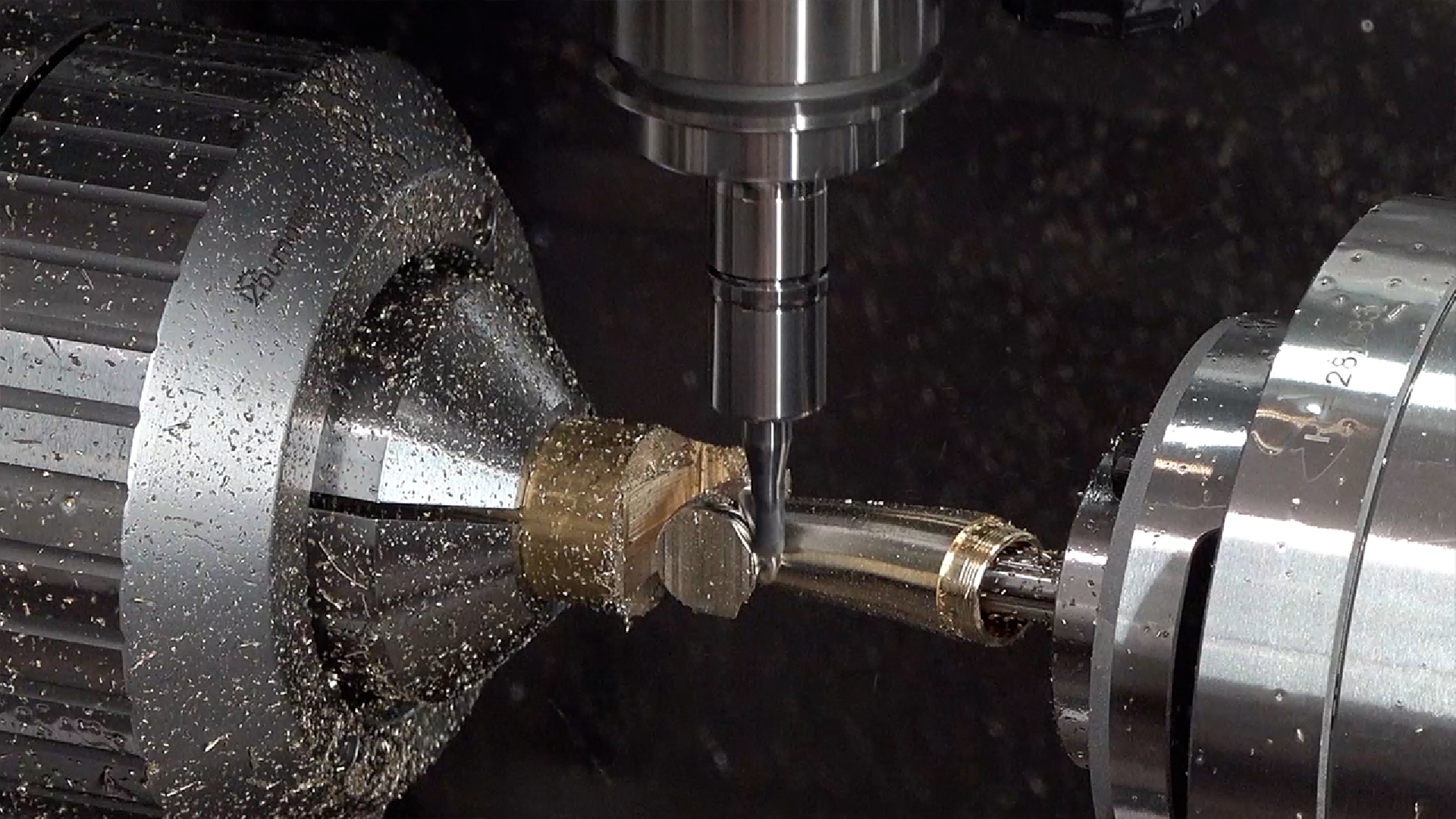
The boring bar magazine is equipped with 12 slots for vibration-damped boring bars, which are automatically inserted into a second machining slide within the machining area via a boring bar change system. The boring bars are powered inductively as soon as they are placed into the slide. Depending on the process, multiple boring bars of up to 14 times the tool diameter (max. 2.4 m) can be used. Despite this significant overhang, the process runs safely and without vibration, thanks to the machine’s exceptionally high inherent rigidity and the proven damping system of the boring bars. Additionally, machining is performed with a high-pressure coolant supply (HPC) of up to 150 bar, ensuring stable cutting conditions, particularly for high-strength materials.
No other solution in the market combines machine, tool, and software with this level of seamless integration and automated reaction.
Customer Benefits
As a result, the solution directly addresses the aerospace industry’s highest stakes machining challenges, enabling manufacturers to push performance forward without increasing risk.
The process allows for up to 30% faster cycle times and up to 20% higher cutting rates compared to conventional boring methods or similar machine solutions currently available on the market. Additionally, the solution nearly eliminates scrap and blind cutting conditions, extends tool life, and safeguards machines and equipment, which reduces spending on consumables, enhances operational performance, and offers compelling commercial advantages.
However, in the end, it is not only the economic benefits that matter, but also a more sustainable manufacturing approach that conserves resources, extends operating times, and improves both quality and safety.
Automation and digital solutions, combined with proven and reliable machine engineering, support manufacturing consistency, extend tool life, and eliminate scrap and damage. Ultimately, all user groups benefit. Operators experience less workload, gain confidence and clarity, manufacturers achieve higher productivity and better margins, and end customers gain greater trust and a stronger sense of safety. The system is already deployed internationally across aerospace platforms and continues to demonstrate its effectiveness in production environments.