06:08
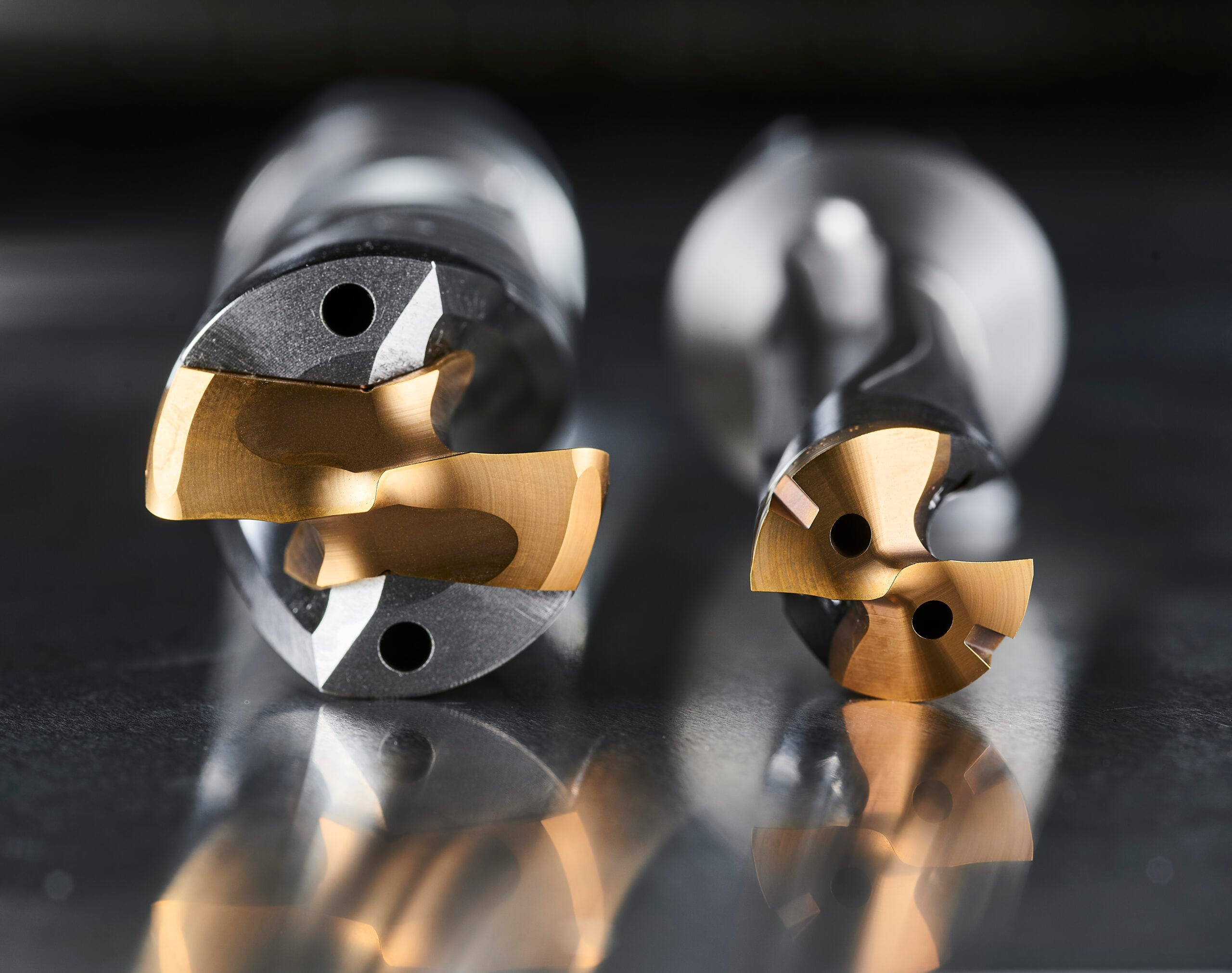
Faced with a once-in-a-generation squeeze on carbide costs and relentless pressure to ramp up build rates, aerospace manufacturers are rethinking processes once considered untouchable. Kennametal’s engineering services team is positioning itself not as a tool vendor but as a partner that works through the challenge from design through to delivery.
Aerospace has never been an industry in a hurry. For decades, the priorities were settled – safety first, then cutting time and then cost per part. Proven processes stayed because changing them carried risk and rarely paid back. That mindset is now shifting at pace. The catalyst is a tsunami of challenges that most of the supply chain has never had to manage. There is a surge in demand, constrained capacity, a shortage of skilled machinists, and the steepest carbide price rises in living memory.
“Aerospace is growing, and there are real issues in the supply chain, so every customer needs to produce faster and to a high standard,” explains Ivan Fiorenzo, one of Kennametal’s EMEA Aerospace Solutions Engineers. “Customers involve Kennametal because they have to produce more parts while maintaining consistent quality and reliability. The market is demanding more components, more quickly. At the same time, there’s a lack of resources in the aero market, so we effectively act as an outsourcing partner to help customers evolve their processes, improve quality and increase productivity.”
A service, not a sale
The most striking feature of Kennametal’s offer is what it does not include on the invoice. The engineering team serves as the technical engine room behind the sales force, undertaking detailed process studies for customers planning production one to three years ahead. Adrien Cellier, Manager of the Aerospace Programme Engineering Team, says: “The customer selects us to manage the solution, and we always try to find the best answer from a tooling perspective, in alignment with their objectives. Whether they want speed, the lowest cost, or a compromise. This approach reflects our commitment to long-term partnerships and it’s a genuine differentiator between Kennametal and our competitors. We’re implementing it more and more for the larger customers.”
That long-term horizon shapes everything. The team is not reacting to a broken tool on a Tuesday; it is engineering a production-ready process for parts that may not reach the shop floor for weeks, months, and maybe even years. Two distinct streams of work arrive through the team: the industrialisation of an entirely new part, or the optimisation of an existing or often ageing process. “The approaches are different, but the end task is the same. It’s about defining a new process to win time. What matters most is understanding the customer’s real goal,” Cellier says.
Inside a typical project
The clearest illustration came from a recent enquiry from a major OEM manufacturer wrestling with a family of large components. “The processes are very old, and they wanted new technology, new tools, a new way of thinking,” Cellier recounts. “Rather than do it themselves, they asked their suppliers to show how the process could be improved. The target was to take 20 to 25% out of the machining time, freeing capacity for other parts.”
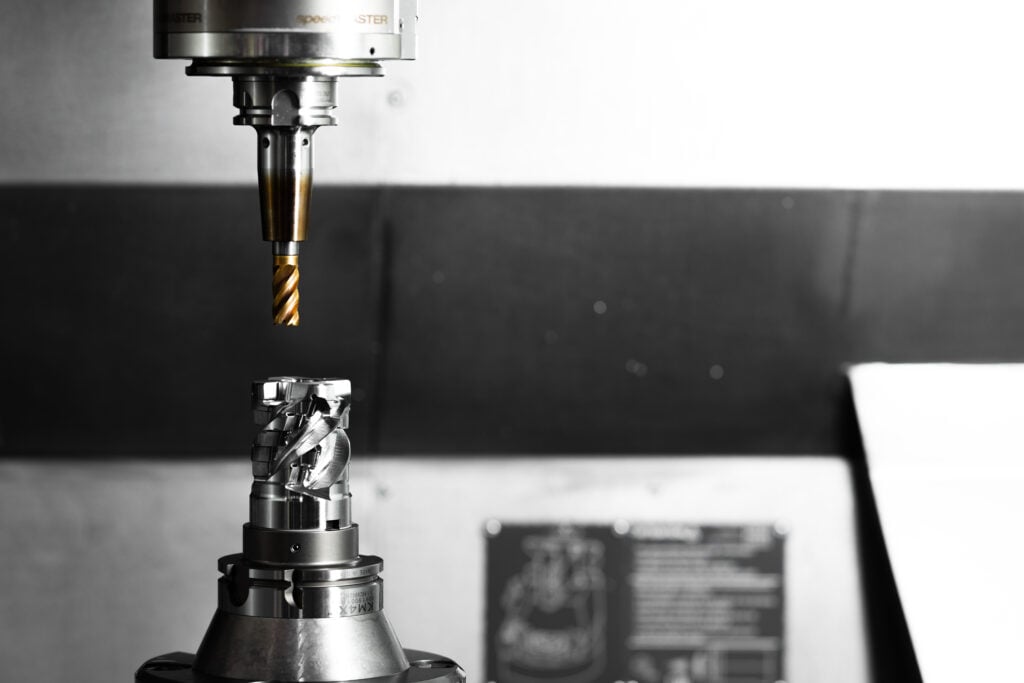
Asked whether 25% is ambitious enough when aerospace primes are straining to lift build rates, Cellier is unequivocal that the stated figure is a floor, not a ceiling. “The target is the target, but if we can do better, we will. As I am certain our competitors are trying to offer their best, too. If we can decrease the time by 50%, we’ll propose it.” The studies begin in the office, then are fine-tuned on the machine, so the final numbers may land slightly above or below the first estimate. CAD/CAM simulation built on partnership platforms with CAM software partners lets the customer see exactly where the tool is going and what it is doing.
Fiorenzo walks through the mechanics. “After an initial meeting to agree on mutually achievable targets and an NDA in place to protect sensitive data, our team collects the geometry of the finished component, the raw material, and the full machining environment. Our engineers then build the process in CAM, operation by operation. We don’t give a rough estimate of the number of tools or the cutting time. We develop every single operation,” he says. “The process we deliver is around 90% ready for the machine before getting anywhere near the shopfloor. We provide the simulation, the machining data, and the cutting times.”
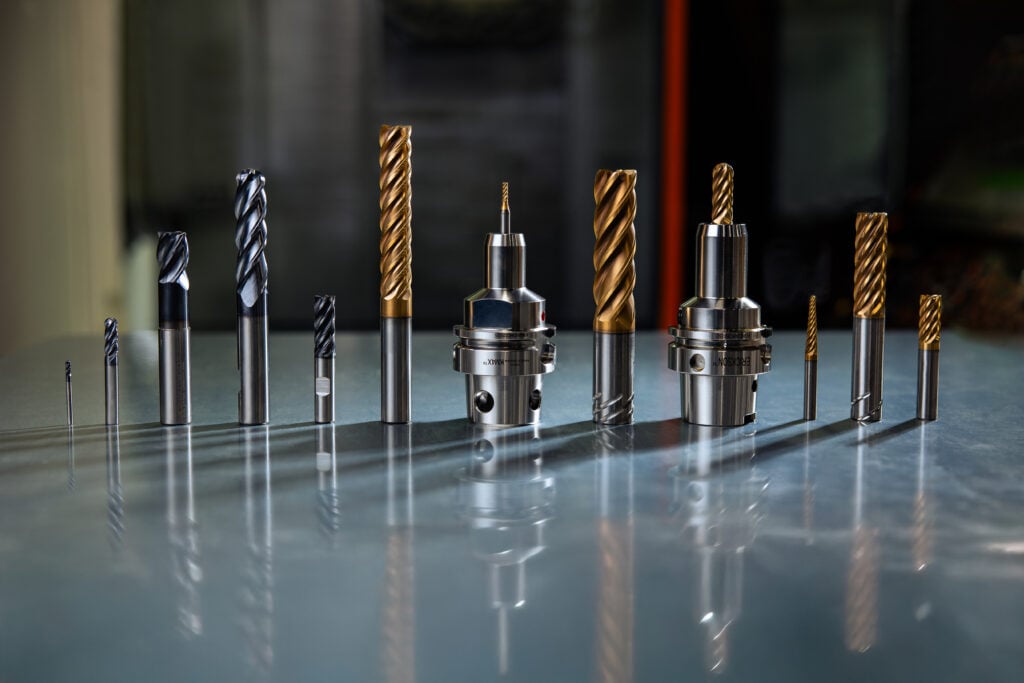
The output is deliberately granular. Every operation is quoted at the level of the individual tool, so that tooling cost and cutting time combine into a cost per part that is broken down by operation. “If the first phase needs ten operations and eight tools, the customer knows exactly what each tool contributes to their production cost before they commit,” Fiorenzo explains. “Then they can decide whether to take the whole process or just part of it. That visibility of the full cost picture before a single chip is cut is the heart of the proposition.”
Similarly, engagement doesn’t end at the quotation. If the customer proceeds, the engineering team accompanies an application engineer to the shop floor for implementation, first helping to transfer the process into the customer’s own programming software, then standing beside the machine for as long as it takes. “We can stay one day, two days or two weeks; we don’t have the pressure of the sales side,” says Fiorenzo. “This team is fully dedicated to supporting the customer, and we only leave when what we developed on paper has been put into action.” It is, as the team’s own documentation puts it, an eight-step journey from reviewing customer requirements through to tool assembly and presetting, from concept to preset.
The carbide question
Over every conversation in metal cutting right now hangs the cost of carbide, driven by the soaring price of ammonium paratungstate (APT), the tungsten precursor at the root of the supply chain. “APT costs have increased, so the main focus for our customers is reducing cost,” says Cellier. “There are two levers. You either decrease cutting time to reduce the hourly machine cost, or you reduce the carbide content per part. That’s exactly why we have more aerospace work today. Costs are rising, so customers are finally rethinking the way they work.”
Kennametal has several options for customers. One solution is regrinding. Rather than scrapping a solid-carbide drill or end mill after use, the company is promoting regrinding partnerships with short lead times to extend tool life. Another solution is a modular tool format that pairs a carbide head with a steel or heavy-metal shank. Another solution is recycling through a carbide buy-back scheme that addresses both cost and sustainability pressures. The third, and most strategic, is design itself. “The end goal is to minimise the size of the carbide inserts in our products,” says Fiorenzo. “That requires new production capability, and our R&D teams are already working on solutions in milling and drilling to reduce the carbide mass. However, there are physical limits that depend on the size of the component, but that’s another direction.”
Reading the industry
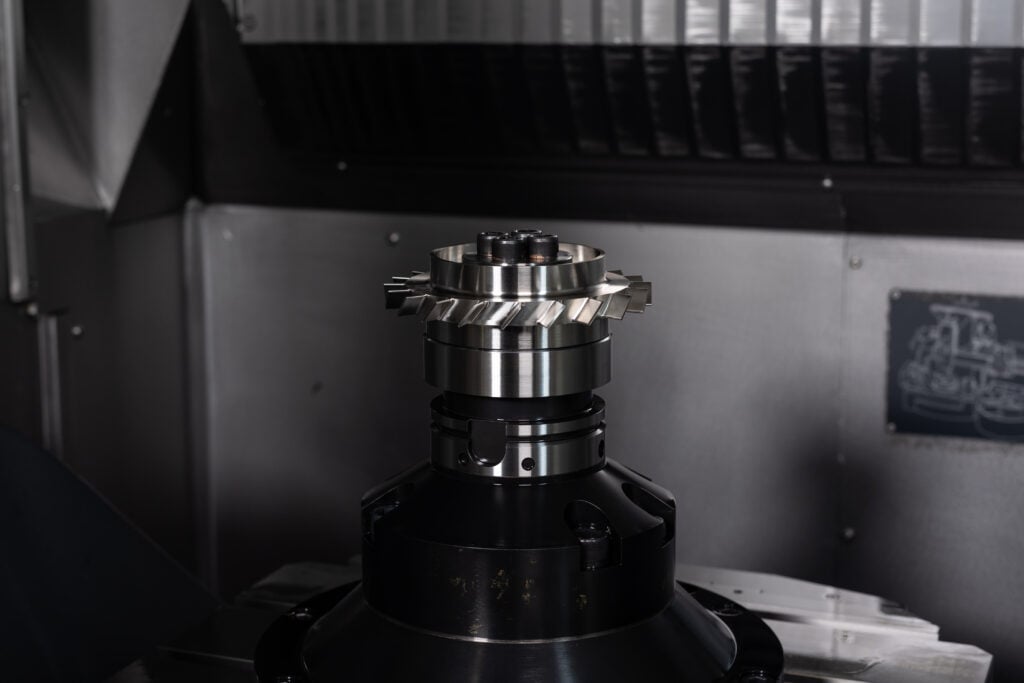
The team is clear about where the aerospace industry is and isn’t heading. With no new airframes planned by Airbus or Boeing in the near term, and no new engine lines due over the next few years, near-term work focuses on optimising existing programmes rather than on novel materials or printed parts. The genuine bottleneck, Fiorenzo argues, lies in the engine. “The issue isn’t demand; it’s production. The bottleneck is the engine components, and as a company, we’re addressing it head-on. For example, our HARVITM line is continuously evolving, HARVI IV, is an excellent SCEM platform designed for machining challenging aerospace materials. Looking further out, we have dedicated engineers who work with the AMRC on a five-to-ten-year horizon, exploring new materials, new manufacturing methods and unconventional tool geometries.” It is this ‘outside-the-box’ thinking that produced Kennametal’s large additively manufactured PCD tooling portfolio, which is leading the automotive industry.
If there is a single philosophy that ties the offer together, Cellier sums it up bluntly. “There is no good tool and no bad tool. There is always the right tool for the right environment. Set-up rigidity, clamping, coolant and strategy all determine whether a tool performs, which is why the team analyses the whole process rather than swapping parts in isolation. Most customers know their parts better than we do, and we know our tools better than they do. The job is to find the common ground between the two and to adapt to the situation, because changing a tool is far easier than changing a setup or a machine.”
Under the pressure of demand and costs, the aerospace industry is finally learning to count production seconds and minutes. It’s something the automotive industry has done for decades. The pragmatic, solution-driven approach over a product-driven strategy will likely prove to be Kennametal’s sharpest edge.