

06:08

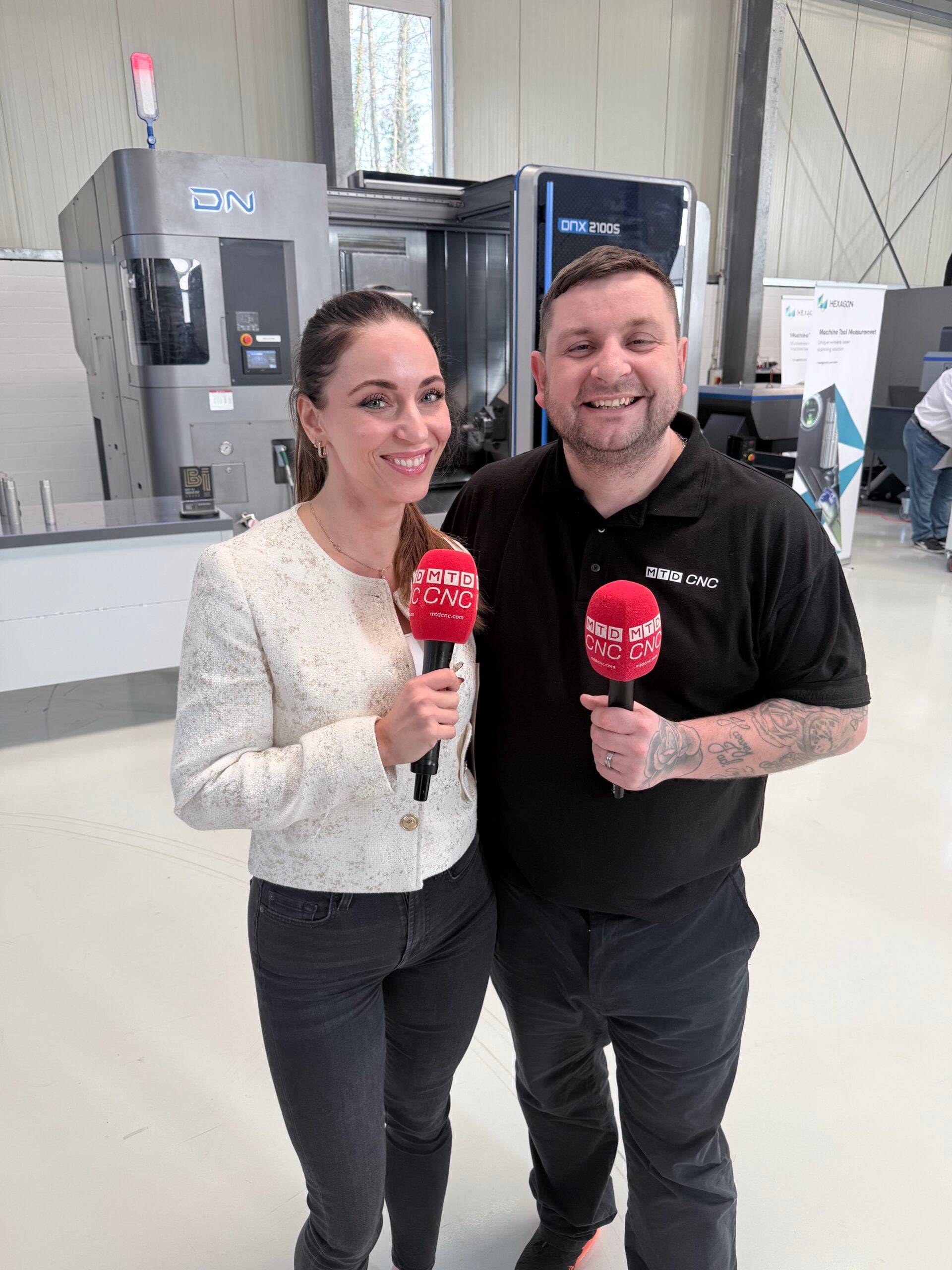
When MTDCNC presenter Tom Skubala arrived at MSC’s UK Technology Centre to make a few parts, he tested MSC’s EDGE cutting tool line on a Hurco machining centre in the process. The brief was simple. He had to run the solid-carbide tooling, firstly at the ‘book data’ for the products – and then push the tools to the limits and give brutally honest feedback on camera.
With more than 10 years on the shop floor as a machinist, Tom said: “I’ve used some top of the range tools, right the way down to tooling that should never have been made.” Working alongside MSC’s Kasra Mehraky, he set out to cut a demonstration part from H13 tool steel using EDGE 16mm and 10mm end mills, drills, a ball nose and a chamfer tool. Already familiar with Hurco machines, the first run at MSC’s published data was to get Tom comfortable in his surroundings, before ramping the speeds and feeds up to the limit of the machine’s manual overrides.

Tom’s opening exchange set the tone: “I have programmed this off your book data, which is quite aggressive. But I’ve actually got two of these parts to run. So I’m going to run one on your book data, but then one on my own data, which I’m not going to tell you about. Now, do you think that your tools will get through it?”
Kasra didn’t blink: “Absolutely. If you’ve run it based on our book data, definitely. And we’ve pushed it even further than that, so I’m pretty confident the tools will do it.”
Designed by engineers, for engineers
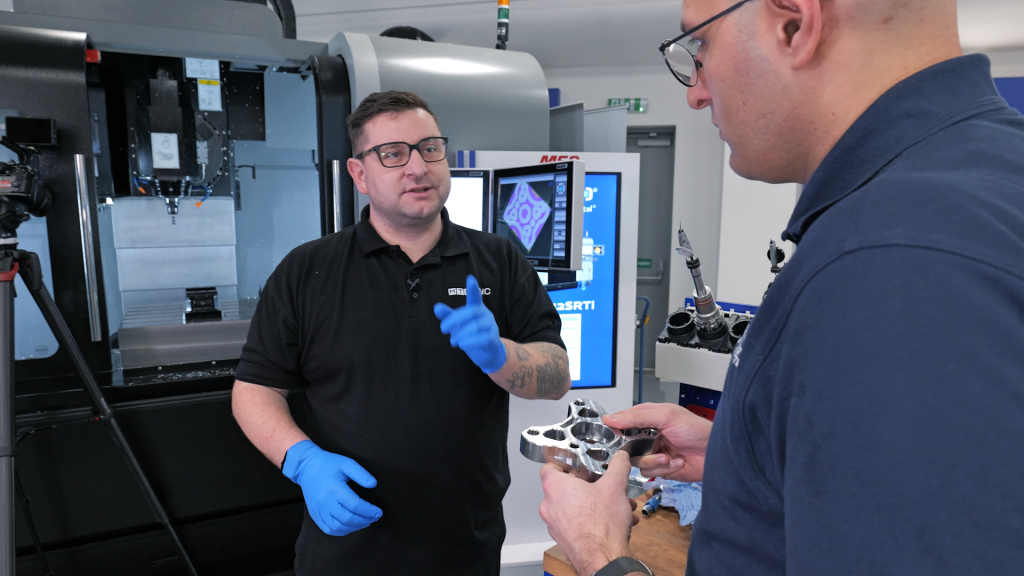
Before any chips flew, Kasra explained the engineering thinking behind the tools to Tom. “We designed these tools in-house, with application engineers nationwide based on customer needs. It wasn’t the first version; it involved extensive testing. For instance, we started with non-variable pitch and helix, tested, and observed chatter and vibration. We then added variable pitch, helix, and corner protection, and found our coating better protects the tool than competitors.”
On the drills, the decisions were equally deliberate: “We’ve got 5XD through-coolant, 3XD without through-coolant, because you don’t really need through-coolant in 3xD.” The aim of the wider EDGE range, Kasra explained, is consolidation in the carousel: “A lot of the tools out there are quite specific for a single application, and we wanted to help our customers rationalise their tooling. We came up with this idea that you can pretty much do 80% of the jobs with only 20% of the tools.”
Playing by the book
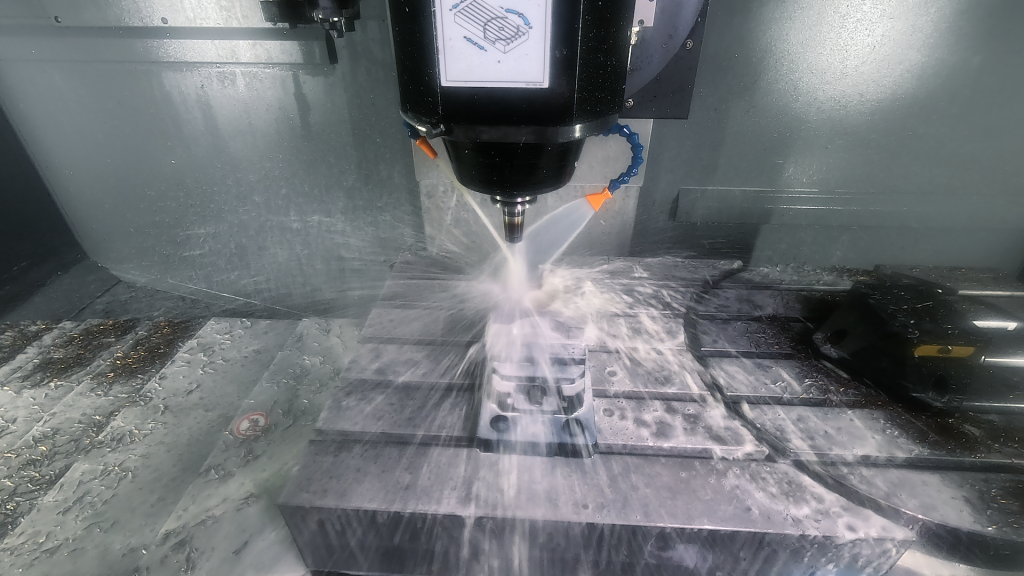
Programmed in Fusion 360 from MSC’s published cutting data and deliberately running dry so the camera could see the swarf, Tom started cautiously. “I just want to make this crystal clear before we start, for 90% of this program – I’m not using coolant. If I were doing this in a work environment, I’d be using coolant. But if I use coolant, we won’t see anything.”
The 16mm 4-flute end mill was immediately put into service as a face mill because none is currently in the EDGE line-up. It settled in after a 10% increase in spindle speed to remove a touch of vibration on the heaviest pass. The reaction was immediate. “That sounds really nice.” While helical-interpolating into a pocket, Tom was clearly surprised: “Oh great, it’s silent. You can hardly hear it. I think another 10% on the spindle will make that even quieter. This is actually H13, so it’s not just any mild steel.”
Chip control drew the same excited response. “The chips are coming off a nice golden colour. That’s coming off beautiful, absolutely golden. I’ve used a lot of end mills in my time that would not have done that; they would have really struggled with that cut. It’s quite a small pocket and quite a big end mill, but the chip evacuation is beautiful.”
Dropping in the 10mm flat bottom end mill to finish the top face at a 75% step-over, Tom was happy with the surface left behind. “I’ll take that finish. That’s not bad, is it? And that’s been done with an end mill. There are no tool marks. You can’t feel any tool marks between the passes, which is always good.” Kasra’s one-line verdict on the first part, run from end to end on book data and dry: “A thing of beauty.”

Pushing to the EDGE…maybe…
For the second part, Tom kept the same tools but increased the surface speed and chip load by two times on the program. After running it for a few seconds, Tom incrementally climbed in steps, firstly running +10%, then +15%, then up to 125% feed – before settling on 150% feed rate and 150% spindle speed increases, the limit of the Hurco’s manual override. “Three times faster than the book data. That’s pulling a bit of spindle load now, though. It’s at 18% spindle load, and that’s doing 15% step-over, but 125% on the feed.” Kasra, watching the swarf, said: “On H13, cutting dry with a 16mm cutter, that’s impressive.”
Even at full cut, long, golden chips were streaming out of the pocket. “Look at the colour, absolutely golden. That’s where I think it sits right, because they come out gold and they turn purple when they hit the bed.” Kasra adds: “Well, that’s what you want – heat in the swarf and not in the part, and not in the cutter.”
The variable-pitch, variable-helix geometry kept chip evacuation clean even when Tom pushed harder again. “It’s like that bubbling effect. It’s getting all the swarf out, which means it’s not recutting its own chips.” Kasra confirmed the design intent: “That’s the pitch we’ve designed into the tool. It’s evacuating the swarf – especially when you go into a deep pocket.”
By the time Tom was finishing pockets with the same end mill that had been roughing them, the override was pegged at 150% / 150%. “We can’t physically go any further on this machine. The machine is maxed out on override controls, and I still think there’s more to give in that tool.”
Drills, ball nose and chamfers – silent running
The EDGE 5XD through-coolant drill produced one of the biggest reactions of the day. Plunging straight into H13 with no spot drill and no pecking, Tom could barely register that the tool was cutting. “Straight through. One go, no pecking, no spot drill – straight in.” On a 10mm drill at 150% feed, and you can’t hear it.” Kasra interjects: “Oh, it’s absolutely silent.” The 2-flute end mill, used as a flat-bottom drill on the next operation, registered just 1% spindle load on the plunge.
The 4-flute ball nose handled the radii with the spindle pegged at its 12,000rpm ceiling and feed near 6m/min, and the chamfer tool finished off the part at the same 150%/150% – drawing Kasra’s most enthusiastic line of the morning: “Normally, if you run your chamfer too fast, you get a burr – but nothing, nothing at all.
The verdict
Side-by-side, the two parts – one cut on MSC’s published data, and the other one cut with the Hurco’s overrides at the limit – were indistinguishable. “To be honest, they look identical to me. They absolutely look identical,” Tom said. “Even if you look at the finish, there’s no difference.”
For Tom, the standout point was that the same 16mm 4-flute end mill had roughed the pockets, finished the outside walls, and faced the top of the part. “I’ve used the same tool to rough the pockets and also finish the outside. You’d get quite a lot of people using a roughing cutter and a finishing cutter. I’ve been able to bring that down to one tool, and I don’t think you can complain.” Kasra says: “That’s the whole mindset – it’s about doing more with fewer tools. It’s the 80/20 rule. You want to do more roughing and finishing with the same tool that’s already in the carousel. It reduces tool changes.”
On the commercial point, Kasra was equally direct: “It’s got an amazing cost per part. The tools are at a very, very fair price – they’re not up there in terms of price, but you can see the performance is right up there.”
Tom’s closing line captured why he was prepared to put his name to the trial. “It’s definitely opened my eyes to how good this is. MSC is a distributor, not a tooling manufacturer, so you expect tools from tooling manufacturers to be good, but from a distributor you may not think like that. The difference is this place, the tech centre for testing tools. They’ve got the experience of being a distributor, but they’ve also got the expertise of their staff – not just engineers, but machinists who’ve been on the shop floor, seen what their customers need, and brought it all into this new series of tools.”
With Tom finally asking whether he should ever be let near a machine again, Kasra delivered the line of the morning: “Yes – absolutely, as long as you’re using EDGE. You proved that you can run the tools as fast as the machine can go.”