

Titanium alloys and nickel-based superalloys are widely used in aerospace applications for their high mechanical strength, corrosion resistance, and thermal stability under extreme operating conditions. Despite these advantages, these materials pose significant machining challenges that directly affect tool life, surface integrity, and overall process stability.
Application knowledge developed by ISCAR’s engineering teams, together with ISCAR cutting tool technologies, addresses dominant wear mechanisms, heat generation, and vibration. The focus is on achieving improved tool life, dimensional consistency, and process efficiency in aerospace manufacturing environments.
Aerospace components are often manufactured from materials engineered to withstand high mechanical loads, elevated temperatures, and aggressive environmental conditions. Titanium alloys and nickel-based superalloys offer high strength-to-weight ratios and excellent thermal resistance, making them essential for structural components, engine parts, and other critical assemblies. However, these same properties lead to poor machinability compared with conventional steels or aluminium alloys. Low material removal rates, accelerated tool wear, and stringent quality requirements significantly increase overall manufacturing costs, particularly when machining high-value aerospace components.
Titanium alloys such as Ti-6Al-4V have low thermal conductivity, about one-sixth that of steel, causing heat generated during cutting to concentrate at the tool–workpiece interface. This localised heat accumulation accelerates flank wear and can cause plastic deformation of the cutting edge. Titanium also has a strong chemical affinity for cutting tool materials, increasing the likelihood of built-up edge formation and material adhesion, particularly at lower cutting speeds. To address these challenges, ISCAR employs fine-grained carbide substrates and advanced PVD coatings across tool families such as HELIDO, CHATTERFREE, and solid carbide cutters, which are designed to maintain edge stability while minimising friction and heat generation.
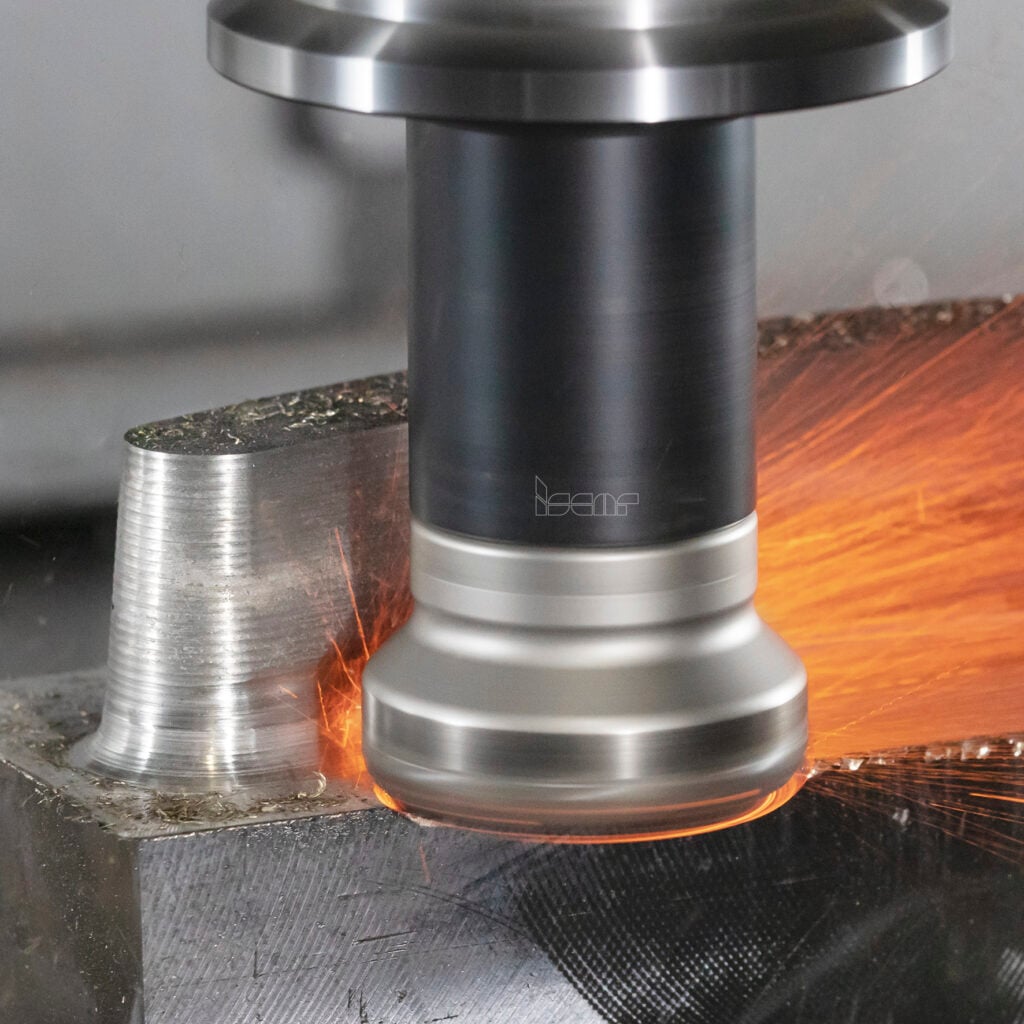
Nickel-based superalloys present a distinct yet equally challenging set of machining conditions. These materials retain high strength at elevated temperatures and exhibit pronounced strain hardening during plastic deformation. In machining, this leads to increased cutting forces, rapid work hardening ahead of the cutting edge, and aggressive wear mechanisms, including notch, diffusion, and crater wear. Cutting speeds are typically limited to control heat generation, further reducing productivity. ISCAR addresses these conditions with reinforced insert geometries and thermally stable coatings for turning and milling systems, including SUMOTEC grades and the HELITURN and LOGIQTURN tool platforms, which are engineered to deliver predictable wear behaviour during prolonged cutting cycles.
Machining processes for aerospace components must meet demanding requirements that go beyond dimensional accuracy. Typical tolerance bands are typically within ±5 to ±10 microns, while surface integrity must be controlled to avoid micro-cracking, smeared material, or tensile residual stresses that could compromise fatigue performance. Many aerospace components feature thin walls, complex geometries, or interrupted cuts, all of which increase sensitivity to vibration and tool deflection. ISCAR’s variable-pitch and variable-helix cutter designs, used in milling families such as CHATTERFREE and HELIMILL, are intended to suppress chatter and improve process stability under these conditions.
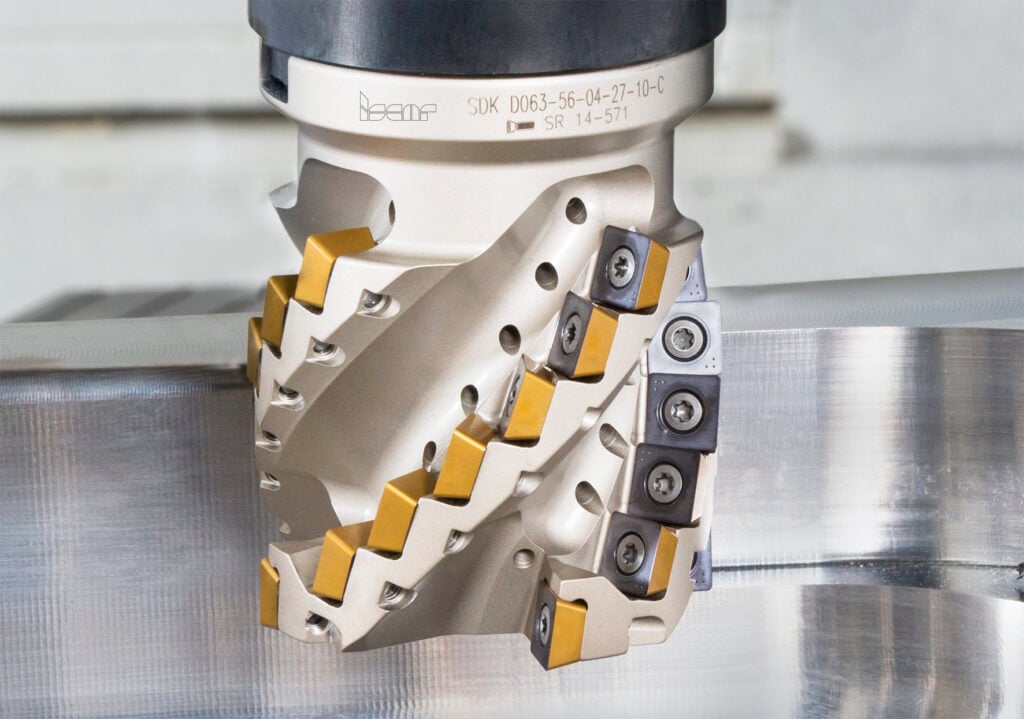
Cutting tool substrates used in aerospace machining must balance hardness and fracture toughness to withstand high mechanical and thermal loads while resisting edge chipping. Fine-grained carbide grades are commonly selected to provide sufficient wear resistance without compromising toughness, particularly in interrupted or unstable cutting conditions. For titanium and nickel-based superalloys, PVD coatings developed under ISCAR’s SUMOTEC technology are frequently applied for their strong adhesion, thermal stability, and ability to reduce friction at the tool–chip interface (Fig. 1). These coatings act as a thermal barrier, slowing heat transfer into the cutting tool and promoting more predictable wear patterns.
In milling operations, variable-pitch and variable-helix cutter designs are used to disrupt harmonic frequencies and reduce chatter, which is especially important when machining thin-walled aerospace components. In titanium applications, high-feed milling strategies, implemented with tools such as HELIMILL HFM, allow reduced radial engagement and higher feed per tooth, lowering cutting forces and limiting heat generation. For nickel-based superalloys, milling strategies emphasise stable cutter engagement and uniform chip thickness to minimise localised wear, particularly at depth-of-cut transition zones where notch wear is most likely to occur.
Turning and parting operations on aerospace alloys require rigid insert geometries and secure clamping systems to manage high cutting forces and thermal loads. ISCAR turning systems, such as HELITURN, JETCUT, and LOGIQTURN, feature robust insert seating and optimised edge preparations to ensure stable cutting. Effective chip control is critical, particularly in titanium machining, where long, continuous chips can interfere with the cutting zone and damage the workpiece or tool. In superalloy turning, insert geometry and edge preparation are central to controlling notch wear and extending tool life during long, continuous cuts.
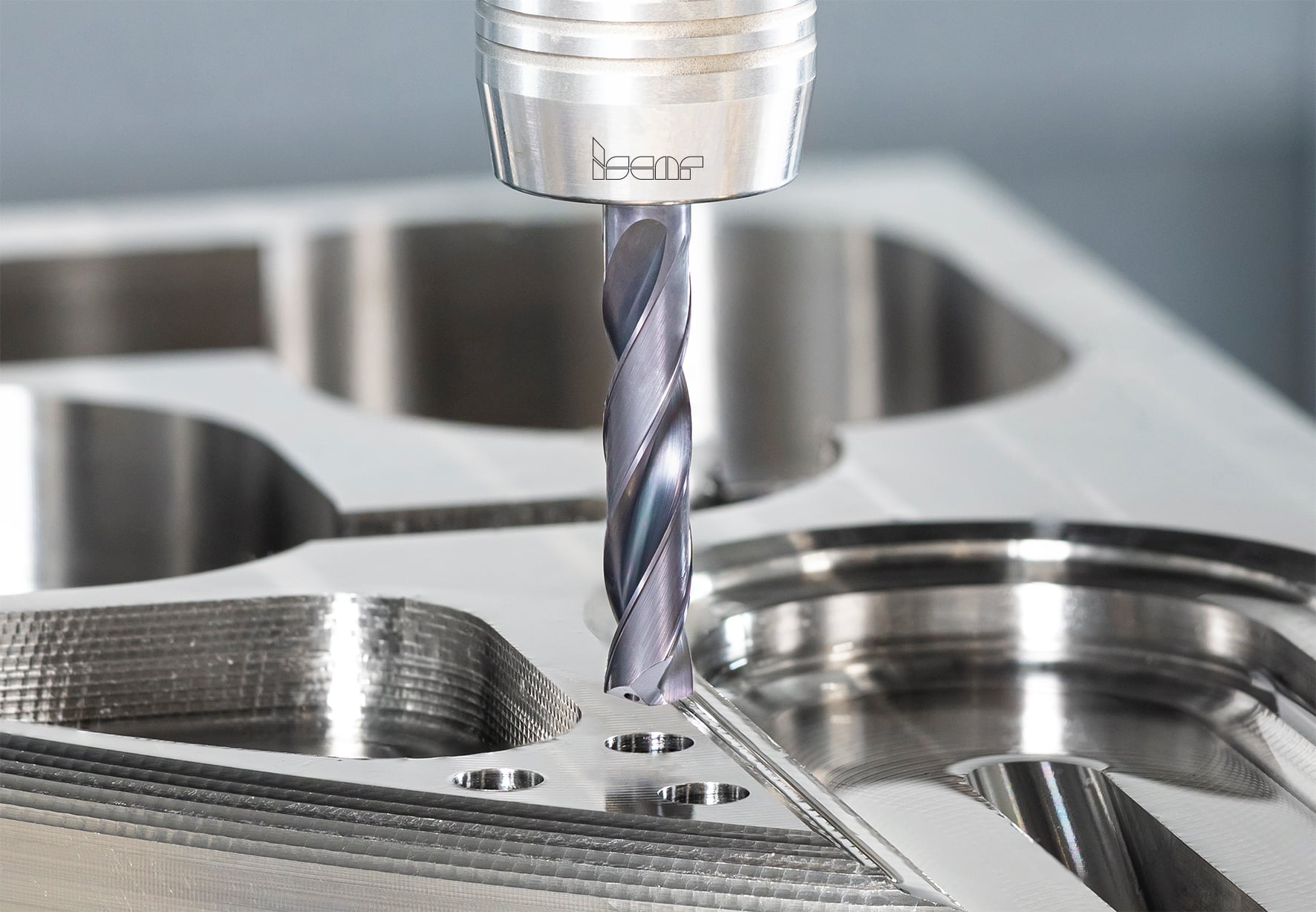
Hole-making operations (Fig. 2) are a critical aspect of aerospace machining, as hole quality directly affects assembly integrity and fatigue performance. ISCAR’s drilling solutions, such as SUMOCHAM and LOGIQ-3-CHAM, together with indexable systems like DR-TWIST and TRIDEEP, provide optimised point geometries and internal coolant delivery to improve chip evacuation and reduce thermal load at the cutting edge. These solutions support consistent hole quality across a wide range of aerospace materials and component geometries.
Tool life in aerospace machining is governed by a complex interplay of cutting parameters, tool geometry, coolant application, and machine tool rigidity. Production data and empirical studies consistently show that even small reductions in cutting speed, typically 10 to 20 per cent, can substantially improve tool life when machining nickel-based superalloys, without a proportional increase in cycle time. ISCAR tooling strategies emphasise predictable, repeatable wear behaviour rather than maximum theoretical tool life, as predictability simplifies tool-change planning and reduces the risk of sudden tool failure on high-value components (Fig. 3).
In a production environment machining titanium structural components for aerospace assemblies, excessive flank wear and an inconsistent surface finish were observed during peripheral milling. By applying a variable-helix ISCAR milling cutter, optimising the coating selection, and adjusting the cutting parameters, tool life increased by more than 30 per cent. Surface roughness was reduced to within specification limits, resulting in improved process stability, reduced scrap, and less operator intervention.
The integration of digital tool libraries with CAM systems is increasingly important for aerospace process planning. ISCAR’s digital tooling platforms provide standardised tool data that supports consistent tool selection and parameter definition, reducing setup variability and shortening process development cycles. Simulation and verification tools further enable the evaluation and optimisation of cutting strategies before implementation on the shop floor, thereby lowering the risk associated with machining high-value aerospace components.
Improved tool life and stable machining processes directly reduce scrap rates and energy consumption per component. Given the high cost of aerospace raw materials, even marginal reductions in scrap can yield significant economic benefits. Efficient machining strategies also support sustainability objectives by minimising material waste and maximising tool utilisation.
Machining titanium and nickel-based superalloys for aerospace applications requires careful alignment of material behaviour, tooling technologies, and cutting strategies. Data-driven tool selection and process optimisation, supported by ISCAR’s aerospace-focused tooling portfolio, deliver measurable improvements in tool life, surface integrity, and process reliability. ISCAR’s strategies provide a technical framework for addressing the inherent challenges of machining aerospace alloys while maintaining compliance with stringent quality and performance requirements.