

08:24
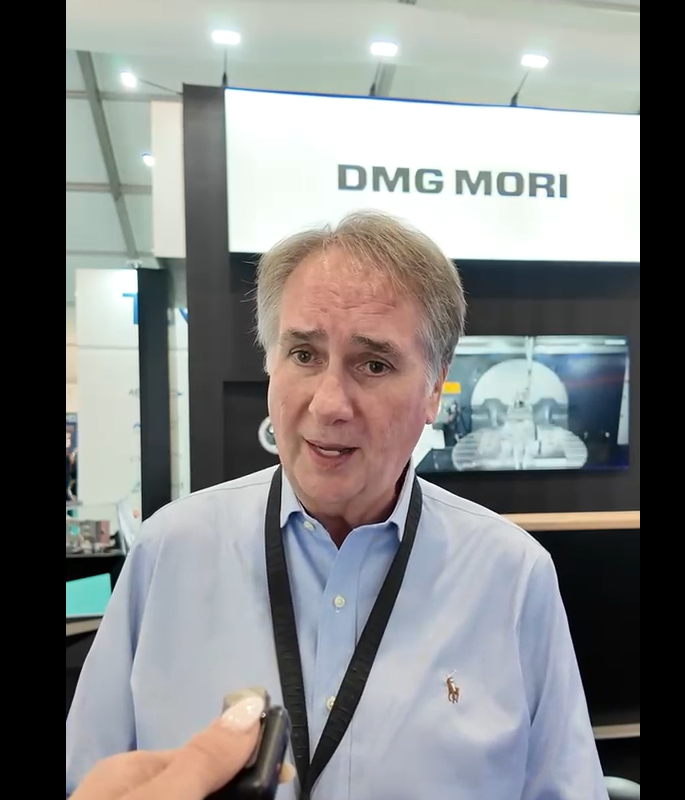
As civil aviation pushes toward quieter, cleaner and more efficient flight, engine manufacturers are rethinking how future turbines are built. The next generation of propulsion systems will combine lighter fan assemblies with hotter-running cores, demanding a sophisticated mix of materials that span composites, titanium and advanced superalloys. This shift is transforming the machining landscape, as Jon Clarke, Industry Segment Engineer at Sandvik Coromant, explains.
In a nutshell, less weight, less fuel to burn. Aerospace has grappled with the need to seek out effective lightweighting solutions to cut costs and reduce emissions. But this brings a set of machining and design challenges.
For aerospace manufacturers, the challenge is no longer only cutting difficult materials — components are becoming larger, thinner and more complex, all while aiming to maintain the same performance expectations.
Rethinking engine architecture
Emerging architectures, such as geared-fan and ultra-fan concepts, are designed to run hotter at the core to improve fuel burn, while driving larger, lighter fan systems to boost bypass ratios. This is supporting a shift towards a more complex mix of materials. These include lightweight options such as titanium and advanced composites in the cold section, and heat-resistant superalloys (HRSAs) capable of withstanding temperatures up to 1,000°C in the hot section.
Additionally, the growing use of large rotating structures such as blisks creates new challenges in maintaining structural integrity and aerodynamic precision. These contrasting demands of combining thin-wall, vibration-sensitive components with dense, highly stressed alloys is reshaping the requirements placed on manufacturers.
Machining is crucial to facilitate this transition, acting as the crucial link between ambitious efficiency goals and the exceptional performance expected from modern efficient engines.
Lightweighting design considerations
This drive to cut weight and boost efficiency is reshaping how engine components are designed and manufactured. Lightweighting is now a defining feature of modern propulsion systems, prompting greater reliance of thin-wall geometries, integrally bladed rotors and composite-metal stacks in both fan assemblies and casings. While these materials reduce inertia and support the larger, lighter rotating structures required by new engine architectures, they also cause a new set of machining challenges.
For instance, the low thermal conductivity of titanium can cause heat build-up and distortion, thin sections are prone to vibration, and composite structures risk delamination or fibre pull-out if cutting forces are not precisely controlled. Maintaining surface integrity is also crucial for rotating parts, as even the smallest deviations can affect aerodynamic behaviour. As a result, manufacturers are placing greater emphasis on techniques that enhance process stability and enable accurate machining of flexible, lightweight components.
With structures becoming thinner and more flexible, maintaining consistent machining performance becomes increasingly difficult. Small differentiations in load, heat or vibration can cause a thin-wall titanium casing or composite rotor structures to deflect, affecting both dimensional accuracy and surface finish. This makes process security equally important as tool capability.
To address this, many manufacturers are now adopting digital monitoring systems to provide real-time visibility of conditions in the cutting zone. Platforms such as CoroPlus® Machining Insights enable engineers to track parameters including spindle load, temperature and tool engagement during demanding operations, helping them detect early signs of instability before they result in scrap. By combining lightweight materials with data-driven process control, engineers can maintain the precision required for large fan structures and thin-walled components while still achieving the weight savings needed for next-generation engine efficiency.
Machining high-temperature components
While lightweight materials dominate the cold section of modern engines, the hot section poses a distinct manufacturing challenge. As operating temperatures rise to improve thermodynamic efficiency, components such as turbine discs, blisks and rotating seals increasingly rely on HRSAs that maintain strength, creep resistance and structural stability at extreme temperatures.
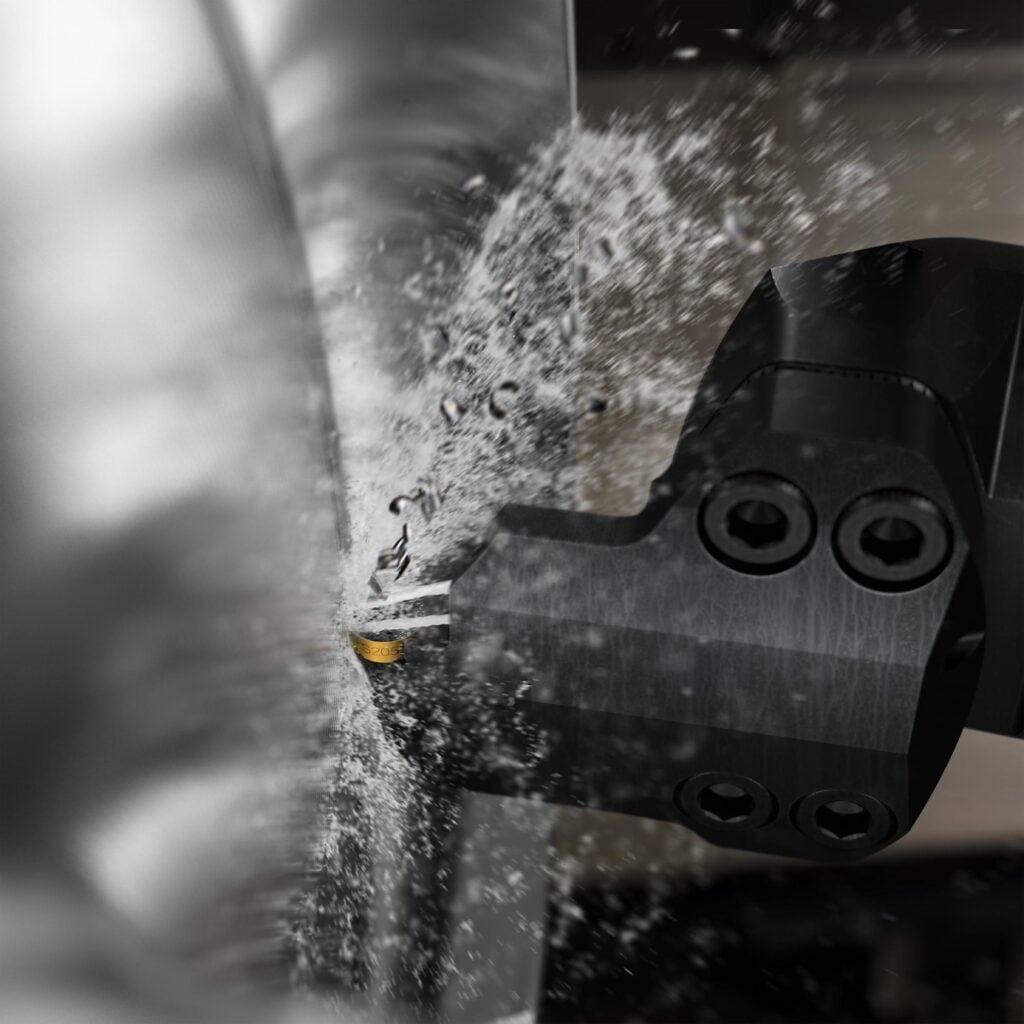
Although alloys are crucial to future engine performance, their strength, hardness and low thermal conductivity make them significantly more difficult to machine. As heat concentrates in the cutting zone, tool wear accelerates, so finishing operations require exceptional stability to maintain tight tolerances on high-value parts.
To manage these pressures, manufacturers must adopt machining approaches that prioritise process security, heat control and predictable tool behaviour.
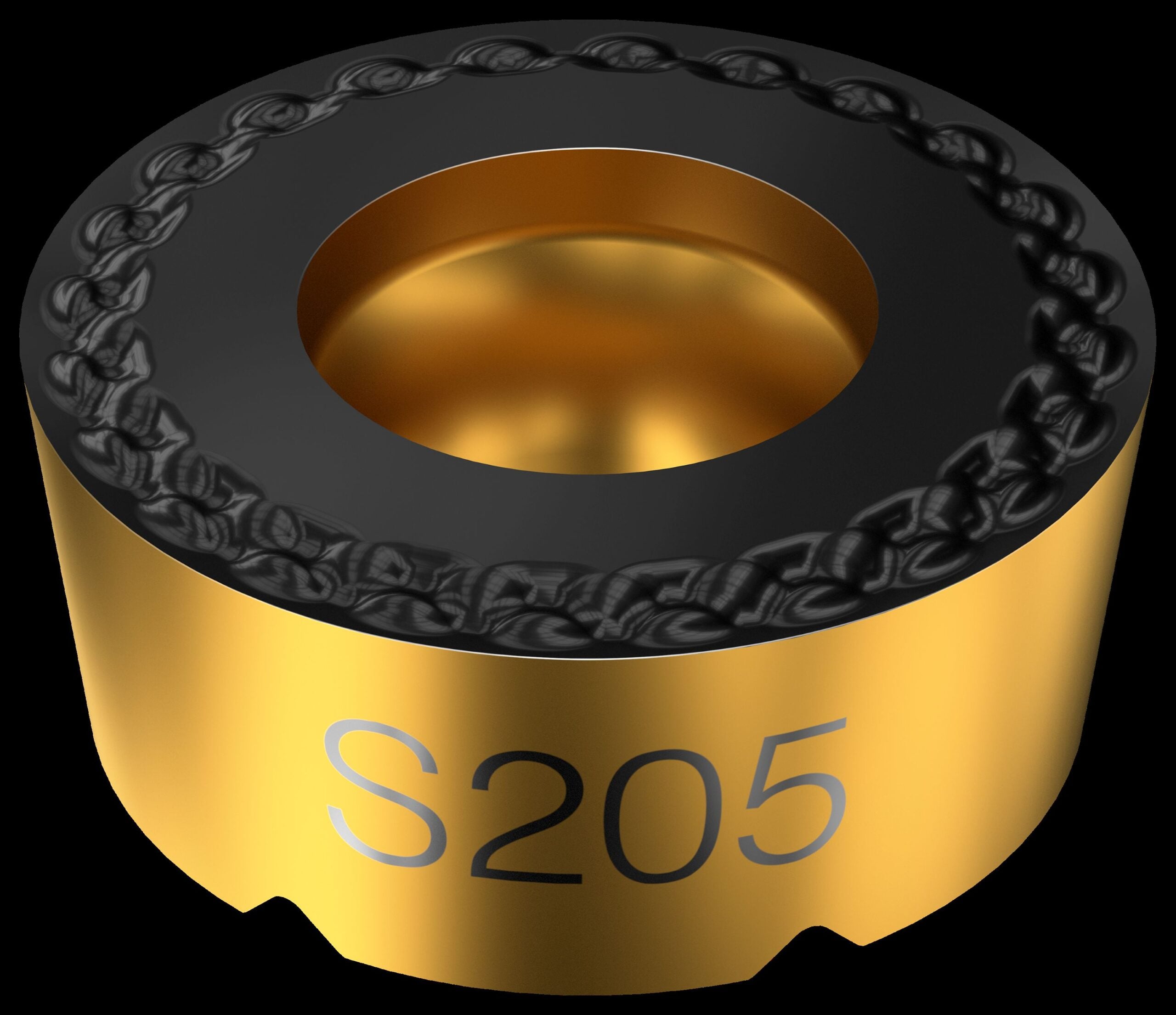
For example, Sandvik Coromant’s S205 chemical vapour deposition (CVD) grade was developed specifically for final-stage machining of superalloy components, where surface integrity is critical. Delivering 30% to 50% higher cutting speeds in semi-finishing and finishing applications, the grade offers increased productivity without compromising tolerances and surface conformity.
Secure toolholding systems also play a key role. Solutions such as the CoroTurn® 107 rail-interface holder provide stability during profiling and reduce the risk of insert movement on complex geometries. Combined with real-time monitoring and predictive techniques to track load, vibration and temperature throughout the cut, these strategies ensure that machining remains a vital enabler of the performance gains expected from tomorrow’s ultra-efficient engines.
As future engines become lighter at the front and hotter at the core, manufacturers must contend with machining demands that pull in opposite directions. Secure processes, smarter tooling and real-time insight are becoming essential to protect high-value parts, achieve the precision these designs demand and keep pace with the ambitions of tomorrow’s aircraft.