
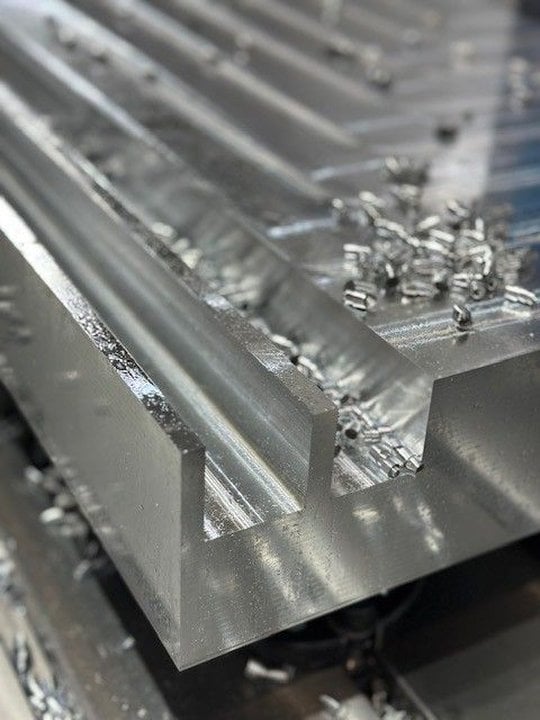
Understanding groove milling challenges is essential for those in the manufacturing industry. This complex operation involves full engagement, restricted chip evacuation, and significant radial forces, all of which can result in vibrations, chip congestion, or dimensional deviations. These issues highlight the need for stability in the milling process.
Common obstacles in groove milling are often rooted in unsuitable geometries, improper cutting parameters, unstable clamping, and uneven cutting edge loading. Addressing these challenges is critical for ensuring process stability and success.
The key to overcoming these challenges lies in using robust cutting edges and secure clamping. Suitable geometries enable controlled chip formation, while stable tool holding and reduced protrusion further enhance process stability. Choosing the right substrates and coatings can also make a significant difference.
When these elements are combined with an appropriate tooling strategy, manufacturers can achieve higher feed rates, cleaner chip formation, and stable processes. This stability is crucial for precision in groove milling. By focusing on the right combination of stability, geometry, and chip control, groove milling becomes more predictable, leading to consistently good results.
For more insights into advanced milling techniques and solutions, ZCC Cutting Tools Europe GmbH continues to offer expertise and innovative products to the manufacturing industry.
View more news from ZCC Cutting Tools Europe GmbH