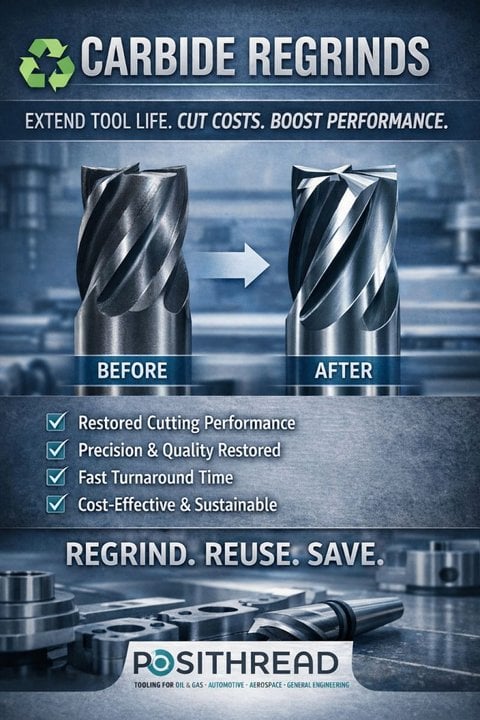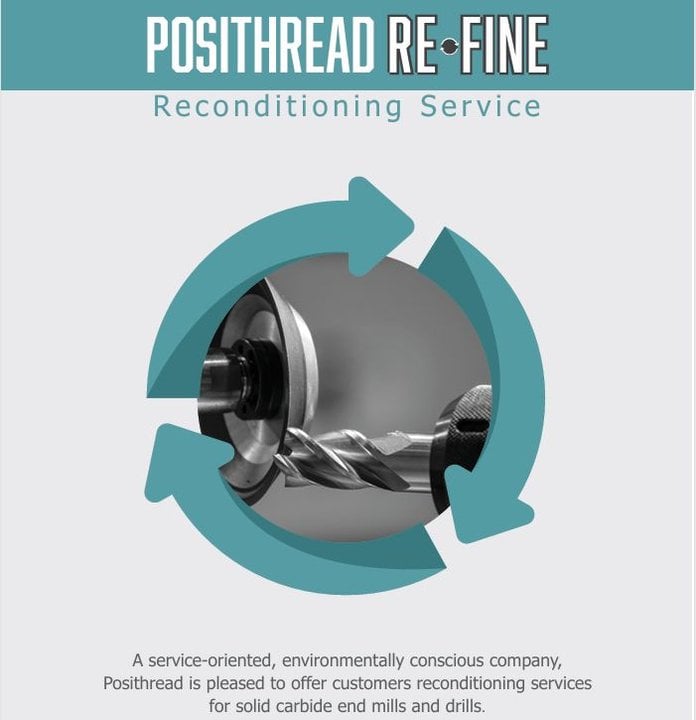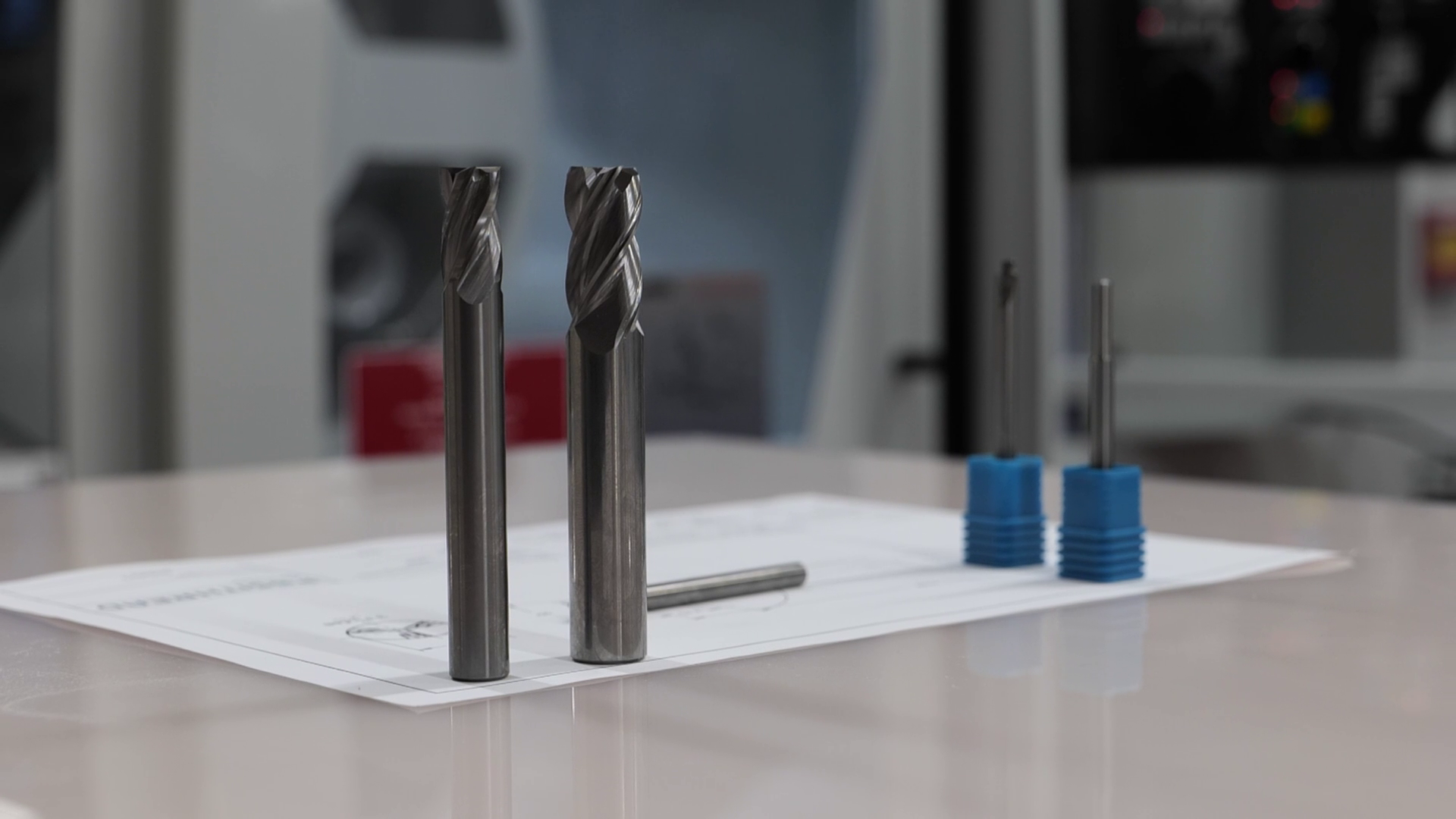

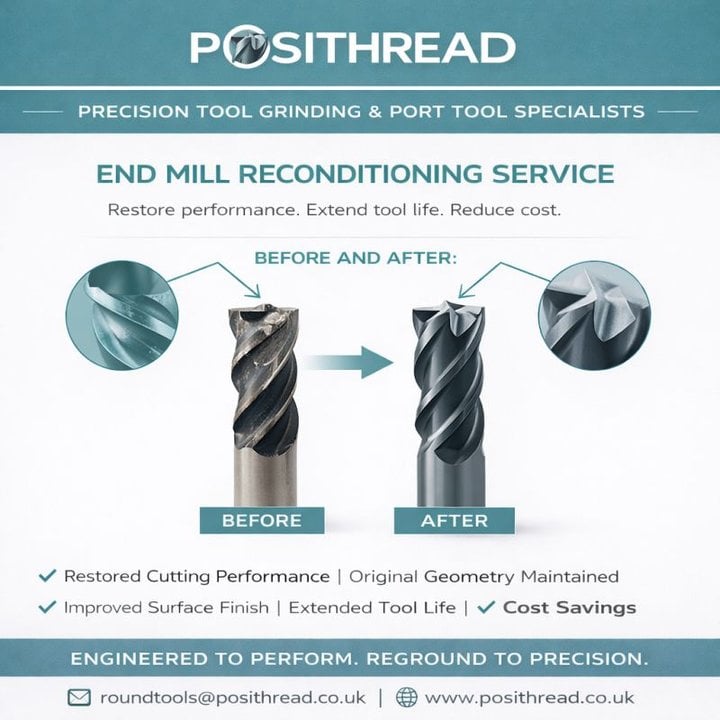
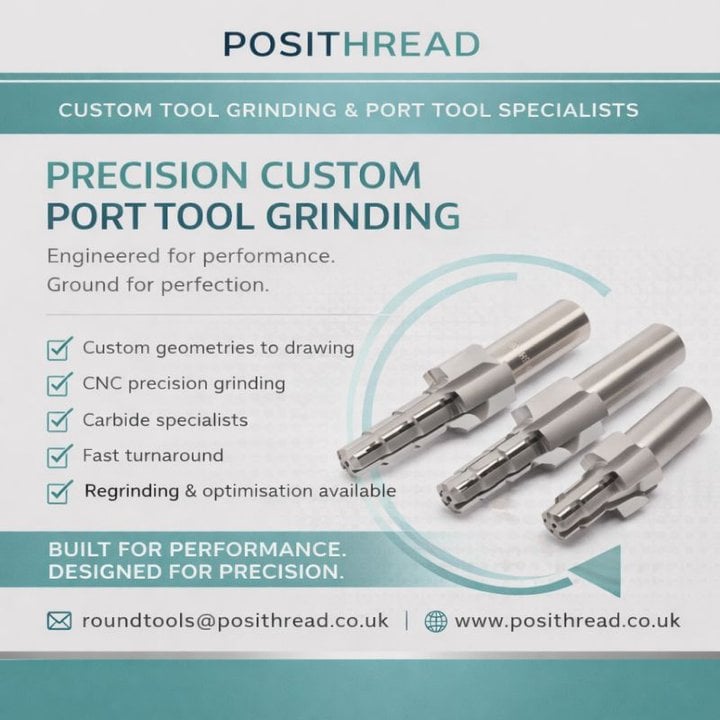
Manufacturers using carbide tooling may find an untapped opportunity for cost savings by embracing regrinding, a practice that offers both economic and environmental benefits. Instead of replacing worn tools with new ones, regrinding allows companies to restore used tools to their near-original performance at a fraction of the cost.
Regrinding carbide tools can substantially lower tooling expenses, as it often costs significantly less than purchasing brand-new tools. This process can extend the life of a tool several times, providing continued value without sacrificing the quality of the cutting performance.
One key advantage of regrinding is its contribution to sustainability. By opting for this process, companies can reduce waste, conserve raw materials, and adopt a more environmentally responsible approach to manufacturing. The reduction in waste also contributes to a company’s sustainability goals, aligning with the industry’s increasing focus on eco-friendly practices.
Additionally, regrinding offers a faster turnaround than sourcing new tools, which can improve operational efficiency. Shorter lead times mean that manufacturers can maintain consistent productivity, an essential factor in the competitive manufacturing landscape.
The combination of cost savings, performance maintenance, and environmental benefits makes regrinding a compelling strategy for any company using carbide tools. As efficiency becomes paramount, incorporating regrinds could enhance the overall value derived from tooling investments.
Manufacturers not currently utilising regrinding are encouraged to revisit their workflow and consider the substantial benefits this strategy might offer. Adapting to such practices could represent a significant step forward in both economic efficiency and sustainable manufacturing.
View more news from Posithread