30:12
In the realm of metal processing, combating oxidation poses a significant challenge. However, Laser Zentrum Hannover e.V. (LZH) is spearheading groundbreaking research to tackle this issue head-on in laser beam brazing and additive manufacturing.
The traditional presence of oxygen during metal processing often leads to the formation of oxide layers, hindering workpiece joining and accelerating component wear. In the Collaborative Research Center (CRC) 1368 “Oxygen-Free Production,” LZH researchers are pioneering an innovative solution. By introducing argon protective gas infused with a small amount of silane, they create an environment akin to an extremely high vacuum, effectively minimizing oxygen content at a fraction of the cost of technical vacuum systems.
In the pursuit of laser beam brazing without the need for flux, LZH’s Joining and Cutting of Metals group has devised a revolutionary process. By utilizing a ns-pulsed laser beam source to break the oxide layer on material surfaces, followed by brazing under a continuous-wave laser beam in a silane atmosphere, they eliminate the need for environmentally hazardous fluxes. This oxygen-free environment prevents surface re-oxidation between process steps, enabling wetting of surfaces with solder material.
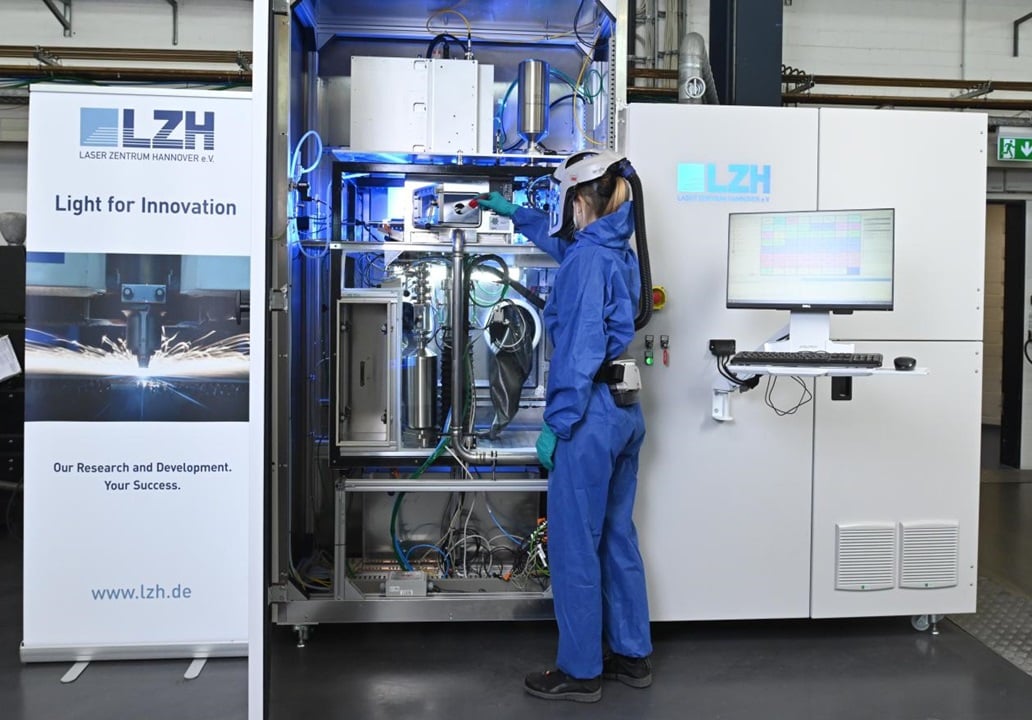
Moreover, LZH’s Additive Manufacturing – Metals group is exploring the potential of processing metal powders in an oxygen-free atmosphere through laser-based powder bed fusion of metals (PBF-LB/M). By leveraging a titanium alloy on a specially developed system, researchers aim to gain insights into process stability, reduced splattering, and improved component properties in an oxygen-free environment.
With these pioneering initiatives, LZH is revolutionizing metal processing, paving the way for more efficient and environmentally friendly production methods in the industry.
Original source from industryeurope.com
Opt in today to our newsletter