

Nikon Introduces Limited Angle CT for High-Resolution Targeted Inspection!
By Ashutosh Arora
Nikon Corporation has expanded its industrial X-ray inspection capabilities with the introduction of Limited Angle CT technology for its VOXLS and XT H 225 systems. This innovation delivers high-resolution imaging without requiring a full 360-degree sample rotation, enabling manufacturers to inspect targeted regions within larger components with exceptional clarity.
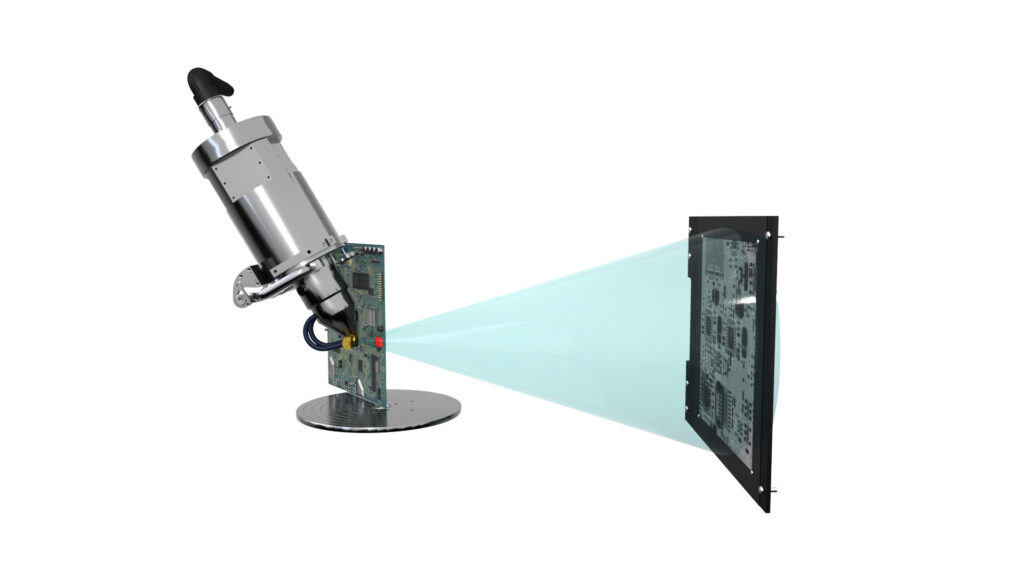
By positioning samples closer to the X-ray source, Limited Angle CT achieves higher magnification and smaller voxel resolution, making it ideal for parts with high aspect ratios or complex geometries. This capability is especially valuable for inspecting planar or intricate components such as printed circuit boards, pouch and prismatic EV battery cells, and carbon fiber parts—applications where traditional geometric magnification methods face limitations.
The technology incorporates Nikon’s advanced reconstruction algorithm, producing datasets equal in quality and accuracy to conventional CT scans despite the reduced rotation angle. Operators also benefit from fully automated scans thanks to an integrated center-of-rotation calculation, eliminating the need for manual adjustments or positioning aids.
Another advantage is speed—Limited Angle CT can deliver detailed, high-magnification scans within minutes, offering a significant time savings over traditional X-ray microscopy for similar applications.
“Limited Angle CT expands the inspection capabilities of our X-ray CT systems,” said Ben Morgan, Nikon’s X-ray product manager. “It complements other advanced techniques in Nikon’s CT toolbox, including X.Tend (Helical CT), Panel Shift CT, Tilted CT, and Scatter Correction CT, allowing users to select the optimal method for each inspection challenge.”
By offering greater versatility and precision in non-destructive testing, Nikon’s Limited Angle CT strengthens the company’s position as a leader in advanced inspection and measurement solutions for industries where accuracy, speed, and targeted analysis are critical.