

Global Shop Solutions Introduces AI Tools to Simplify ERP Workflows and Improve Manufacturing Efficiency!
Global Shop Solutions has expanded its ERP platform with two new artificial intelligence–driven capabilities aimed at removing friction from everyday manufacturing operations and improving overall business efficiency. The newly launched AI Accounts Payable Automation and AI Sales Order Entry tools are designed to reduce repetitive manual work, improve data accuracy, and allow teams to focus on higher-value activities that directly impact productivity, customer satisfaction, and profitability.
In many manufacturing organizations, administrative processes such as invoice processing and sales order entry remain highly manual, time-consuming, and prone to errors. These tasks often require skilled staff to spend hours on data entry, cross-checking documents, and correcting mistakes—time that could otherwise be invested in strategic planning, customer engagement, or continuous improvement initiatives. Global Shop Solutions’ latest AI enhancements directly address these challenges by embedding intelligence into core ERP workflows.
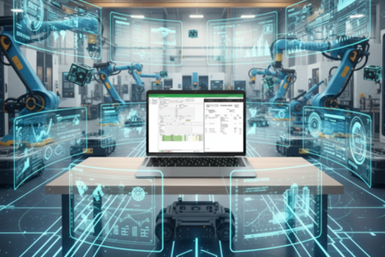
AI Accounts Payable Automation streamlines the traditionally labor-intensive invoice management process. Using artificial intelligence, the system automatically scans incoming invoices, extracts relevant data such as vendor details, line items, quantities, and pricing, and inputs this information directly into the ERP system. The solution also matches invoices against purchase orders and receiving records, significantly reducing the need for manual reconciliation. By automating these steps, manufacturers can accelerate invoice processing cycles, minimize errors caused by manual entry, and reduce administrative overhead. Faster and more accurate invoice handling also supports better cash flow management and strengthens supplier relationships through timely payments.
According to Global Shop Solutions, the goal of this capability is not just speed, but reliability. By removing repetitive data entry from the workflow, companies reduce the risk of costly discrepancies while improving consistency across financial records. This allows accounting teams to shift their attention from clerical tasks to activities such as financial analysis, cost control, and process optimization.
Complementing this is AI Sales Order Entry, which targets another critical area of operational efficiency. Sales orders often arrive in multiple formats, including PDFs, emails, and customer-specific templates, requiring staff to manually interpret and enter order details into the ERP system. AI Sales Order Entry uses machine learning to read purchase orders, identify key information, and automatically populate sales order fields. Instead of typing data line by line, users can review, validate, and make adjustments where needed, dramatically reducing processing time and the likelihood of errors.
This improvement not only accelerates order turnaround times but also enhances the customer experience. With less time spent on manual entry, sales and customer service teams can focus on communication, exception handling, and relationship building. Faster and more accurate order processing helps ensure that production schedules remain aligned with customer expectations, reducing delays and rework.
Global Shop Solutions positions these AI tools as part of a broader strategy to embed practical, easy-to-use artificial intelligence into manufacturing ERP systems. Rather than adding complexity, the company aims to make AI an invisible assistant that works in the background, improving accuracy and efficiency without disrupting existing workflows. By integrating AI directly into familiar ERP processes, manufacturers can adopt advanced technology without significant retraining or system overhauls.
As manufacturers face increasing pressure to do more with fewer resources, tools that automate routine tasks while improving data quality are becoming essential. With AI Accounts Payable Automation and AI Sales Order Entry, Global Shop Solutions is helping manufacturers modernize their operations, reduce administrative burden, and ensure their teams spend more time on work that truly adds value—delivering quality parts on time, every time.