

30:12
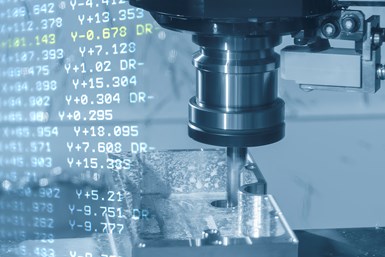
Over the years, Mike Lynch has fielded countless inquiries regarding CNC machines, many revolving around operational glitches mistaken for mechanical failures. These issues often stem from programming or operation blunders rather than equipment malfunctions, leading to perplexing machine behaviors and challenging diagnoses. Some dilemmas even involve obscure CNC functionalities unbeknownst to users.
These peculiar instances typically fall under the umbrella of altered initialized states. CNC machines automatically engage certain modes upon startup, a fact many programmers rely on, neglecting to include pertinent G codes, known as safety commands, in their programs. This oversight can have dire consequences, as evidenced by the following scenarios.
One recurring call Mike Lynch has received involves painfully sluggish feed rates on turning centers. Despite position displays indicating movement, actual motion remains imperceptible. The culprit? An erroneous subprogram calling command – using G98 instead of M98 inadvertently shifted the lathe into per-minute feedrate mode, resulting in excruciatingly slow operations.
Similarly, a user reported unusually minuscule machine motions, akin to machining a tiny workpiece near the starting position. This turned out to be a mistyped G-code issue; intending to initiate cutter compensation with G41, they accidentally activated metric mode with G21, leading to misplaced coordinates and miniature workpieces.
These peculiar issues, likely more widespread than reported, often vanish with a simple machine restart, reselecting initialized states. However, such incidents leave users bewildered, fostering misconceptions about machine reliability.
Another prevalent concern involves X- or Y-axis overtravel during initial motion commands on machining centers. Despite correct program commands, the machine veers off course. Investigation revealed inadvertent activation of axis mirror image from a previous program, rectified by disabling mirror image settings.
A different anomaly arose during hole drilling post-milling operation on a machining center. Despite accurate programmed coordinates, the drilled holes were misaligned, traced back to lingering cutter radius compensation from the preceding milling tool, distorting subsequent motions.
To prevent such mishaps, integrating a series of safety commands into programs is paramount. These commands, strategically placed at program beginnings or tool changes, ensure consistent initialized states and mitigate unforeseen errors.
Older FANUC CNCs impose limitations on compatible G-codes per command, necessitating multiple safety commands. While newer models offer greater flexibility, adherence to this practice ensures program compatibility across different machines.
Recommended safety commands for machining centers include canceling mirror image, cutter compensation, and selecting appropriate cutting modes. For turning centers, essential commands involve canceling cutter compensation, mirror image, and configuring cutting modes.
Though FANUC deems some features optional, invoking related G codes serves as a failsafe, triggering alarms for absent functionalities. By incorporating these safety measures, users can navigate CNC operations with confidence, minimizing disruptions and maximizing productivity.
Original source MMS
Opt in today to our newsletter