
Why 24-Hour Production Lines Still Don’t Run by Themselves


Friday 30 January 2026, 3:03:10 PM


In many factories, achieving continuous 24-hour production isn’t just a question of material loading. More often, the real bottlenecks appear at the output stage and in the manual processes that follow: inspection, part handling, and the space consumed by unloading and sorting operations.

Even in today’s manufacturing environments, where partial automation is common, production frequently comes to a halt. Why?

Because:

  • Material storage capacity is limited, requiring frequent operator intervention
  • Tool changes depend on manual wear checks
  • Dimensional inspection and finished-part handling require constant human presence, occupy valuable floor space, and introduce downtime between processes

So why doesn’t a production line simply “run by itself”?

Muratec Case Study #28: Tackling Input, Process and Output

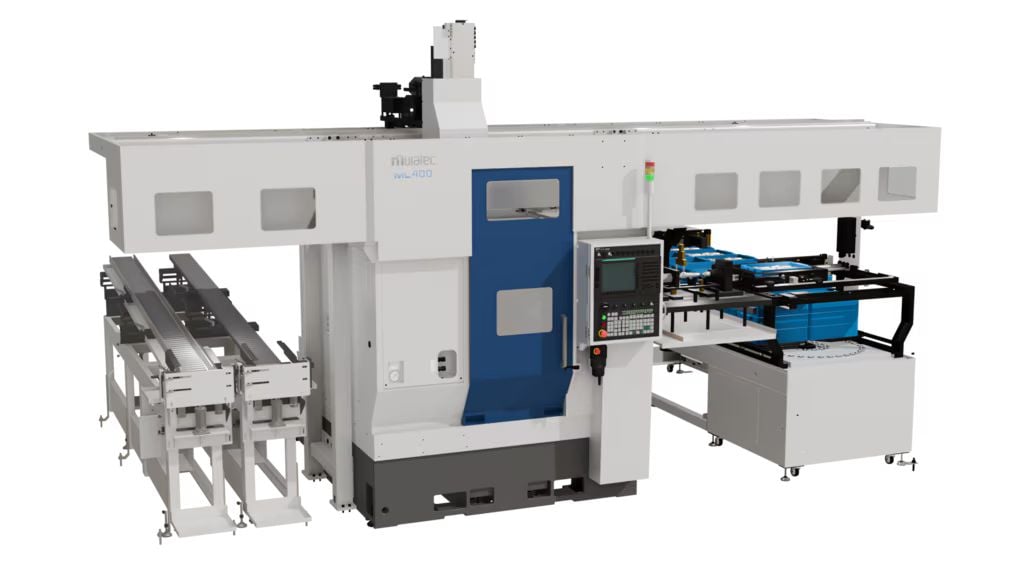
In Muratec case study #28, a comprehensive solution is presented that addresses the entire production chain — input, machining process and output — with particular focus on the final phase and its impact on overall autonomy.

Key elements of the solution include:

  • Raw material change
    Switching from bar stock to pre-cut material, combined with a dedicated feeder, enables sufficient material capacity for up to 24 hours of continuous operation.
  • Automatic tool change
    Integrated tool life management continuously monitors wear and automatically switches to a reserve tool without stopping the machine, eliminating manual intervention.
  • Automated inspection and sorting
    An integrated measurement system replaces 4–5 minutes of manual inspection per part, while a tray-based feeder automatically sorts finished components ready for packing. This reduces floor-space requirements and eliminates unnecessary downstream handling.

The Result for the Plant

The outcome is a production line that operates virtually unattended. Only periodic maintenance and consumable replacement are required, while the system maintains stable output, improves operator safety, and significantly reduces reliance on labour for repetitive, low-value tasks.

For manufacturers targeting true lights-out or near-lights-out production, the real gains lie not only in machining automation, but in solving what happens before and after the cut.


    Want to know more?

    Whether it's extra details on this article or information about MTD's services, fill in this form and we'll get back to you.

    Get the Latest Industry Insights


    Sign up to receive the latest news, insights, and exclusive content from the world of manufacturing — straight to your inbox.

    Sign up for exclusive news & offers

    Get updates, promotions and insights.

    Join Thousands of Professionals Staying Ahead with MTD

    Sign up to receive the latest videos, insights, and exclusive content from the world of manufacturing

    Let's Get You Connected