59:34
By Mike Stobart

As a leading UK manufacturer of solid carbide cutting tools, Quickgrind has been working with medical equipment manufacturers to develop optimised tools and machining strategies to great effect.

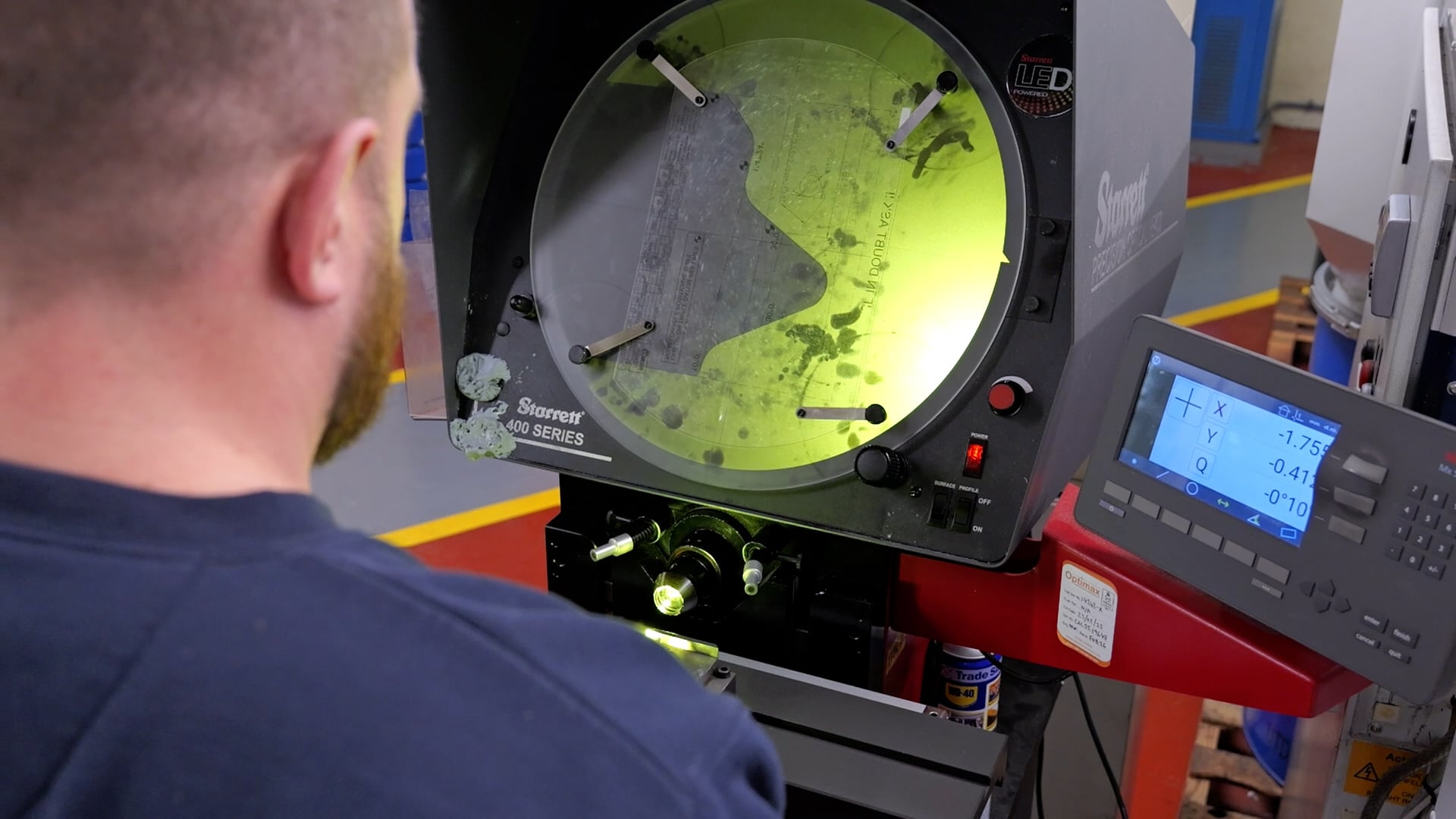
At our headquarters in Tewkesbury, we use the latest ANCA multi-axis grinding machines as well as the Walter and Alicona inspection machines to develop bespoke tools, which we test and continually improve by machining parts on our state-of-the-art MAZAK 5-axis machine. We then run prove-out trials at the customer’s factory where our application team further develop the machining strategies to produce cycle time savings of 60% or more.
As the worldwide market continues to grow for replacement femoral knee joints, we work tirelessly at our in-house Technical Centre to identify areas of the production cycle for numerous parts whereby we can greatly reduce cycle times by applying our expertise and know-how. Two main areas that we have identified as key factors that are causing companies in this industry much headache and despair are the composition and machining of the base material and the other is the high finish requirements for these parts.

Demand for orthopaedic implants is growing as life expectancy continues to lengthen. An ageing population suffering from arthritis and osteoporosis together with trends towards higher body weight and obesity result in high and continual growth for medical implants. Nowhere is this more evident than in the knee and hip replacement segment. Manufacturers of these components have high demands placed upon them to ‘scale up’ production without over increasing the price per part. Due to the high stresses, the implants have to endure during their lifetime, there has been a tendency for R&D to venture toward the growth of biocompatible materials – this brings an entirely new challenge to engineers machining the components.
The metallic materials need to be hard-wearing and require high-quality surface finishes to enable the plastic parts to achieve their life expectancy of 20 years or more. The hard-wearing metal parts with plastic cushioned between them require high levels of absolute smoothness to protect against wear and early failure. For example, in replacement knee joints this means the femoral component and tibial tray must be machined and polished to the highest levels achievable.
Here, we are concentrating on femoral knee implants due to the high demand placed on the cutting tools to machine materials such as titanium and cobalt chrome. These materials are chosen due to their ability not to react with body tissue whilst being relatively lightweight.


The machining processes
To machine the femoral component, we use the following ranges with specific recipes of tool material, geometry and coating to ensure trouble-free machining and long tool life of both the new tool and the remanufactured tool that is a service provided through our QuickEdge service.
The machining process of the femoral component requires CNC machines (typically with a 5th axis or at a minimum a 3-axis machine with fourth axis capability) to rough, semi-finish and finish the part ready for polishing. The polishing process is time-consuming and removes the machining marks – but this is a labour-intensive high-cost process. Therefore, the machining process should provide a high level of surface finish leaving less material to be removed during this process. This greatly influences the overall production cycle time and therefore manufacturing costs.
The tool that we have applied and has subsequently proven invaluable in this process is our Mirage Super end mill for roughing. The other tool of choice is our highly innovative Eliminator barrel tool which is a direct replacement for ballnose endmills.
The roughing process is time-consuming and creates a high level of tool wear. At Quickgrind, the composition we have created in our Mirage Super end mills provides high resistance to tool wear and it also enables high metal removal rates.
With the right CAM software, we can eliminate the use of ballnose endmills to semi-finish and finish the parts as these are time-consuming. Until the introduction of barrel tools, this was the only way to achieve the required pre-polishing finish. Now, we show two examples that are our main stay with customers.
Here we show some of the tools we have developed that are proving phenomenally successful. These products are giving our customers a high ROI. However, this is not all we can do for the customer. Through our ‘Infinite Possibilities’ programme, we enable our customers to never be restricted in determining the best and most efficient tool for their particular parts and processes. By streamlining the process and reducing the number of tools used, we have been able to bring about great savings for our customers and with our ‘never-stand-still’ ethos, we continually look for improvements. Quickgrind will be exhibiting at the Manufacturing Solutions Ireland exhibition in Limerick on the 15th and 16th of June, to find out more please contact Quickgrind.