


German engineers refer to the root cause of out-of-round, thin-walled parts as “Überbestimmung,” which translates to over-determination. This issue arises when rigid multi-jaw chucks grip thin rings on the shop floor, causing jaws to fight against each other. As a result, parts are forced into strained positions, and walls flex under clamping pressure. While the machining may appear flawless, once the part is unclamped, it relaxes and transforms from perfect to polygonal.
The solution, experts suggest, is not to clamp harder but to clamp smarter. HWR’s INOFlex® and INOZet® combination addresses this by offering more points of contact with equal force distribution, utilising compensation rather than rigidity.
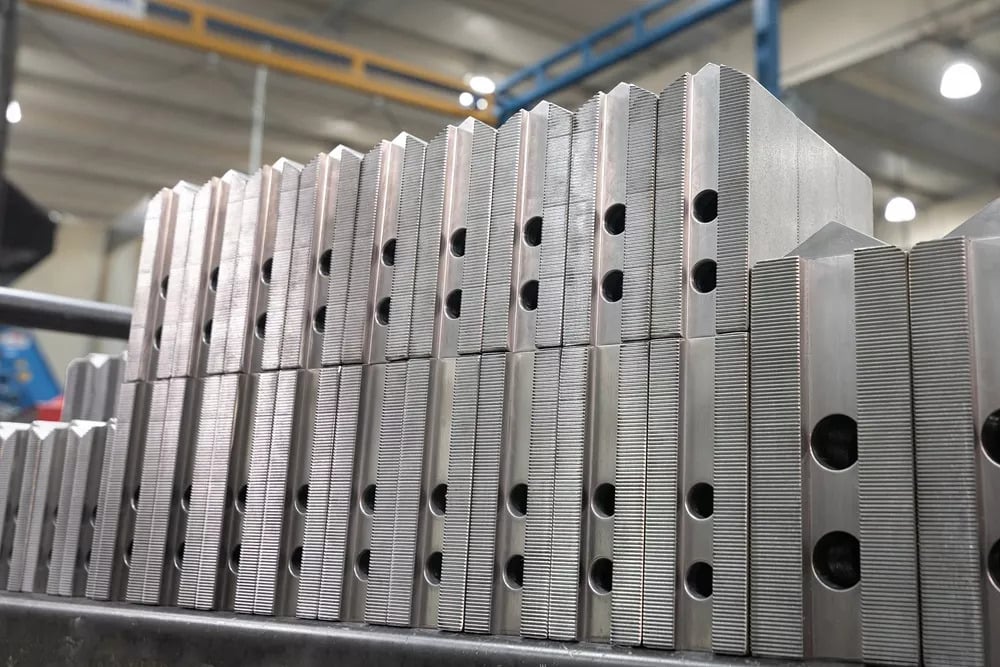
The INOFlex® compensating 4-jaw chucks feature patented mechanics that ensure each jaw applies identical force, even with rough or irregular blanks. Furthermore, INOZet® pendulum bridges mount on these jaws, transforming the chuck into a compensating 8-point clamp. This design ensures eight evenly loaded contact points, lowering pressure per point and minimising deformation, preventing the polygon effect.
Evidence from GROB-Werke showed significant improvements in concentricity, enhancing from 0.3 mm to 0.02 mm, and eliminating the need for a grinding operation altogether. Contract manufacturer EMB achieved 6 µm cylindricity in series production using this setup.
Moreover, a single set of standard jaws accommodates the entire diameter range with both internal and external clamping, reducing the need for numerous special jaws.
For those machining thin-walled flanges, rings, or housings, the primary quality improvement lies in the innovative design of the jaws.
View more news from HWR USA