
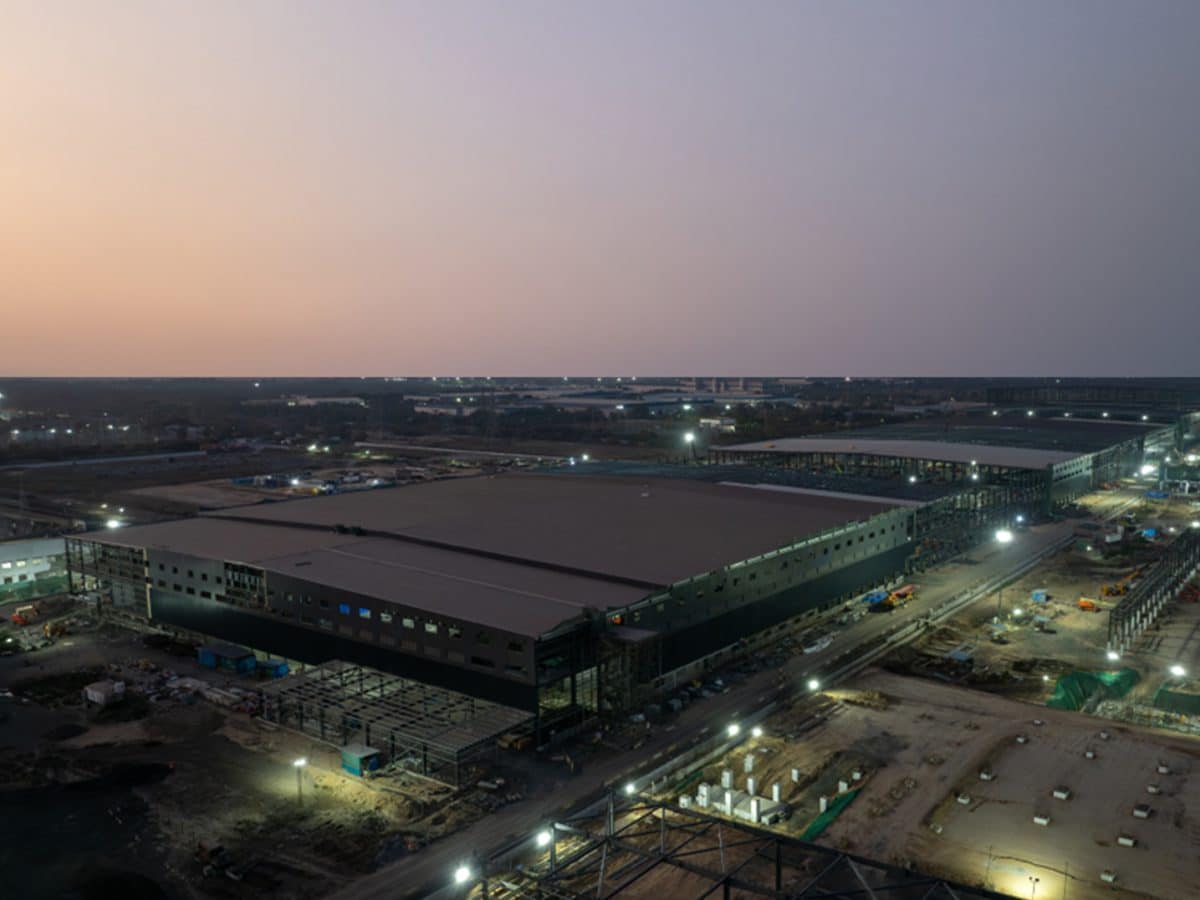

Agratas completes steel frame at Sanand battery plant, advancing toward 2027 production!
Agratas has achieved a major construction milestone with the completion of the steel framework at its battery manufacturing facility in Sanand. The development marks a critical step toward operational readiness, with commercial production scheduled to begin in 2027.
The scale of the structure reflects the ambition behind the project. The steel frame extends 700 metres in length, 150 metres in width and reaches a height of 34 metres, covering a built-up area of approximately 105,000 square metres. More than 24,000 tonnes of steel have been used in the main structure, while construction of associated buildings is progressing simultaneously. At peak activity, over 2,500 skilled workers were deployed at the site, highlighting the scale and complexity of execution.
The project is being delivered by Tata Projects Limited in collaboration with Tata Consulting Engineers and multiple domestic contractors. A strong emphasis has been placed on localisation, with all steel and most materials sourced within India. This approach supports domestic supply chains and aligns with the country’s broader push for self-reliance in critical manufacturing sectors.
Quality and execution excellence remain central to the project. Construction is being carried out in accordance with regulatory standards and industry best practices to ensure long-term operational reliability. Structured planning frameworks are also being implemented to support the development of a world-class manufacturing facility, with sustainability considerations integrated into both design and construction phases.
Once operational, the Sanand plant will play a significant role in India’s clean energy transition. In its first phase, the facility will have a production capacity of 20 GWh, manufacturing advanced battery cells for electric vehicles and energy storage applications. This capability is crucial as India accelerates the adoption of electric mobility and renewable energy systems.
The project aligns with India’s broader environmental goals, including achieving net-zero emissions by 2070 and expanding non-fossil fuel energy capacity to 500 GW by 2030. A robust domestic battery manufacturing ecosystem is essential to support these ambitions