03:35
By Ashutosh Arora
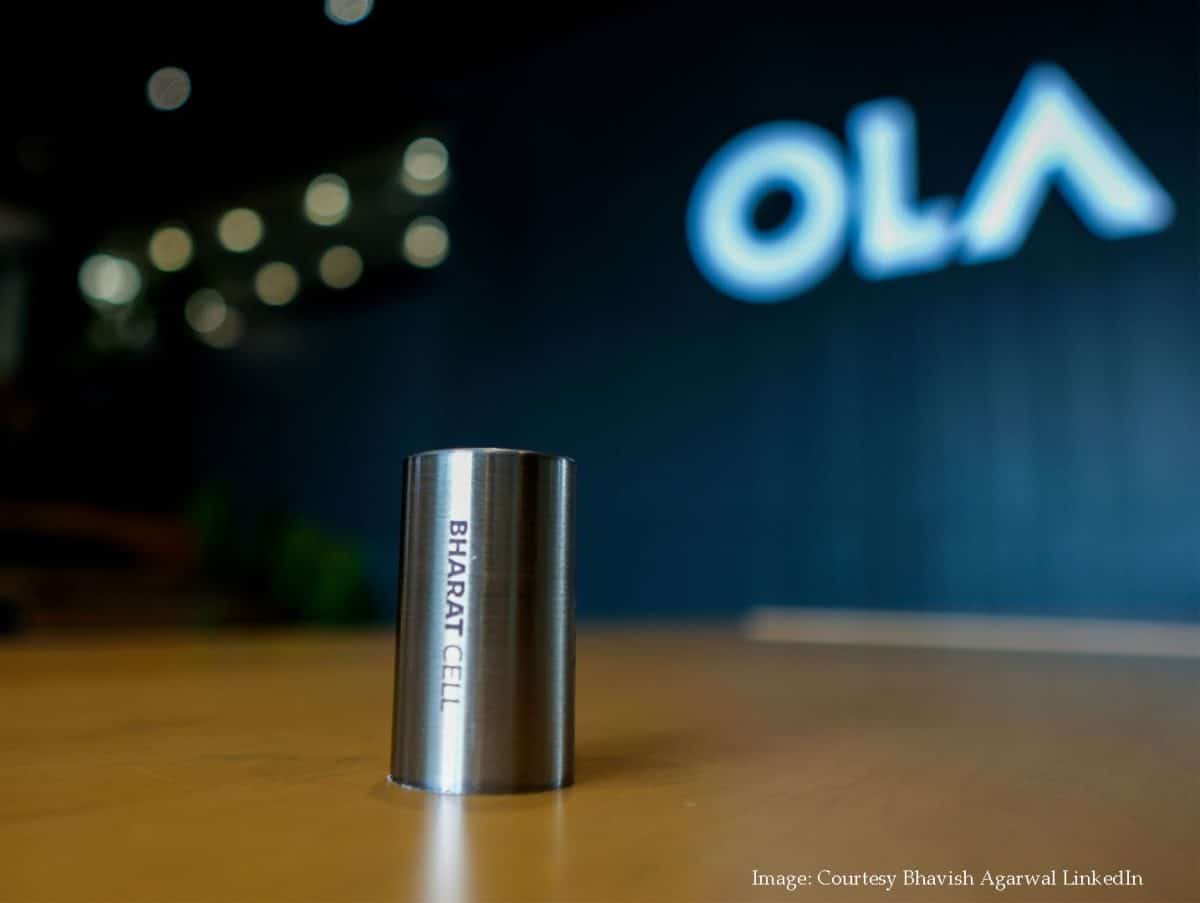
Ola Electric has achieved a major milestone in India’s electric mobility journey with the Automotive Research Association of India (ARAI) granting certification to its indigenously developed 4680 Bharat Cell battery pack. The 5.2 kWh pack has been approved under the latest AIS-156 Amendment 4 standards set by the Ministry of Road Transport and Highways, underscoring Ola’s technological maturity and commitment to self-reliant EV manufacturing. The certified battery pack will debut in the company’s S1 Pro+ model, marking the first time an Ola vehicle will run on a fully home-grown cell platform.
This certification represents more than a product approval—it is a crucial step in Ola Electric’s strategic push for vertical integration. Until now, the company relied on third-party suppliers for its battery cells, even as it met previous AIS-156 safety standards. By transitioning to its own 4680 Bharat Cell design, Ola aims to optimise its supply chain, improve cost structures, and enhance product performance.
The certification process, according to the company, included rigorous testing to ensure safety and durability. These assessments covered vibration endurance, water immersion, and thermal shock resistance—key parameters in real-world operating conditions. Meeting these stringent standards highlights the robustness and reliability of the 4680 Bharat Cell technology.
The introduction of Ola’s 4680 Bharat Cell also carries wide implications for India’s EV ecosystem. The 4680 format, known globally for its higher energy density and simplified manufacturing architecture, is expected to improve range, charging efficiency, and thermal management in EVs. Local production of such advanced cells reduces dependence on international suppliers, aligning closely with the government’s Make in India and Atmanirbhar Bharat initiatives.
Ola Electric’s achievement not only strengthens its market position but also paves the way for an expanded domestic supply chain for critical EV components. The move could spur opportunities in areas such as cell component manufacturing, battery pack assembly, and energy storage integration services—key sectors for building a sustainable EV ecosystem in India.
Industry experts view this certification as a potential turning point for the Indian electric vehicle landscape. With one of the country’s leading EV players now producing its own high-density cells, the focus may shift toward localising more of the value chain—from raw material processing to pack integration and recycling.
As Ola prepares to scale production of its Bharat Cells, the development signals a future where India moves closer to full EV self-sufficiency. The certification not only boosts Ola’s technological credibility but also sets a benchmark for other OEMs to accelerate innovation, invest in R&D, and pursue similar in-house advancements in battery technology.
Opt in today to our newsletter