
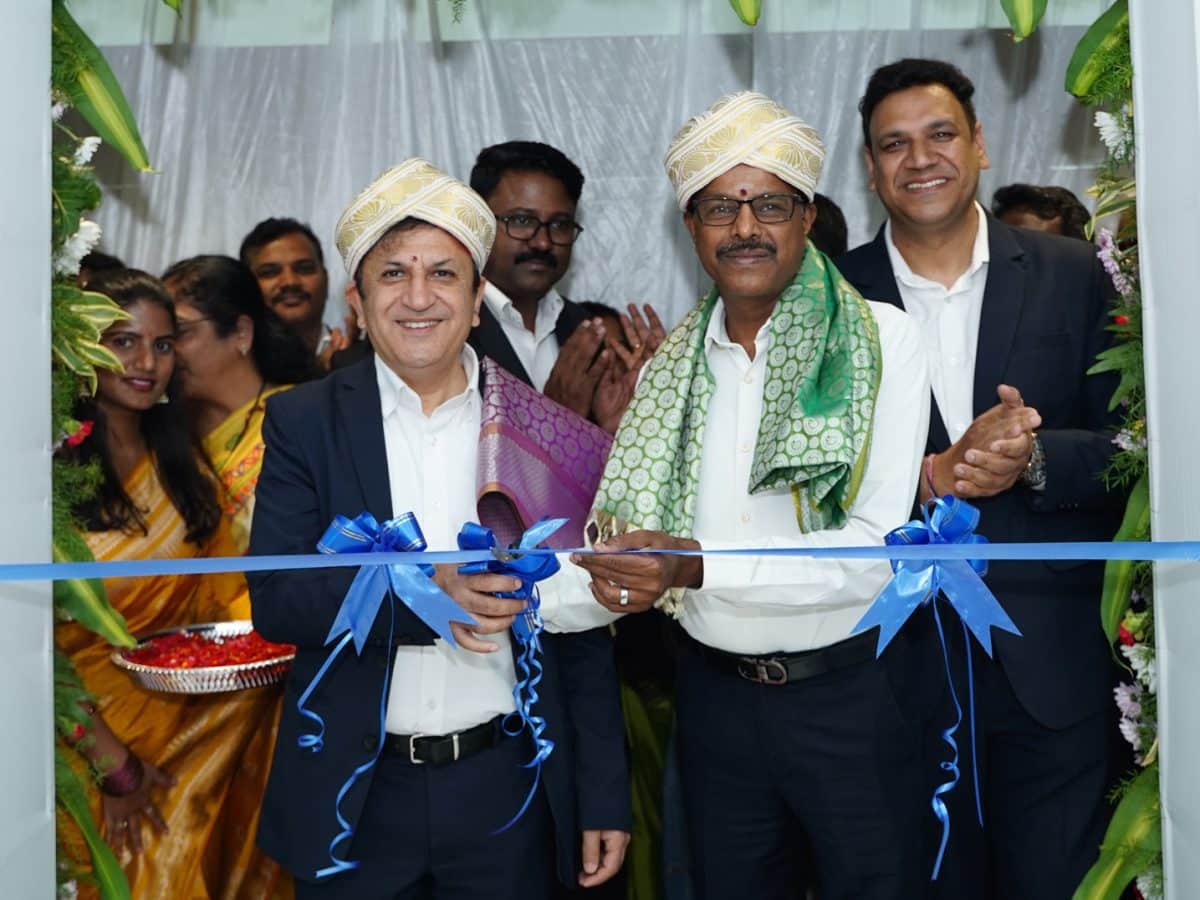
Feintool Opens First Production Facility in India to Strengthen Local Manufacturing!
Feintool has officially inaugurated its first production facility in India with the opening of a new manufacturing plant in Pune, marking a significant milestone in the company’s global expansion strategy. The investment reinforces Feintool’s commitment to serving the rapidly growing Indian automotive industry through local manufacturing while supporting future growth opportunities across the country’s industrial sectors.
As India continues to strengthen its position as one of the world’s fastest-growing automotive markets and an emerging global manufacturing hub, the Pune facility will enable Feintool to supply customers with locally manufactured precision components while reducing lead times and improving supply chain responsiveness. Production has already commenced, with the company ramping up output to fulfil initial customer orders for fineblanked automotive components.
Speaking at the inauguration, Feintool CEO Lars Reich said the company is proud to meet customer demand for local production in India through its new Pune facility. He noted that India’s expanding automotive sector presents significant long-term opportunities and that Feintool is well positioned to benefit from the country’s continued industrial growth while supporting customers with high-quality precision manufacturing solutions.
Feintool currently operates 18 production facilities across Asia, Europe, and the United States, specialising in high-volume manufacturing technologies including fineblanking, cold forming, and e-lamination stamping. These advanced manufacturing capabilities enable the company to produce highly precise metal components used across the automotive and industrial sectors, where quality, consistency, and production efficiency are essential.
The Pune facility forms an important part of Feintool’s “local-for-local” manufacturing strategy, which focuses on producing components closer to customer locations while leveraging the company’s global engineering expertise. Marcel Pernici, President of Feintool Asia, explained that this approach allows the company to serve regional markets more efficiently, improve operational agility, reduce dependence on geopolitical uncertainties, and maintain the high standards of quality and reliability expected by customers worldwide.
India’s position as the world’s third-largest automotive market, combined with its growing importance as an export base for global manufacturers, has made it a strategic investment destination for international automotive suppliers. Many of Feintool’s global customers continue to expand their manufacturing footprint in India, creating increasing demand for advanced local production capabilities.
Looking ahead, the company has ambitious plans for further expansion. Tobias Gries, Managing Director India, said Feintool has established a strong local team and is initially focusing on the production of fineblanked automotive seating system components. As customer demand grows, the company plans to expand its manufacturing capabilities into cold forming, e-motor core production, and hydrogen-related applications, supporting the evolving needs of both conventional and next-generation mobility technologies.
The Pune plant has been designed with future expansion in mind, providing the flexibility to increase production capacity and introduce additional manufacturing technologies as market requirements evolve. This scalable approach will enable Feintool to respond quickly to changing customer needs while supporting India’s transition towards advanced manufacturing and sustainable mobility.
The opening of Feintool’s first Indian production facility reflects the company’s long-term commitment to the Indian market and strengthens its ability to support customers with locally manufactured, high-precision components. By combining global technological expertise with local production capabilities, Feintool aims to enhance supply chain resilience, improve customer responsiveness, and contribute to the continued growth of India’s automotive and industrial manufacturing sectors.