06:34
By Ashutosh Arora
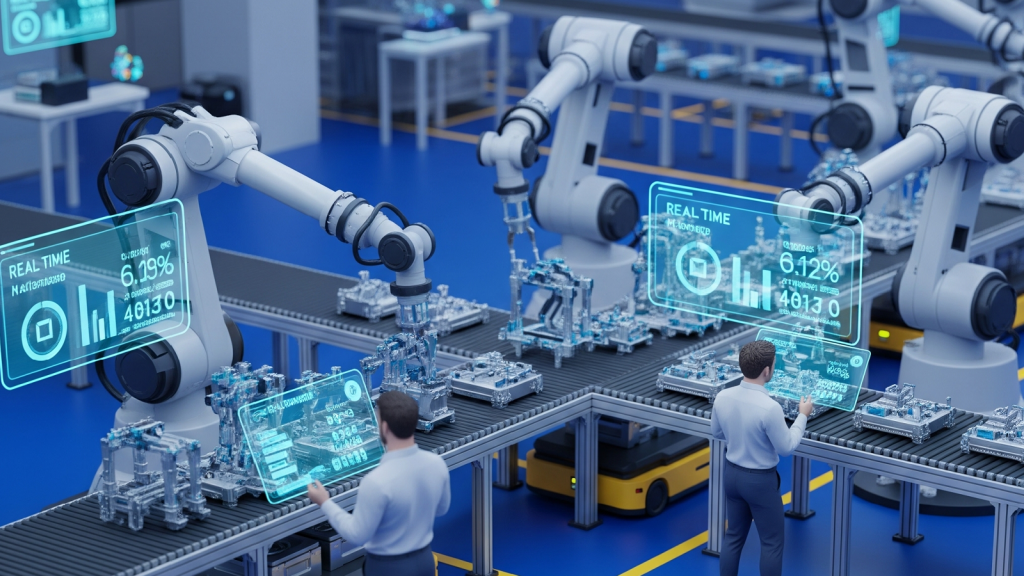
At Mazak’s Discover 2025 technology and education event, FANUC America President and CEO Mike Cicco made a compelling case for why now is the defining moment for manufacturers to embrace automation. Speaking to a full audience in Florence, Kentucky, Cicco’s message was clear — automation is no longer optional; it’s a strategic necessity for any shop that wants to stay productive, flexible, and globally competitive.
Drawing on over two decades of experience promoting robotics in manufacturing, Cicco highlighted how economic conditions and labor shortages have created a perfect storm for automation adoption. “The people who want a job already have a job,” he remarked, referring to the persistent 3% U.S. unemployment rate and roughly 400,000 open manufacturing positions. With factories running at around 77% capacity — among the strongest in 25 years — demand for production remains high even as skilled labor becomes increasingly scarce. “That’s why now is the time to automate,” he emphasized.
Cicco also noted that the reach of automation now extends far beyond the automotive sector, which once dominated robot installations. More than half of all new robotic systems today are being deployed across diverse industries such as aerospace, agriculture, consumer goods, and pharmaceuticals. This diversification reflects a new industrial reality — automation is for everyone, not just car manufacturers. He pointed out that while electric vehicle investments initially drove automation demand, recent shifts in EV production volumes have pushed manufacturers to refocus on traditional powertrain and mixed-model production lines, both of which benefit from flexible automation.
Another major theme of Cicco’s presentation was workforce transformation. FANUC has placed over 5,000 robots in schools, colleges, and universities across North America, ensuring that the next generation enters the workforce with firsthand experience in robotics and CNC integration. “Today’s workforce is more comfortable programming and maintaining robots than ever before,” he said, emphasizing that education is the foundation of sustainable automation growth.
Cicco connected these workforce developments to the growing trend of reshoring — bringing manufacturing closer to end markets. “People want to make things where they consume things,” he said, referencing how consumer expectations for fast, customized deliveries are driving localized production. This shift, he explained, demands greater flexibility in manufacturing, as shops increasingly handle a mix of high-variety, low-volume orders. Automation, according to Cicco, is the best way to manage this shift efficiently, enabling shops to run jobs ranging from a thousand parts to a single unit without disruption.
He also advised manufacturers to start small when implementing automation, focusing on repetitive or hazardous tasks — the “three D’s” of manufacturing: dirty, dull, and dangerous. With advancements in technology, integration has become simpler than ever. Modern controls like Mazak’s Mazatrol system now feature built-in automation interfaces, allowing seamless communication with robots over a single Ethernet connection — a stark contrast to the complex, manual setups of the past.
Cicco concluded by encouraging manufacturers hesitant about automation to take the first step, learn from initial deployments, and expand gradually. His message encapsulated the evolving mindset of modern manufacturing: automation is not replacing people — it’s empowering them to work smarter, safer, and faster.
Opt in today to our newsletter