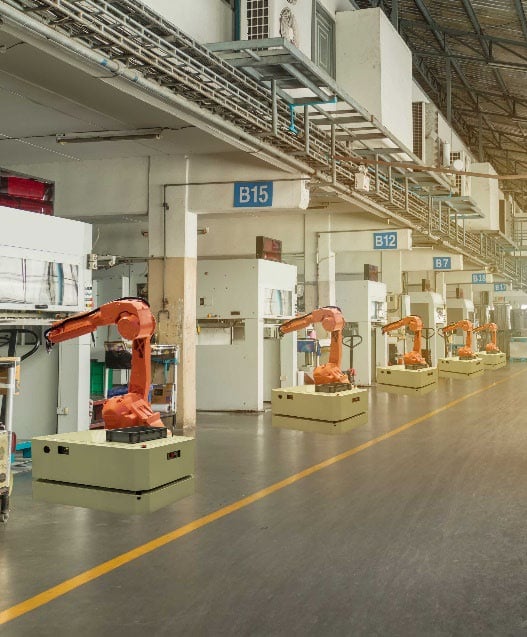




In the manufacturing sector, often large-scale buildings with expensive equipment, can leave businesses cornered with a distinct set of challenges when it comes to energy management.
For that reason, we’ve put some heads together and drawn up a list of tips for optimising your energy usage for your manufacturing business.
1. Turning things off
Turning off a power switch seems simple, but for every 1,000 kWh that you save by turning off a power switch, you save £120 on your utility bill (assuming an average electricity cost of £0.12 per kWh)..
2. Walk-through audits
One method to identify energy-efficiency opportunities is to walk through the facility with an experienced energy auditor to identify wastage.
3. Idle equipment
Some industrial equipment must run 24-7, or it can’t power down between uses. Other equipment can turn off automatically when left idle for a time. But many other pieces of equipment needlessly remain idle for extended periods. For example, compressors in compressed air systems waste energy when not in use; be sure they’re turned off when not needed. To ensure that equipment isn’t left idling unnecessarily, document and post the power-down procedure or schedule. Doing so can reduce maintenance requirements and extend the useful life of the equipment, besides saving energy.
4. Plug loads
Items such as computers, speakers, radios, water coolers, and coffee machines burn energy even when no one uses them. Use the energy-saving settings on computers and printers and turn the equipment off after hours. Install smart power strips, which sense when devices are in “off” mode and cut all power to the devices plugged into them, eliminating phantom loads. Additionally, look for smart strips that control loads based on occupancy. Give power strips to employees so they can easily switch off all their often-forgotten energy users at the end of the day.
5. Space Heaters
Plug space heaters into power strips controlled by occupancy sensors. Other loads, such as task lights and monitors, can also be plugged into these power strips. Note that when employees feel the need for their own space heating, it’s usually a sign of poor HVAC system control.
6. Lighting
Turn lights off when they’re not in use. Where lights cover large areas of the floor, you can save substantial energy by turning lights on only as they’re needed. Occupancy sensors and timers can capture these savings, but they need to be combined with lighting systems that you can control effectively. For a no-cost option, train staff to turn off lights as part of closing procedures (you can also help by identifying the location of light switches on a posted notice).
7. Outside-air intake controls
Many air-conditioning systems use a dampened vent called an economizer to draw in cool outside air to reduce the need for mechanically cooled air. You can set these economizers to run only when spaces are occupied, which is commonly called demand-controlled ventilation.