
There is nothing certain, but the uncertain. It is an old saying, but it has arguably never been more relevant to machinists, whose fortunes have waxed and waned with those of the global economy over the last ten-to-fifteen years. There have been good times, but there have also been storms to weather, meaning that owners of machine shops have had to work to make their businesses both more agile and more efficient to prosper, or even to survive. Take those supplying to the automotive industry, for instance. The automotive industry has, in the last fifteen years or so, been in an almost constant state of change and, with the global financial crisis, the Covid 19 pandemic and the microchip shortage, it has taken several hard knocks in relatively rapid succession. Consumer demands and, perhaps more importantly, governmental pressure, meanwhile, are increasingly driving OEMs to adopt hybrid and fully electric power trains. Furthermore, the industry demands that parts be delivered on time, to an exceptionally high standard and to stringent cost targets. Its suppliers, therefore, must be willing and capable not only of expanding but also of being able to manage contraction.
 They must be light on their feet and flexible enough to cope with technological change. They must also be highly focused on their efforts to cut any inefficiency from their operations. Boosting the bottom line None of this will be news to the owners and managers of machine shops that supply to the automotive industry or many other industries, but they might be surprised by the role that an effective tool-management system could play in streamlining their operations, making them lighter on their feet and ultimately – boosting their bottom line. Widespread problem An out-of-control tooling inventory is a more widespread problem than many machine shops realise and it can have severe impacts on costs, by as much as 20%. There are numerous reasons for this. A disorganised inventory can lead to disorganised working practices. Without an effective tool-management system, for instance, shops can find themselves doing one of two things. They either rush orders of new tools when inventories are depleted unexpectedly, or they stock more tools than they need so they do not run out in the first place.
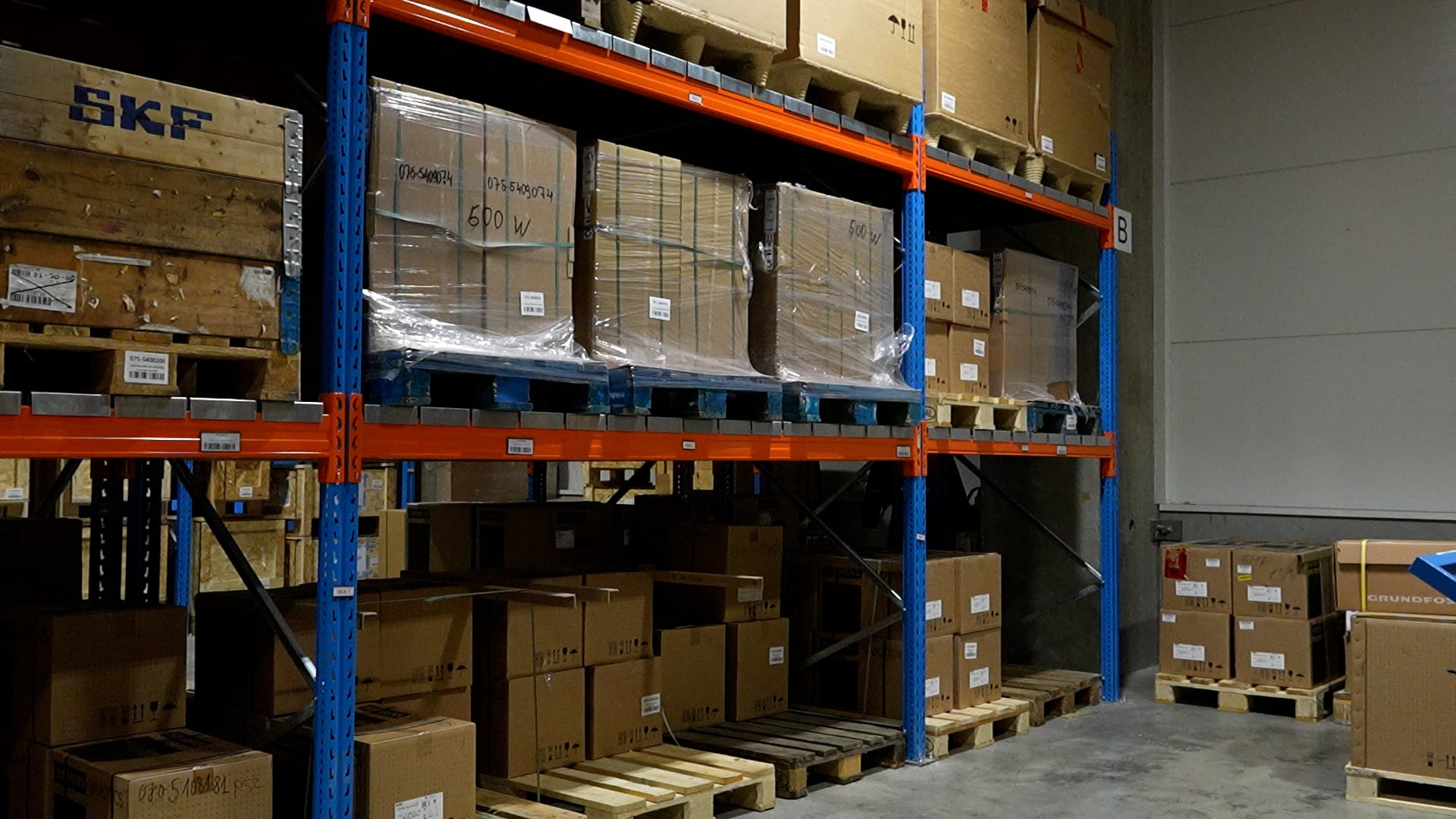
Both can significantly add costs and can cause problems on the shop floor. Some machine shops might track their tools by instructing the outgoing shift to communicate tool consumption and status to the incoming shift, but when the incoming shift finds that the cutters and inserts it needs are worn-out, missing or in the wrong place, this can lead to expensive downtime. Adding up the costs There are also ancillary costs associated with bloated inventory: • Opportunity costs. Space used for storage is space that cannot be used for other purposes, such as a new product line, new machinery, offices and more. Money tied up in unnecessary assets is money that is not being spent on profitable endeavours. • Administrative costs. Vast amounts of time can be spent maintaining and managing a tooling inventory, including ordering tools, putting them away, picking, counting and relocating them. The larger the inventory, the greater the number of transactions and the greater the number of people involved. Time is also eaten up by the administrative tasks associated with tooling inventory management. • Logistics costs. Equipment is required to load and unload inventory, as well as transport tools to their points of use. All of this equipment must be maintained, and employees must be given extensive and expensive training to use it safely. • Insurance costs. Insurance premiums escalate in proportion to the size of the inventory being held. Simple solution Traditionally, an out-of-control inventory could be a lengthy and complex problem to solve, but simple and cost-effective solutions have recently become available. Large shops are rapidly adopting the latest technologies – namely cloud-based inventory management and tool-tracking software to get to grips with this issue.
Fortunately, these intuitive and proven solutions are now affordable for smaller shops too. The software as a service (SaaS) delivery models employed by innovative and disruptive entrants to the market, such as CRIBWISE, developed by Sandvik, means that access to highly sophisticated inventory-management and tool-tracking solutions can be secured for a nominal monthly fee, making them a highly attractive option for even the most compact and specialised of SMEs. Myriad of benefits The benefits of the best inventory management software are numerous. They reduce administrative headaches. Using intelligent rule-based systems, the ordering process can be automated.
 How tools move through an organisation and around the shop floor can be streamlined and controlled precisely. Tool inventory management software can also be integrated into existing enterprise resource planning (ERP) systems to simplify the management of orders, the goods-received process and invoicing. Using inventory management software for tools allows costs to be controlled. Inventory can be made more visible; tooling can be marked as ‘in use’ rather than ‘out of stock’, eliminating over-ordering. Rules can be set to ensure that operators choose used and refurbished tooling before new. Tooling consumption patterns and spending over time can be tracked to identify areas of improvement. Additionally, the use of inventory management software for tooling can increase productivity and the amount of time machines can run. The tools available, where they are on the shop floor and even the operative that selected them can all be tracked—eliminating time wasted searching for them. Incoming orders and deliveries can also be tracked, and low-inventory alerts and automatic ordering rules can be established so production delays become a thing of the past.
What features should shop managers look for to determine the best inventory management software for them? It should be easy for them to use and to customise to their needs. It should be vendor-agnostic. It should be capable of hardware and software integrations that encompass all of its inventory, regardless of brand. It should also be able to function as a stand-alone system, or with various optional vending machines. A disorganised and bloated inventory can have significant impacts on the ability of a machine shop to get parts out of the door quickly, efficiently and profitability. Fortunately, solutions exist that are so cost-effective and easy to implement that machine shops might one day wonder how they ever coped without them. If you want to know more about inventory management, visit cribwise.com