
An increase in annual turnover from £3m in 2016 to £8m has been reported by contract machining specialist Unicut Precision Engineering, Welwyn Garden City, which has spent £1.7m in the last two years on new production and inspection equipment.

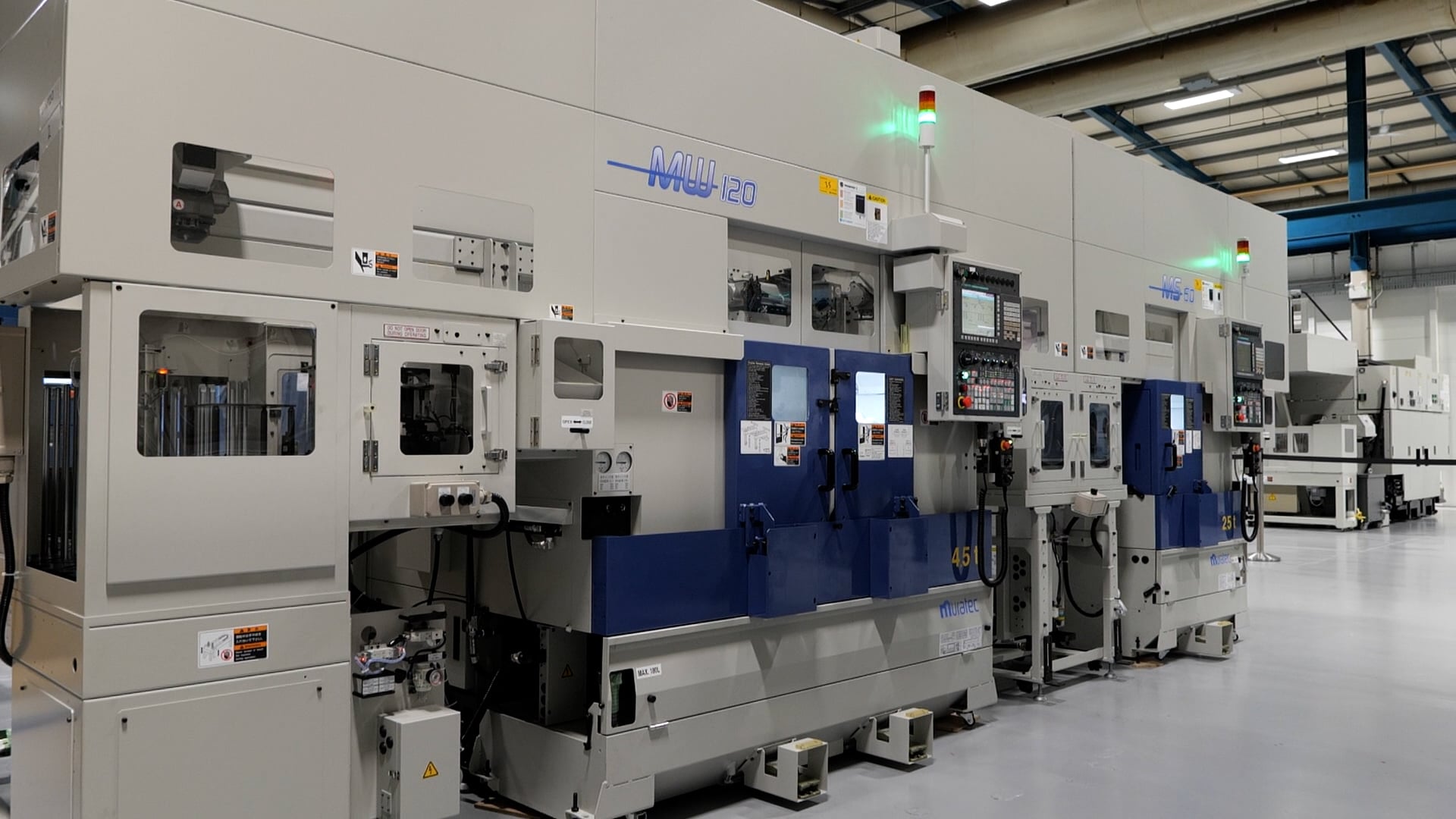
About half of the investment went on two more Cincom sliding-head lathes and two additional Miyano fixed-head lathes from Citizen Machinery UK, bringing the totals of the bar-fed lathes on site to 24 and 11 respectively. The remaining funds were used to purchase three new items of inspection equipment and to extend the automatic pallet storage and retrieval system linking three 5-axis machining centres on-site.
Jason Nicholson, Owner and Managing Director of Unicut commented: “Efficient production is not just down to automation but also depends on how well you monitor the machine tools on the shop floor and use the data to make informed decisions. We use PSL Datatrack to help with this and will shortly be progressing from manual extraction of production data from our machine tool controls to directly downloading it over a network for remote monitoring.”
Regarding turning, which currently accounts for 85% of Unicut’s turnover, he said that standardisation on Citizen lathes with their user-friendly, intuitive Mitsubishi controls greatly helps to mitigate the current shortage of skilled setter-operators, which he sees as a worldwide problem. The use of this CNC system throughout the factory also speeds up the training of staff and allows operators to swap easily between machines.
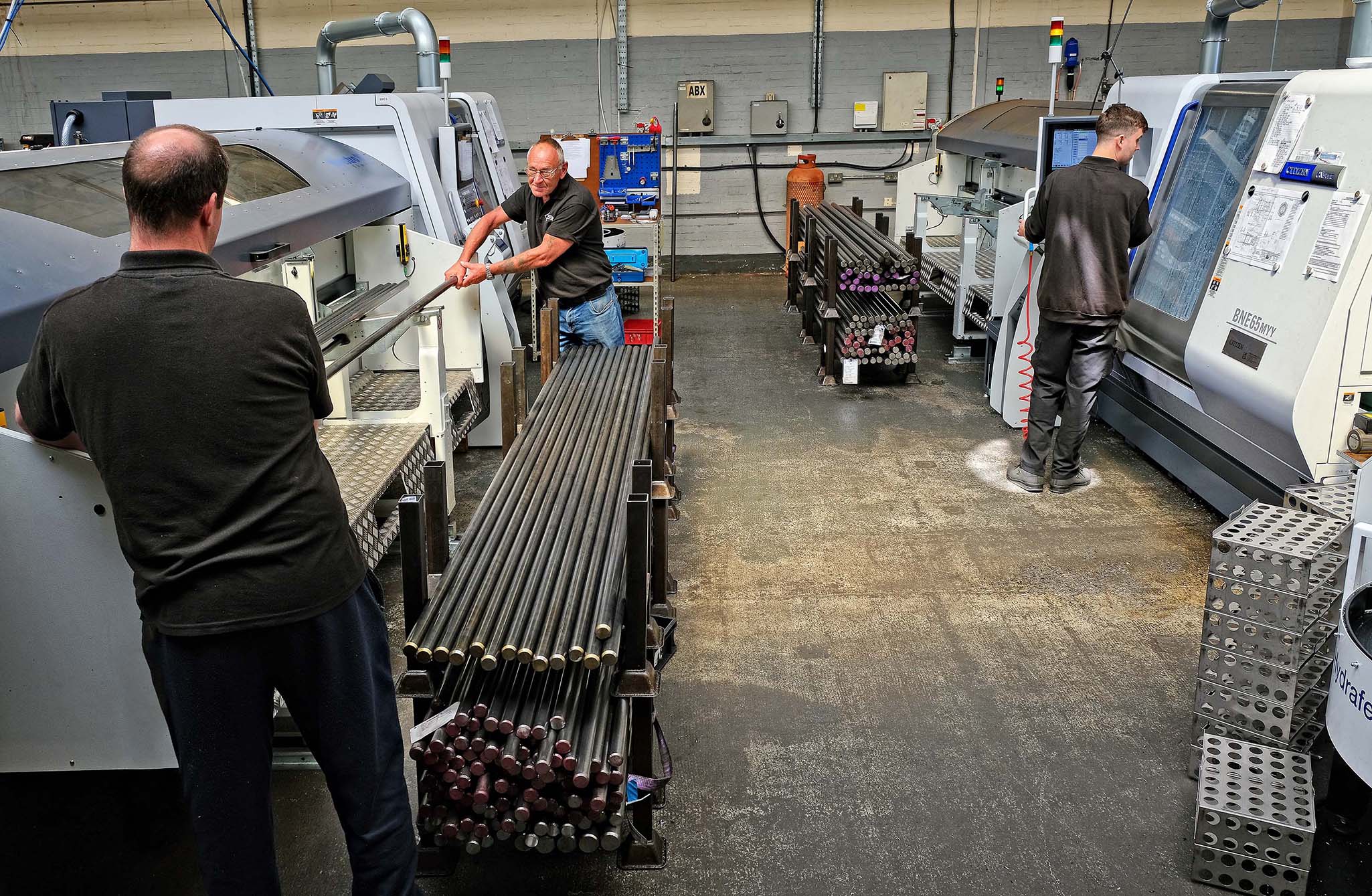
The latest turning centre additions were two 65mm bar capacity Miyano BNE-65MYY models, each featuring a pair of Y-axis turrets and the latest Mitsubishi 15-inch touchscreen control. They joined five smaller fixed-head lathes in the same series to form a seven-machine cell for producing hydraulic and pneumatic components in large volumes, typically from 2,000 to 10,000-off.
Mr Nicholson continued: “Flexibility of production in a contract machining environment is crucial, as it is the key to profitability and to being able to compete with subcontractors in low-wage countries. Having two Y axes in the latest BNEs rather than one enables the preparation of programs that closely balance front and back working cycles at the main and sub spindles.

Each turret has 12 live stations, so an extensive variety of milling, drilling and other driven tool operations can be carried out in-cycle, almost always enabling one-hit production of parts. Sometimes prismatic machining accounts for more than 90% of a cycle, so at first glance, the components look as though they have been produced on a mill. Mr Nicholson is also a long-time user of sliding-headstock lathes from Citizen Machinery, having bought his first one in 2000. In 2018, he was an early adopter of the lathe manufacturer’s LFV (low-frequency vibration) software, which was included in the operating system of the Mitsubishi control on one of two 12 mm capacity sliders bought in that year.
At the time, he said that the ability of the programmable function to break stringy swarf into shorter chips was eliminating the need to periodically stop the lathe to clear away clogged swarf, raising productivity. The LFV lathe was therefore left with the confidence to run unattended, including overnight and at weekends, even when turning ductile metals and plastics, increasing throughput further. Impressed with the trouble-free performance, he bought two similar, improved versions of the lathe with LFV in 2022.
Mr Nicholson concluded: “On this type of machine, productivity is all about getting the material to chip because otherwise, you have to keep stopping the spindle to remove swarf from around the workpiece and tool. On a fixed-head lathe, it is possible to increase the feed rate to promote chipping, but that is not possible when turning smaller diameter parts on a slider. With LFV programmed correctly, the swarf never fails to chip whatever the material, even when OD turning long components.”