

Into the Depths of Space: Coherent Machines Giant Telescope Mirrors with DMG MORI
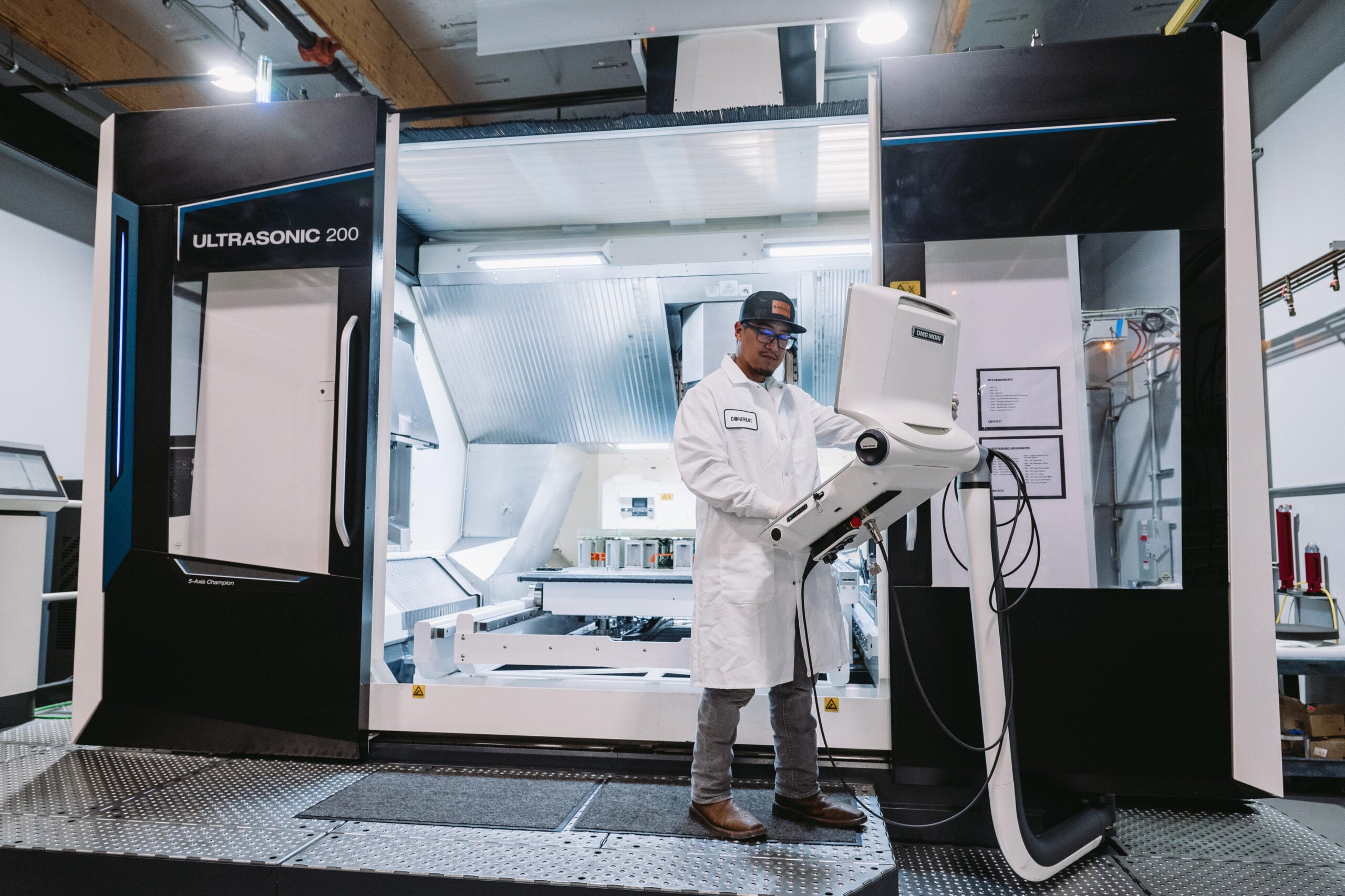
Using a DMG MORI ULTRASONIC 200, Coherent Aerospace & Defense is producing 1.5-metre hexagonal mirror segments for some of the world’s most advanced ground-based telescopes.
Founded in 1971, Coherent operates globally with approximately 28,000 employees. At its facility in Richmond, California, the company specialises in the precision manufacture of optical components and assemblies for aerospace, defence and astronomical research.
Coherent has relied on DMG MORI’s high-precision ULTRASONIC technology for glass machining for several years. Its investment in an ULTRASONIC 200 has now enabled the company to manufacture large telescope mirror segments more efficiently, reliably and at significantly higher speeds.
“Thanks to ULTRASONIC technology, we can produce mirrors up to two metres in size with process reliability – up to ten times faster.”
Precision machining for giant telescopes
A new generation of optical telescopes, with mirror diameters reaching up to 30 metres, is allowing researchers to look deeper into space and investigate fundamental questions in astronomy, astrophysics and cosmology.
Manufacturing the enormous mirrors required for these telescopes presents a major engineering challenge. Rather than using one continuous surface, the primary mirror is assembled from hundreds of individual hexagonal mirror segments.
“The initial shape of these segments is a round mirror with a diameter of one and a half metres and a thickness of just 45 mm,” explains Matthew White, Senior Manager of Manufacturing Engineering at Coherent Aerospace & Defense.
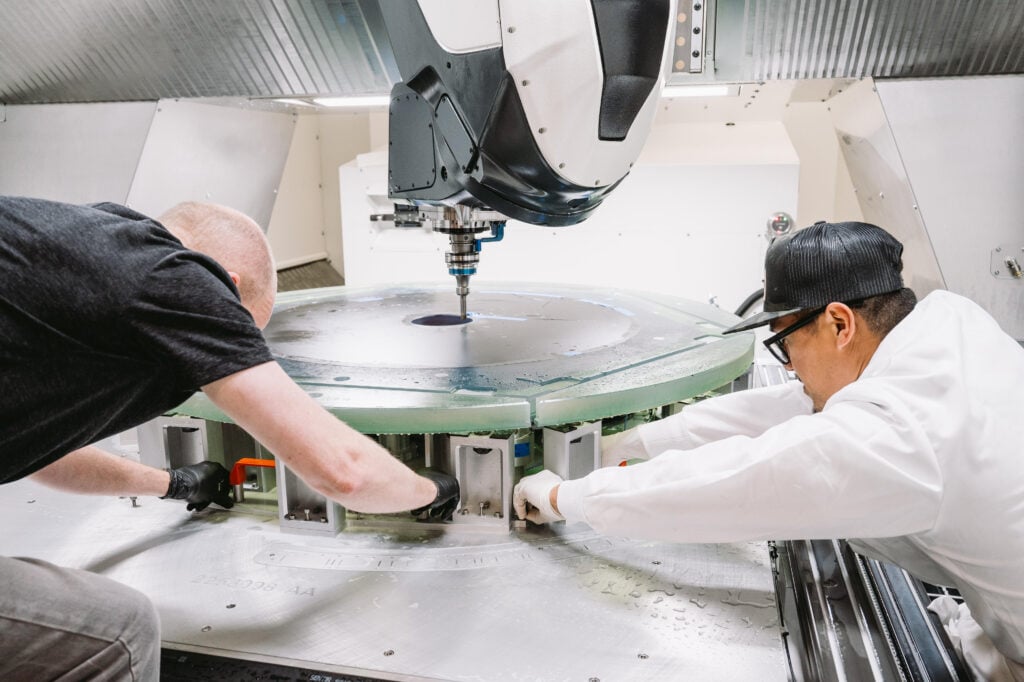
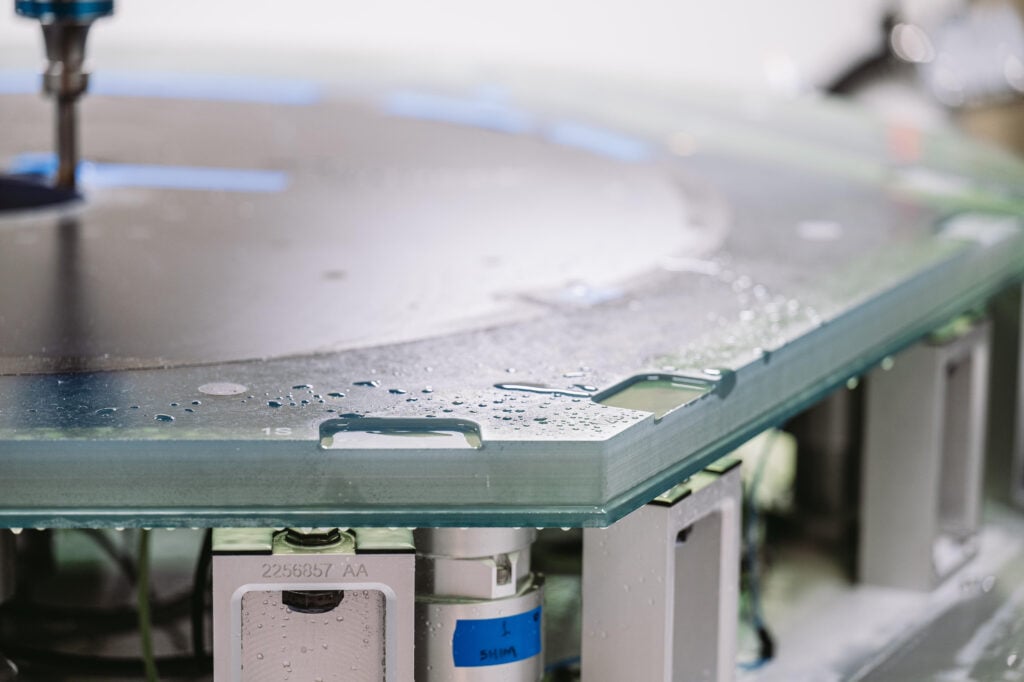
“We shape this into a hexagonal form, known as hexing. Assembly features, such as sensor pockets, are also incorporated into the component.”
The combination of a large diameter and extremely low thickness makes every stage of machining, clamping and handling particularly demanding.
Up to ten times faster with ULTRASONIC technology
Glass materials have traditionally been machined on conventional machining centres using diamond tooling. Although established and reliable, this process can be relatively slow, particularly when producing components of this size and in the quantities required for a major observatory.
“With the large mirror segments and the enormous quantities involved, it would take many years to equip an observatory using conventional methods,” says White.
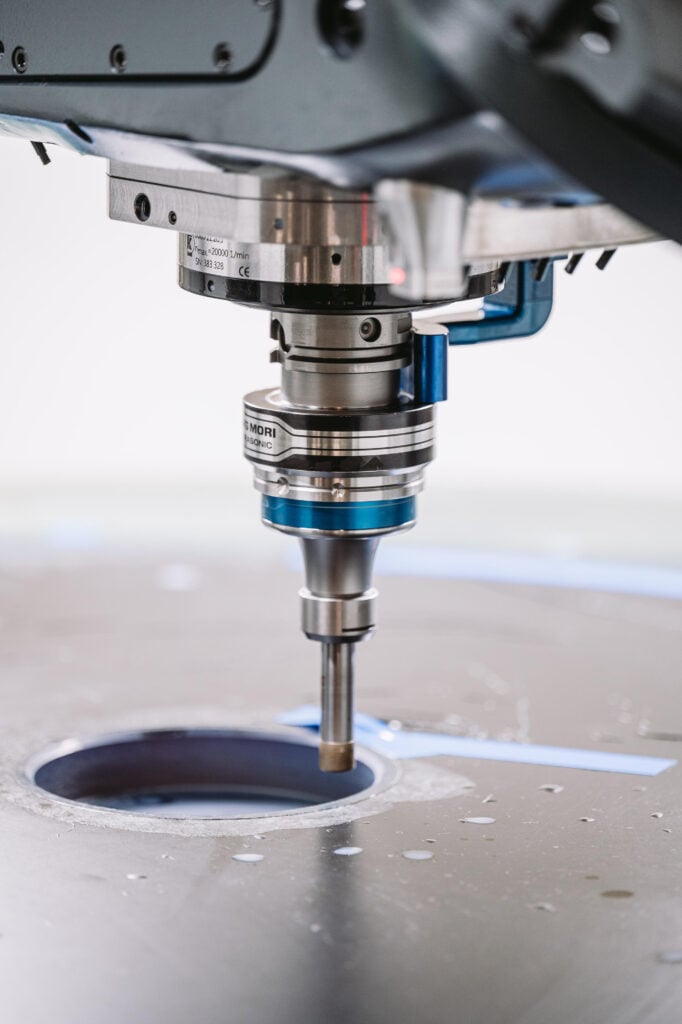
DMG MORI’s ULTRASONIC technology offered Coherent the opportunity to reduce machining times dramatically.
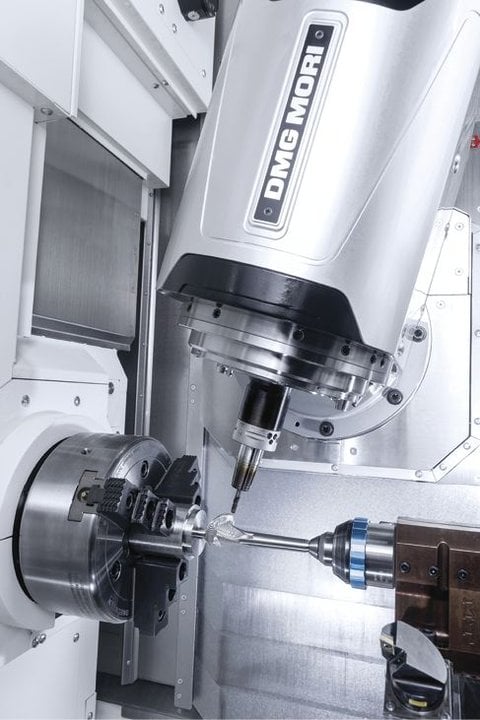
During the process, the diamond tool oscillates axially at a high frequency and low amplitude while simultaneously rotating at high speed. This movement continuously interrupts contact between the tool and the workpiece, reducing cutting forces and enabling significantly higher material removal rates.
“This enables us to remove material six to ten times faster,” explains White. “At the same time, tool life increases significantly.”
The process has already proven successful in industries such as semiconductor manufacturing. Coherent has now applied the technology to the machining of much larger and more complex glass components.
XXL machining on the ULTRASONIC 200
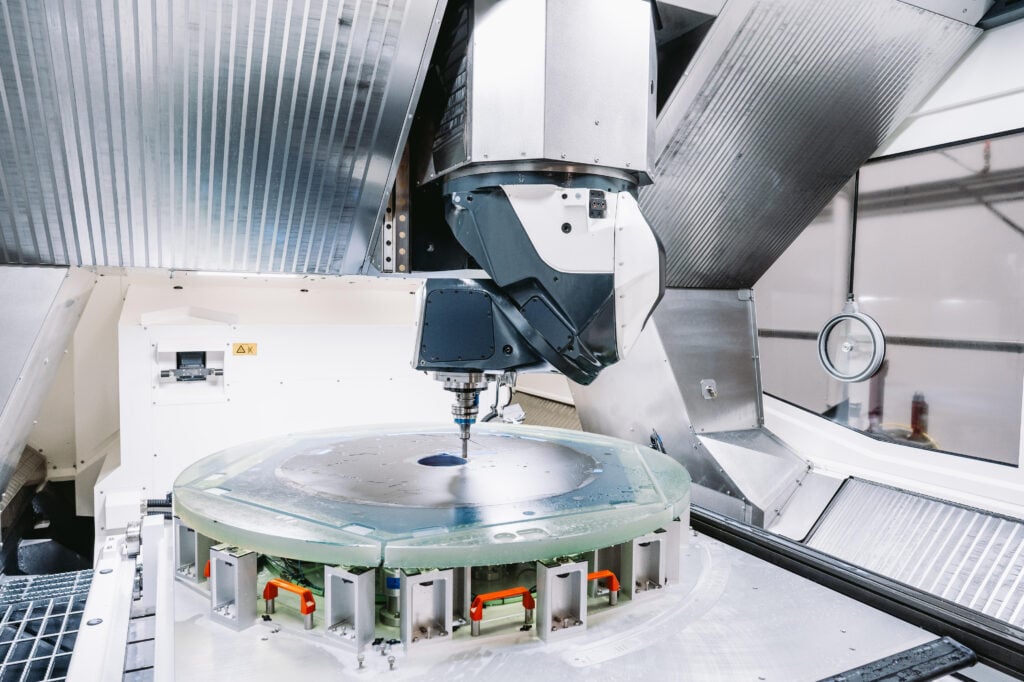
For the machining of large components, DMG MORI offers the ULTRASONIC 200, a machine based on the DMU 200 Gantry platform.
The machine provides travels of 4,000 mm in X, 2,000 mm in Y and 1,200 mm in Z, giving Coherent the capacity required to manufacture its large mirror segments.
The rigid gantry construction provides a stable foundation for high-precision machining. However, installing a machine for an application of this scale also required careful preparation of the production environment.
Coherent poured a new, reinforced concrete foundation specifically for the machine.
“This ensures mechanical stability,” says White. “We have also improved the temperature control within the facility to maintain consistent ambient conditions.”
Controlling vibration and temperature is essential when machining optical components where even the smallest variation can affect the final geometry and surface quality.
Reliable clamping without component distortion
One of the biggest challenges is securely clamping a component that measures 1.5 metres in diameter but is only 45 mm thick.
Using a conventional clamping method could cause the mirror segment to distort during machining. Once released, the component could spring back out of shape, compromising dimensional accuracy.
The asymmetrical and aspherical geometry of the component also means that a conventional vacuum chuck is unsuitable.
To overcome this, Coherent’s engineers developed a proprietary tooling system combining carefully positioned support and clamping elements.
“This fixes the mirror segment in all degrees of freedom without causing unwanted bending,” explains White.
The reduced machining forces generated by the ULTRASONIC process are also crucial to the success of the clamping strategy.
“The ULTRASONIC technology significantly reduces process forces because contact between the tool and workpiece is constantly interrupted,” says White.
“This produces excellent surfaces and cutting edges because there is virtually no material chipping. It also works extremely well with the complex clamping system we have developed.”
A strong partnership with DMG MORI
Coherent’s decision to invest in the ULTRASONIC 200 was influenced not only by the performance of the technology, but also by the company’s existing relationship with DMG MORI.
“The response times from the service team are always good, and the ability to configure the machines individually makes the selection process easier,” says White.
The successful installation and performance of the ULTRASONIC 200 has given Coherent the confidence to continue expanding its capabilities.
“The next step will be to increase our ULTRASONIC capacity with an ULTRASONIC 80 eVo linear.”
By combining advanced machine tool technology, specialist workholding and tightly controlled production conditions, Coherent is helping to manufacture the optical components that will allow scientists to explore further into the universe than ever before.