Oberg Industries has strengthened its large-component machining capabilities with the installation of a DMG MORI DMC 210 U 5-axis portal machining centre, supported by automated pallet handling and digitally connected production processes.
The investment is designed to improve flexibility, machine utilisation and long-term competitiveness across demanding industries including aerospace, medical, energy and precision tooling.
Founded in 1948 by Donald E. Oberg, the Pennsylvania-based manufacturer has built its reputation on innovation, precision and the ability to solve complex production challenges.
Oberg initially transformed the tool and die industry through the use of tungsten carbide. Rapid growth led the company to relocate from Tarentum to nearby Freeport in 1950, where it expanded beyond precision stamping into the machining and grinding of carbide and metal components.
Today, Oberg Industries employs more than 680 people and operates as a comprehensive manufacturing partner, supporting customers from initial design and prototyping through to series production and manual or automated assembly.
CNC machining remains a major part of the company’s manufacturing capability.
Decades of investment in advanced machining technology
Oberg Industries has worked with DMG MORI machine tools for many years, operating equipment including high-precision NLX 2500|700 turning centres and a range of 5-axis simultaneous machining centres.
Its latest investment continues that long-standing strategy.
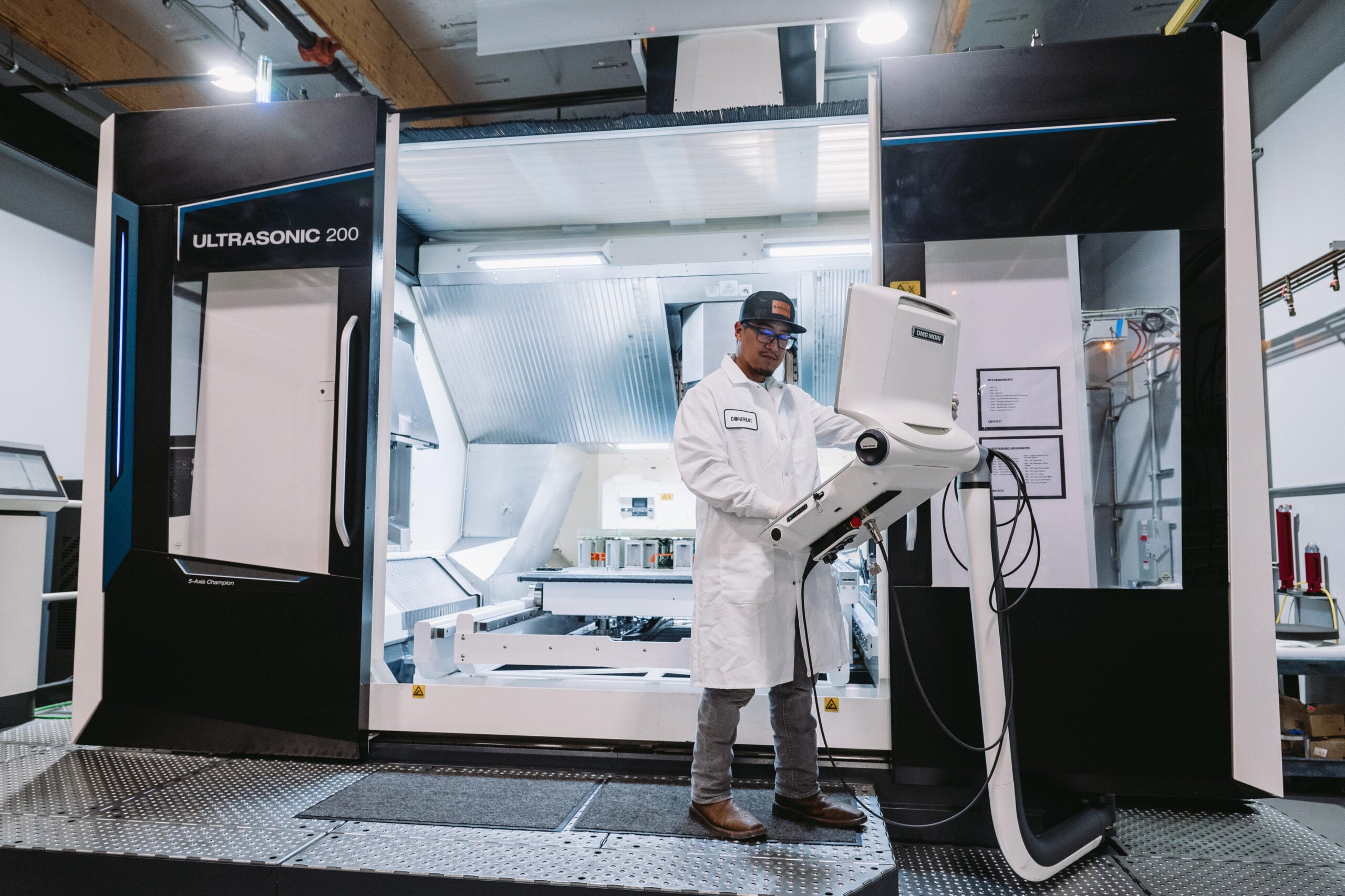
Installed in 2024, the DMC 210 U provides the capacity, precision and flexibility required to manufacture highly complex XXL components while supporting automated and digitally integrated production.
The machine forms part of Oberg Industries’ wider objective to create stable, efficient and future-ready manufacturing processes.
Responding to increasing global competition
Manufacturers serving highly regulated and technically demanding industries face growing pressure to reduce lead times, improve productivity and react quickly to changing customer requirements.
Oberg Industries identified several key challenges affecting its future production strategy:
- Increasing competitive pressure within global markets
- A need for greater complete-machining capability
- Growing demand for automation and digitalised processes
- The requirement to manufacture highly precise XXL components
- Market volatility requiring rapid production flexibility
- The need to maintain stable, efficient and repeatable quality
Complete machining, automation and digital integration were therefore central to the company’s investment decision.
These priorities closely align with DMG MORI’s Machining Transformation, or MX, strategy, which focuses on improving productivity through process integration, automation, digital transformation and sustainable manufacturing.
5-axis machining for XXL components
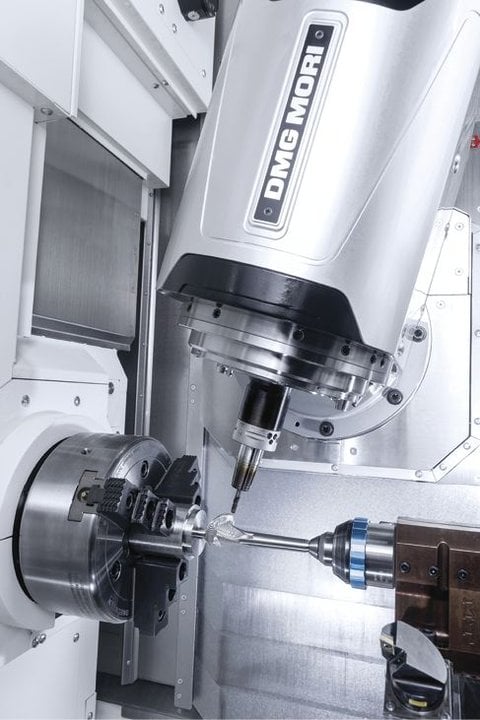
The DMC 210 U is a large 5-axis portal machining centre designed for the complete machining of complex and heavy components.
Its generous working area allows Oberg Industries to expand the size and complexity of the parts it can manufacture while maintaining the precision required by sectors such as aerospace, medical technology and energy.
The machine can accommodate components weighing up to 13,227 lbs, giving Oberg Industries additional capacity for large, high-value workpieces.
By combining multiple machining operations within a single setup, the DMC 210 U also helps reduce handling, minimise alignment errors and improve overall process reliability.
Complete machining is particularly valuable for complex components where repeated transfers between machines can increase lead times and introduce additional quality risks.
Automated production with the RPS 5 pallet system
To increase machine uptime, the DMC 210 U has been integrated with an RPS 5 automated pallet magazine.
The pallet system allows components and fixtures to be prepared away from the machining area while production continues.
Completed pallets can then be exchanged automatically, reducing the amount of time the spindle is waiting for setup operations.
This creates several important production benefits:
- Reduced setup and changeover times
- Higher machine utilisation
- Longer periods of unattended machining
- Improved production planning
- Greater flexibility across different component types
The automated system enables Oberg Industries to continue machining during night shifts and weekends, extending productive hours without requiring continuous operator attendance.
This is particularly valuable for long-running, high-precision components where uninterrupted machining can significantly improve delivery performance and production economics.
Digital integration through CELOS
The DMC 210 U has also been integrated into Oberg Industries’ digital manufacturing environment using DMG MORI’s CELOS platform.
CELOS provides a central interface for managing production information, machine data and manufacturing workflows.
By digitally connecting the machine with the wider production process, Oberg Industries can improve transparency and make production information easier to access across the organisation.
The platform supports more consistent planning, monitoring and documentation while reducing the risk of information being separated across different systems.
Digital integration also helps the company respond more quickly to changes in production priorities, customer demand and machine availability.
Technology cycles improve accuracy and efficiency
Oberg Industries is also using DMG MORI technology cycles to simplify complex machining and calibration processes.
These include VCS Complete and the ATC cycle, which are designed to improve accuracy while reducing manual programming and operator intervention.
Technology cycles allow advanced machine functions to be accessed through guided, user-friendly interfaces rather than requiring every process to be programmed manually.
This reduces programming effort and helps ensure that sophisticated machining strategies can be applied consistently.
The result is improved process efficiency, greater repeatability and reduced non-productive time.
Building a future-ready manufacturing operation
The DMC 210 U investment gives Oberg Industries additional capability to manufacture large, complex components with a high level of precision.
Combined with the RPS 5 pallet automation system, CELOS digital integration and DMG MORI technology cycles, the machine supports a more productive and flexible manufacturing environment.
The key benefits include:
- Expanded capacity for large and heavy components
- Greater 5-axis complete-machining capability
- Reduced setup and non-productive times
- Increased unattended production
- Improved process accuracy and repeatability
- Reduced programming effort
- Better digital visibility across manufacturing operations
- Greater flexibility in response to changing market demand
For Oberg Industries, the investment is not simply about adding another machine to the shop floor. It represents a wider commitment to automated, digitally connected and highly efficient manufacturing.
By adopting future-proof production technology, the company is strengthening its ability to compete across aerospace, medical, energy and tooling markets while continuing a history of innovation that began more than 75 years ago.