
02:38
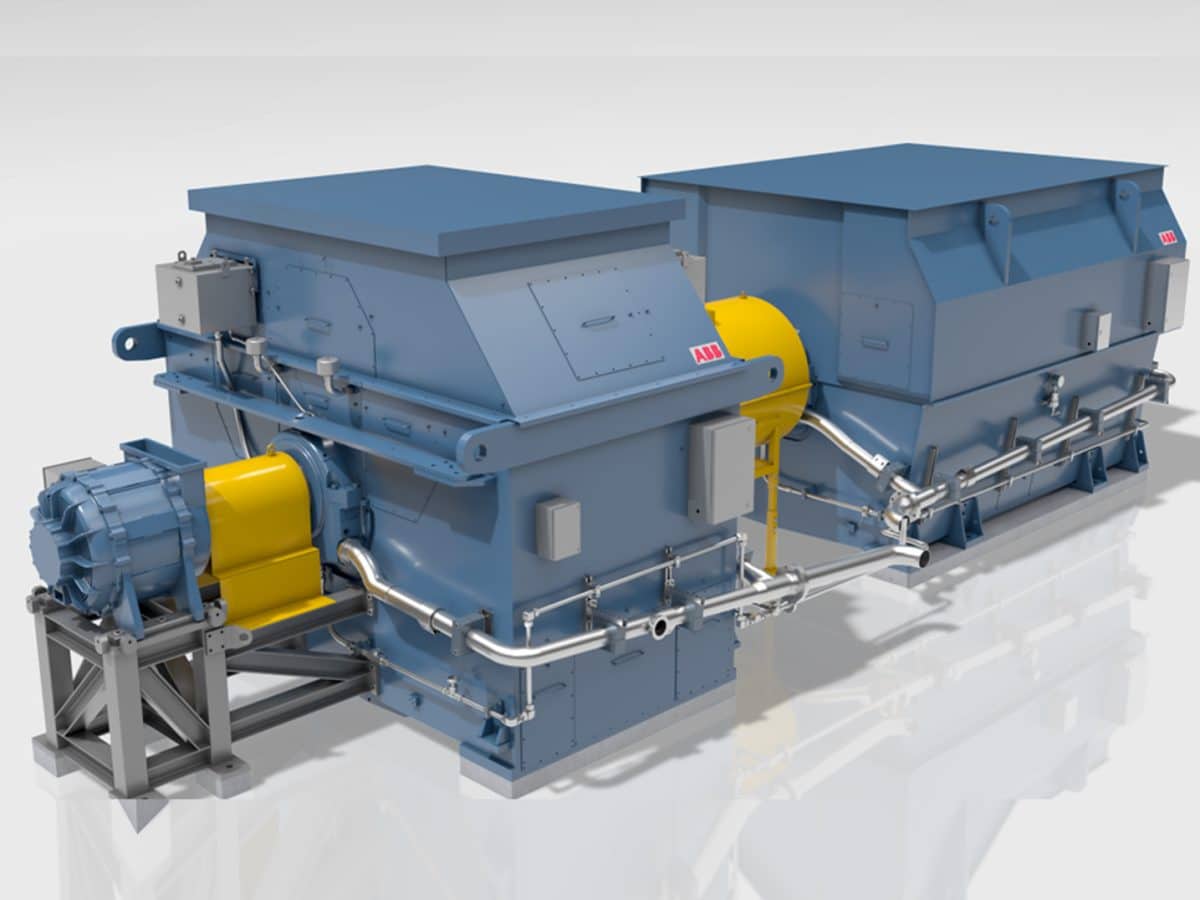
As artificial intelligence continues to transform industries and fuel an unprecedented surge in data centre construction worldwide, ensuring reliable and stable power has emerged as one of the sector’s biggest challenges. Recognising the growing pressure that AI-driven facilities place on electrical infrastructure, ABB has introduced a new pre-engineered modular synchronous condenser package designed to enhance grid stability, accelerate project deployment, and support the rapidly expanding data centre ecosystem.
The launch comes at a critical time for the global digital economy. Industry projections indicate that data centre capacity could increase nearly fourfold by 2030, largely driven by the explosive growth of AI applications, cloud computing, machine learning, and advanced analytics. While these technologies are creating new opportunities across industries, they are also placing unprecedented demands on power networks that must deliver consistent, high-quality electricity to increasingly energy-intensive facilities.
Unlike conventional industrial operations, AI-focused data centres experience significant and rapid fluctuations in electricity demand as workloads change dynamically. These sudden variations can create challenges in maintaining stable voltage and frequency levels across the electrical grid. If not properly managed, such disturbances can impact grid reliability, delay project approvals, increase infrastructure costs, and limit the ability of operators to scale their facilities efficiently.
To address these challenges, ABB’s newly introduced modular synchronous condenser package provides a dedicated solution for improving grid resilience at data centre connection points. The system is engineered to deliver instantaneous inertia and dynamic reactive power support, helping stabilize voltage and frequency in real time. By responding rapidly to fluctuations in power demand, the solution minimizes the risk of disturbances affecting both the facility and the wider electrical network.
Grid stability has become an increasingly important consideration for data centre developers, particularly as utilities and regulators impose stricter requirements for connecting large-scale facilities to existing power infrastructure. ABB’s solution enables operators to address these requirements early in the development process, reducing uncertainty and simplifying the path toward grid approval.
One of the key advantages of the new package is its modular, pre-engineered design. Traditional synchronous condenser installations often require extensive site-specific engineering, lengthy construction schedules, and complex integration processes. ABB’s standardized approach significantly reduces these challenges by delivering a ready-to-deploy solution that minimizes on-site work and accelerates project timelines.
The integrated package includes a predefined foundation system, synchronous condenser, flywheel, starting equipment, lubrication systems, cooling infrastructure, auxiliary equipment, electrical house (e-house), and optional noise-reduction enclosure. By combining all major mechanical, electrical, and control components into a single coordinated solution, ABB simplifies procurement, installation, commissioning, and long-term operation.
A particularly important element of the package is the specially developed flywheel system, which has been engineered specifically for electrical network stabilization. The flywheel stores rotational energy and provides additional inertia to support the grid during sudden changes in power demand. ABB has also incorporated an integrated safety enclosure, enhancing operational reliability while meeting stringent safety standards.
The standardized design offers significant benefits beyond faster deployment. By reducing engineering complexity and minimizing the need for custom solutions, the package provides greater predictability in project execution, helping developers manage costs and reduce schedule risks. This is especially valuable as the race to build AI-ready data centre capacity intensifies globally.
In addition to supporting current infrastructure requirements, the solution has been designed with future scalability in mind. As AI workloads continue to grow and facilities expand, operators can integrate additional capacity without requiring major redesigns of their power systems. This flexibility enables data centre owners to adapt to changing business needs while maintaining reliable grid performance.
Commenting on the launch, David Bjerharg, Business Line Manager, High Speed Synchronous at ABB, highlighted the growing importance of grid stability in supporting AI-driven digital infrastructure. He noted that as investment in large-scale data centres accelerates worldwide, operators need solutions that enable faster connections to the grid while ensuring long-term operational reliability and scalability.
The introduction of the modular synchronous condenser package reflects ABB’s broader strategy of supporting the global energy transition and digital transformation. As renewable energy penetration increases and electricity demand from sectors such as artificial intelligence, cloud computing, and electrified transportation continues to rise, maintaining grid stability is becoming more complex and increasingly critical.
For data centre developers, utilities, and infrastructure providers, technologies that enhance power quality and network resilience will play a central role in enabling future growth. ABB’s latest solution addresses these emerging requirements by combining proven grid-stabilization technology with a streamlined deployment model tailored to the fast-paced demands of the AI era.
As the world moves toward an increasingly digital and AI-powered future, reliable access to stable electricity will become as important as computing capacity itself. With its modular synchronous condenser package, ABB is helping bridge the gap between growing digital infrastructure demands and the need for a resilient, reliable, and future-ready power grid.
Opt in today to our newsletter