AUTOMATED CELL FOR PRODUCING MEDICAL COMPONENTS FROM TOUGH MATERIALS
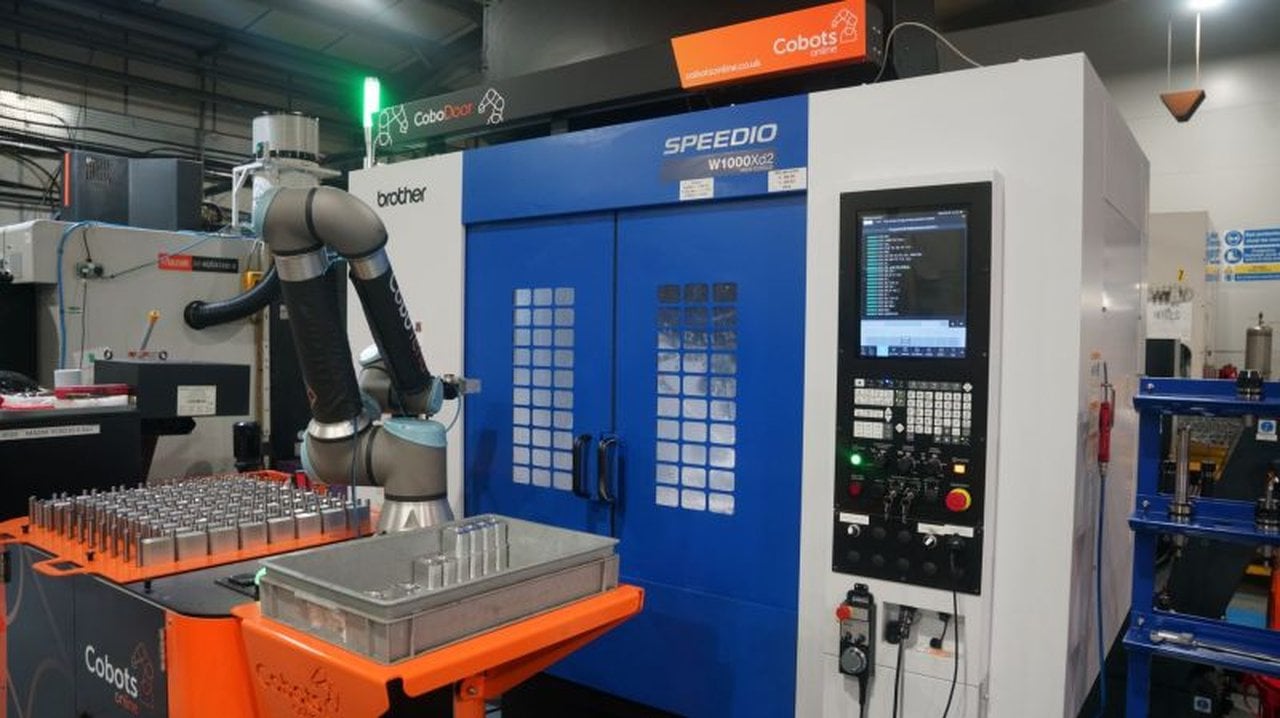
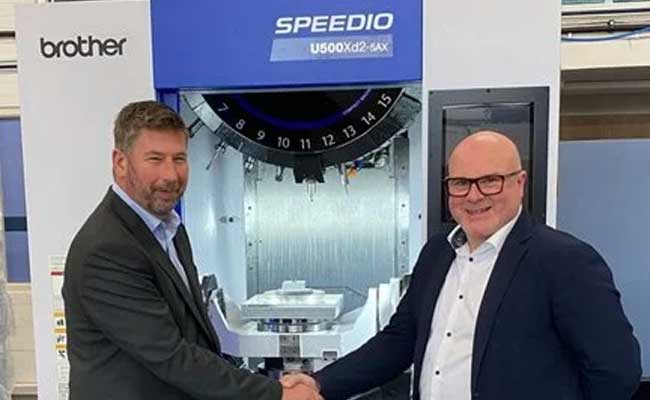
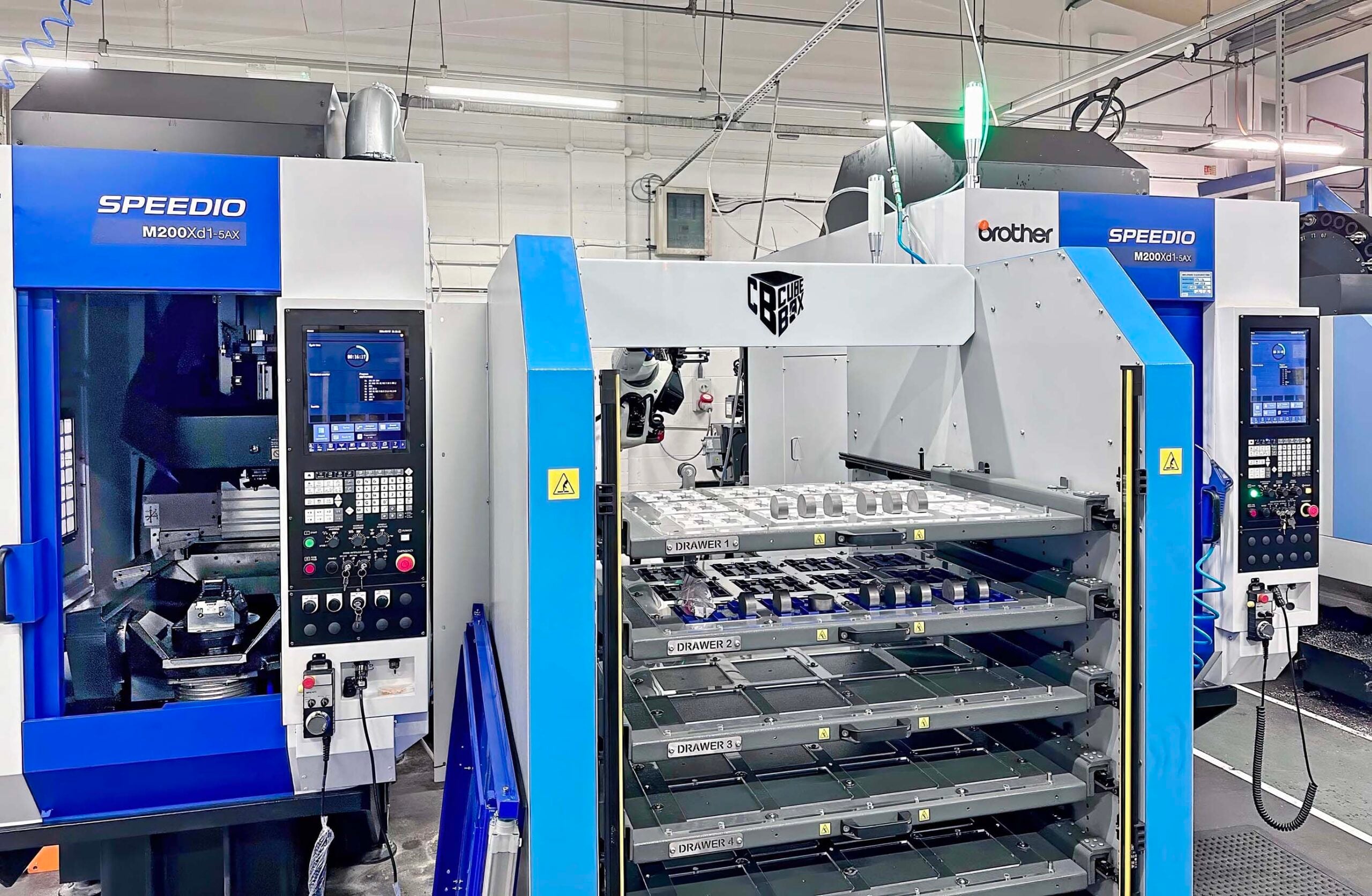
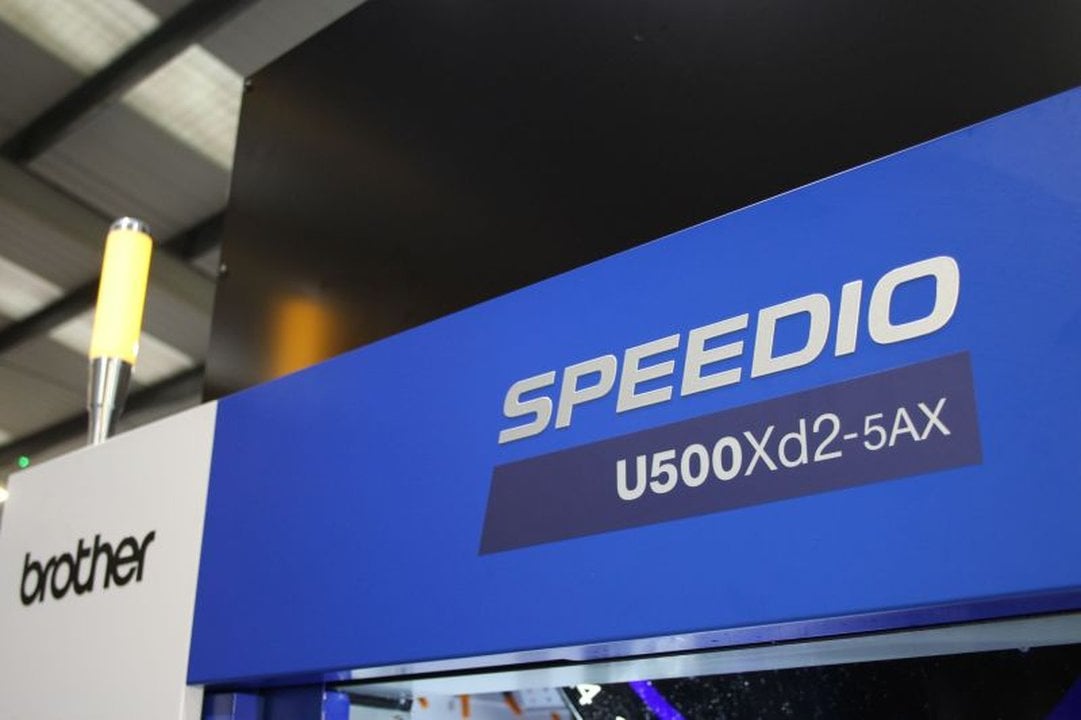
Subcontract machining firm Kirkstall Precision, Leeds, has enhanced its ability to serve the demanding medical sector with the acquisition of a pair of Japanese-built Brother Speedio M200Xd1-5AX 5-axis machining centres, served by a Tezmaksan robotic workpiece load, unload and storage system from Turkey. The cell was installed in two phases by Whitehouse Machine Tools, UK and Ireland sales agent for both of the overseas manufacturers.
For the past seven years, the subcontractor has focused almost exclusively on producing components for the medical industry, while also producing surgical instruments and implants for the veterinarian sector. The company is seeing a 15 to 20 percent year-on-year growth rate due to high demand for its services.
The first Speedio with a 16,000 rpm BBT30 BIG Plus spindle was installed in stand-alone mode in mid-2025 and was chosen for its accuracy, repeatability, versatility and compact footprint. Adam Thornton, Kirkstall’s managing director said, “Accuracy in the medical sector is a given. Everything has to be completely correct, so we inspect and report all dimensional tolerances. Opting for a top quality machine tool like the Brother Speedio was a fairly obvious decision for us.
“We’ve used 40-taper 5-axis technology for some time, but the Brother Speedio is faster and takes up less space. It is ideal for the smaller, high-accuracy parts we produce and deliver typically a 20 percent cycle time reduction compared with our larger production centres.”
Approved to ISO 13485, a globally recognised quality management standard for medical devices, Kirkstall produces mainly low-volume orthopaedic components from challenging materials, including stainless steel, hardened stainless, titanium and other tough alloys. The 30-taper Brother Speedio M200Xd1-5AX is ideal for processing these materials. Additionally, it is able to combine on a single platform 5-axis prismatic machining with turning using the rotary torque table, which was a further key attraction of the production platform.
A notable attribute of the machine is its energy efficiency. Compared to traditional 40-taper machining centres, it draws up to 80% less power, which translates into electricity savings worth several thousands of pounds a year. Energy-saving measures include power regeneration during deceleration, high efficiency motors driving the spindle and axis motions, an optimised pump for coolant recirculation, LED lighting, low air consumption, and automatic power-off when the machine is not being used.
Low power consumption is not just through energy-saving features, but is also inherent in the machine design. Fast cutting speeds and rapids, plus an ability to combine milling and turning operations in one setup, lead to reduced cycle times that in turn lower power consumption.
Second installation phase
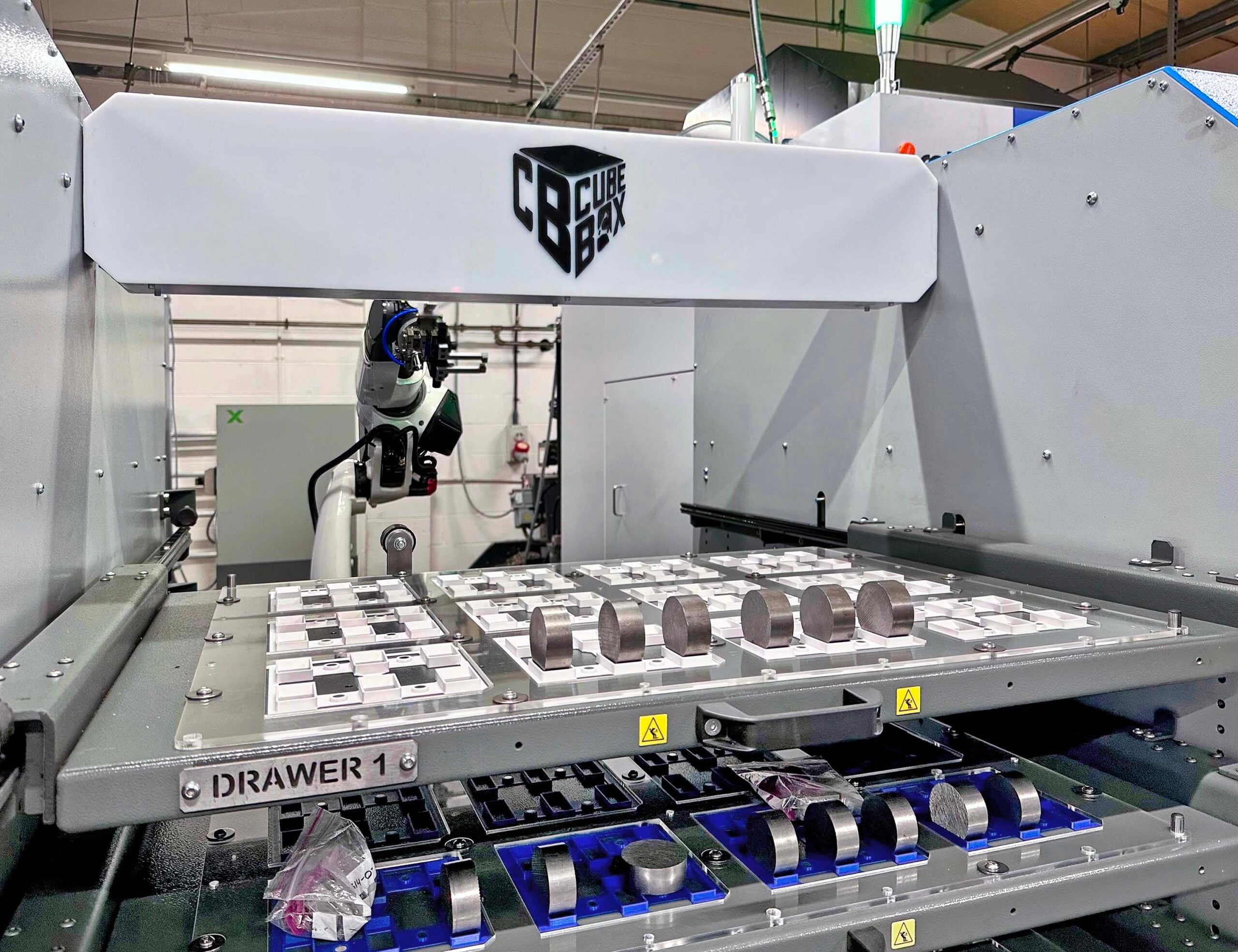
The first Brother Speedio proved so successful in terms of production output and accuracy, despite the tough materials being machined, that in April 2026 the subcontractor decided to install a second M200Xd1-5AX and automate both of them with a single workpiece handling robot. The Tezmaksan CubeBOX Blues DR is a compact automation system with a 6-axis industrial robot and an integrated storage unit consisting of a five-level drawer stacker.
The configuration in Leeds is engineered to handle round billets from 5 mm to 550 mm in diameter, having a maximum height of 135 mm and weighing up to 12 kg. The system facilitates 24-hour production including lights-out, with minimal operator attendance during daylight hours, boosting production output by up to 50%. Able to be installed in one day due to its standardised design, it offers a cost-effective alternative to bespoke automation and typically costs 20% less than machine-specific robot integrations.
A key advantage is the inclusion of the user-friendly RoboCAM smart automation software, which allows Kirkstall’s operators to convert 2D CAD drawings into robot instructions, without requiring robot programming or CAM knowledge. Manual unloading of machined workpieces and loading of fresh material for processing is accomplished while the robot continues to tend the two Brother machining centres. The system reduces human error, improves manufacturing quality and is expected to deliver a rapid return on investment.
Mr Thornton concluded, “Throughout both phases of this installation, Whitehouse Machine Tools has been a collaborative partner, very similar to us in terms of values and ambition.
“We are forming a medical group in the contract manufacturing sector and are aiming to be world class. Investing in top quality brands like the Brother cell really adds to this strategy.”