
Quantum Space Establishes New Manufacturing Facility in Oklahoma to Expand Spacecraft Production Capacity!
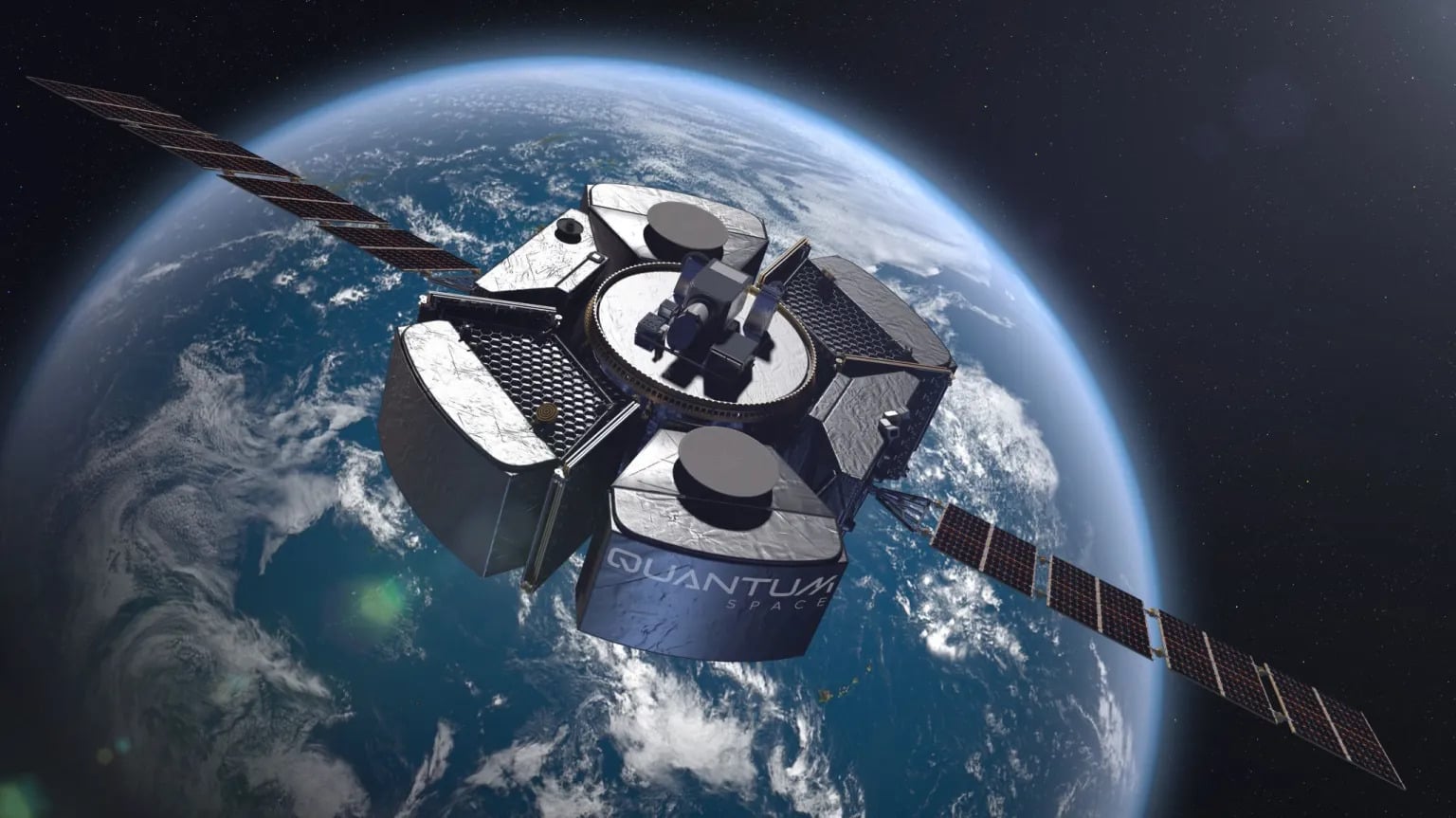
Quantum Space has announced plans to establish a new manufacturing facility in Tulsa, Oklahoma, further expanding its U.S. production network and strengthening its capabilities in spacecraft manufacturing and propulsion system development. The new facility will serve as the company’s primary site for large propulsion tank manufacturing and precision spacecraft component production, supporting the continued growth of its Ranger spacecraft program.
The Oklahoma expansion represents a significant milestone in Quantum Space’s broader manufacturing strategy as the company scales operations to meet increasing demand in the rapidly evolving space industry. Initially, the facility is expected to create up to 50 jobs, with additional employment opportunities anticipated as production volumes and operational activities continue to grow over time.
The Tulsa facility will complement Quantum Space’s existing operations across the United States, creating a distributed manufacturing and development ecosystem designed to support the complete lifecycle of spacecraft production, integration and mission operations. The company currently operates propulsion integration and testing capabilities in Hawthorne, California, while its engineering and mission development headquarters are based in Rockville, Maryland.
Together, these locations will form an integrated manufacturing network aimed at supporting the design, fabrication, assembly and operational deployment of the company’s Ranger spacecraft fleet. By expanding its production footprint geographically, Quantum Space aims to improve manufacturing scalability, operational efficiency and supply chain resilience while accelerating spacecraft development timelines.
The new facility is expected to initially occupy between 25,000 and 40,000 square feet and will be equipped with advanced manufacturing technologies and capabilities tailored for aerospace-grade production requirements. Planned operations at the site will include CNC machining, friction stir welding, assembly and fabrication, nondestructive testing and pressure testing.
These capabilities are critical for manufacturing high-precision propulsion tanks and spacecraft structures that require exceptional dimensional accuracy, material integrity and reliability under extreme operating conditions. Friction stir welding, in particular, is widely used in aerospace applications for producing strong, lightweight and defect-resistant joints in critical components.
The addition of advanced nondestructive testing and pressure testing systems will further ensure that manufactured components meet stringent aerospace quality and safety standards before integration into spacecraft systems. The facility’s manufacturing infrastructure is expected to support both prototype development and future scaled production activities.
According to the company, modifications and preparation work for the Tulsa facility are scheduled to begin in July 2026. Initial operational capability is targeted for the first quarter of 2027, marking the start of production activities at the site.
The decision to establish operations in Oklahoma reflects the growing importance of regional manufacturing hubs in supporting the expanding U.S. aerospace and space technology sectors. Tulsa’s industrial infrastructure, skilled workforce and manufacturing ecosystem make it an attractive location for advanced aerospace production and engineering activities.
Quantum Space’s expansion also highlights the increasing investment taking place across the commercial space industry as companies accelerate the development of next-generation spacecraft, propulsion systems and orbital mobility technologies. Building dedicated domestic manufacturing capabilities allows space companies to strengthen production control, improve scalability and reduce dependency on external supply chains.
As the company continues to expand its Ranger spacecraft program and broader space mobility initiatives, the new Oklahoma facility is expected to play a key role in supporting future production growth, mission readiness and long-term operational capability within Quantum Space’s expanding aerospace network.