
06:08
🔊Defining high volume drilling
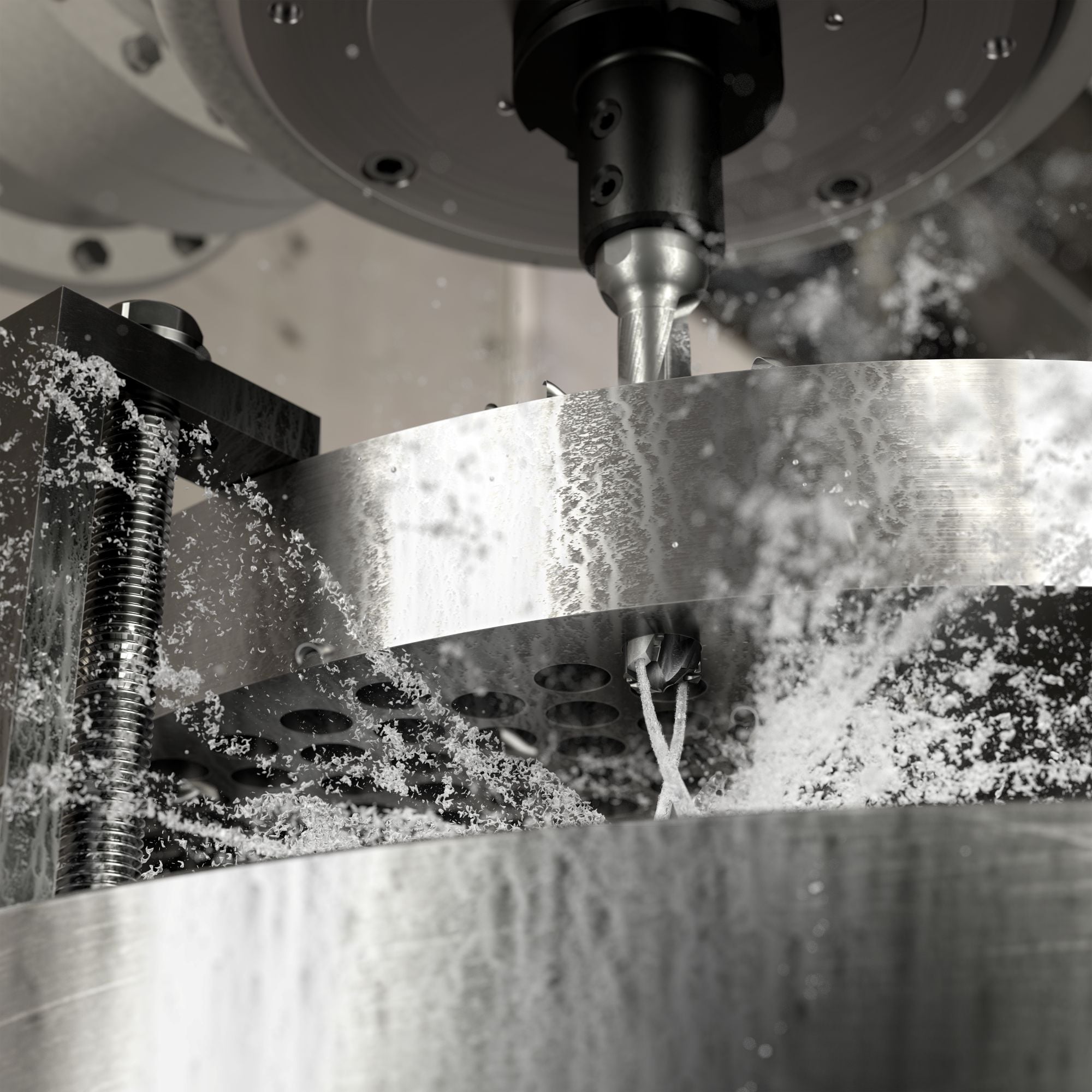
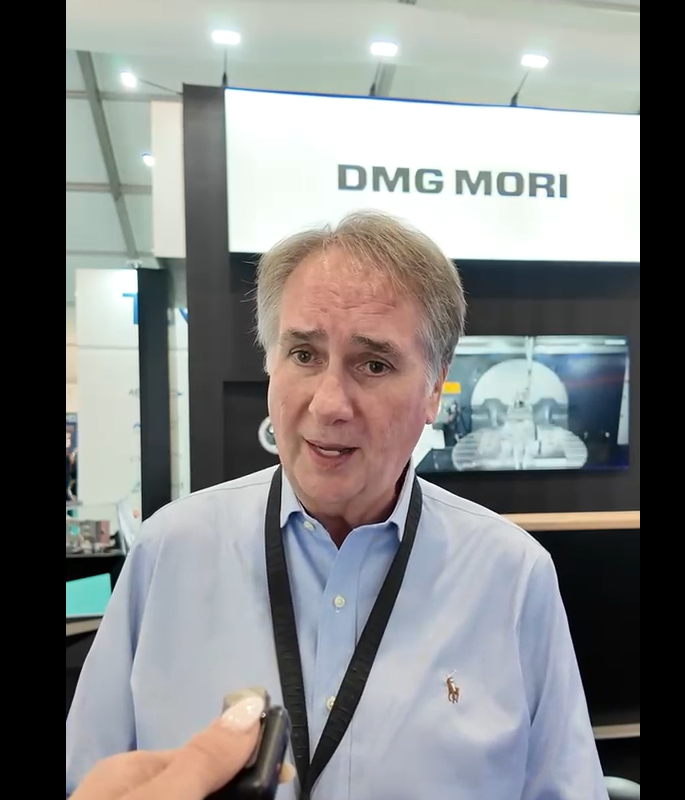
Sandvik Coromant launched the CoroDrill® DE10 in March, offering a universal M5 geometry for more versatile machining. Here, Mikael Carlsson, Global Product Specialist for Indexable Rotating Tools discusses what CoroDrill® DE10 can do.
The CoroDrill® DE10 was developed around three core goals. This was ease of use, robust performance and adaptability. It features a patented tip-to-body interface and a high-strength steel drill body that ensures maximum stability.
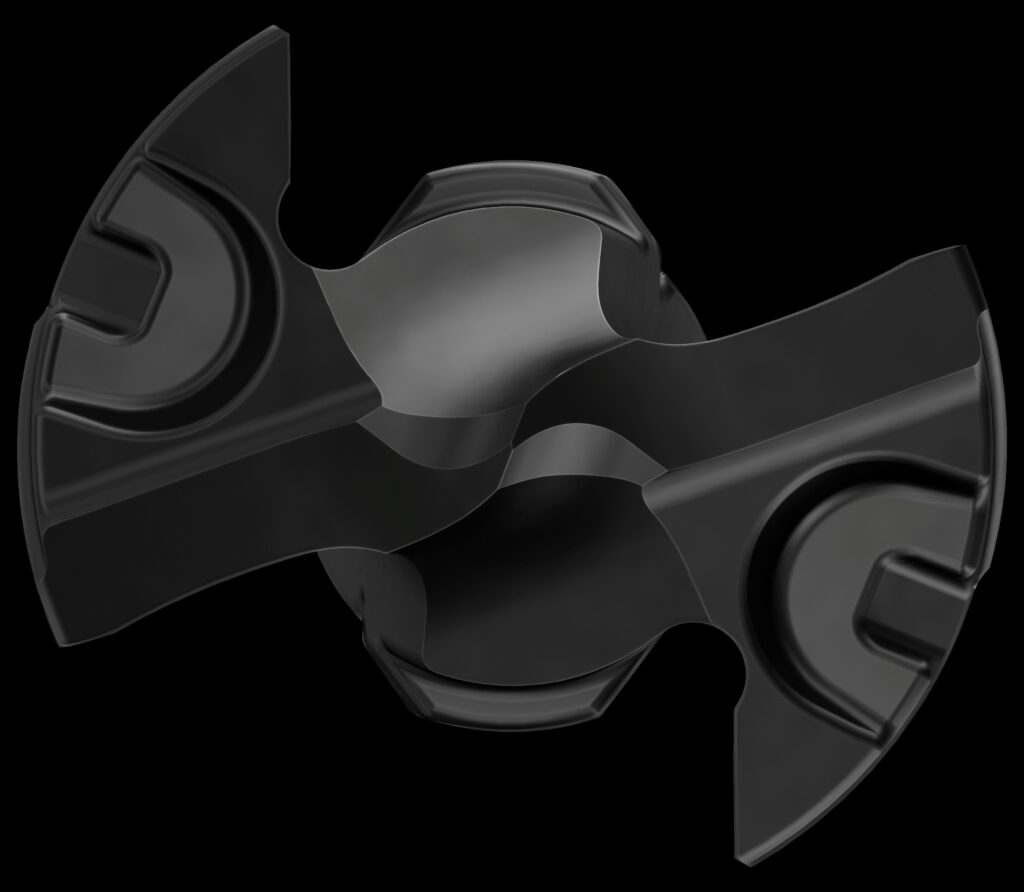
A defining innovation is its injection moulded solid carbide tip — a first for Sandvik Coromant. By adapting powder injection moulding, the team engineered a more refined and consistent tool geometry. This allowed for tighter control of the drill’s centre and reinforced corner design.
Another crucial feature of CoroDrill® DE10 is its patented pre-tension clamping interface, which combines familiar design with enhanced security. The interface enables fast and easy tip changes without spare parts, ensures reliable drilling at high feeds and speeds, delivers superior clamping strength and achieves straighter holes. But, benefits aside, a tool needs to prove its worth in real machining environments if it’s to transform how manufacturers approach drilling applications.
Making a difference across ISO P
Following its launch, Sandvik has set out to prove CoroDrill® DE10’s performance through an extensive global benchmarking programme. Over several months, four Sandvik Coromant Centres in Sandviken, Sweden; Renningen, Germany; Chongqing, China and Mebane, USA, all conducted rigorous testing. Each site applied standardised cutting parameters across materials, including steels (ISO P1 and P2) and stainless steels (ISO M1), comparing CoroDrill® DE10 against the major competitors.
For a complete overview of the tool’s performance, multiple properties were tested and analysed. Hole diameter, surface quality, burr height, chip formation, tool life and process security were all assessed against solutions from six competitors.
The results were consistently in CoroDrill® DE10’s favour. In Sandviken, where high-strength ISO P2 trials pushed the drills to their limits, CoroDrill® DE10 achieved H9/H10 hole tolerances with exceptional process security. At the same time, the other two tools tested could not reach this accuracy range. CoroDrill DE10 delivers a consistent surface finish of Ra0.8–1.3µm without any tool damage, while the competing tools show chipping or corner wear.
Other ISO P tests showed promising results. In Germany, when testing on an ISO P1 workpiece, CoroDrill® DE10 was shown to improve or maintain surface finish of 1.2 to 1.9µm under optimised conditions, while one competing tool worsened dramatically to 3.3 to 3.8µm, even after optimisation — indicating unstable process. The other competitor showed an inconsistent surface finish initially and was not tested further due to poor performance.
The wear images from Chongqing clearly demonstrate that CoroDrill® DE10 maintains the most stable and predictable wear pattern compared to competitors. CoroDrill® DE10 showed only light flank wear and minor abrasion after 41 meters of drilling, and no edge breakage was observed. The wear was uniform and predictable, indicating controlled cutting forces and stable chip evacuation. On the other hand, one competitor reached a similar cutting length but exhibited corner breakage and edge damage. This type of brittle wear indicates instability, likely caused by chip adhesion or micro-fracture at the cutting edge. Another showed severe wear even earlier at just 38mm.
Mastering accuracy in ISO M
CoroDrill® DE10’s strengths were also demonstrated when testing ISO M materials. Over in Mebane, the tool consistently outperformed both a competitor’s solution by achieving the best balance of accuracy, surface quality, stability and tool life.
In testing, CoroDrill® DE10 delivered a precise hole diameter within 13.03 to 13.05mm, while maintaining a smooth surface finish of Ra0.7 to 1.0µm. It completed over 52.5 meters of drilling without reaching its tool life limit — unlike the other tools.
Results for ISO M1 were strong in Sandviken too. CoroDrill® DE10 exceeded 76m of drilling and still had usable tool life left, while the competitor failed at just 53m. The tool also consistently held hole diameters at 13 to 13.02mm, meeting H9/H10 tolerance classes. The competing tool, however, produced slightly undersized holes of 12.99 to 13.02mm. While a fractional difference, even the smallest deviances in hole size can risk assembly issues for workpieces in real-world scenarios.
The innovations behind CoroDrill® DE10 are impressive, and they’re proven to make a real difference to high-volume hole making.