
🎧Brother’s blue technology revolution: How energy efficiency is transforming UK manufacturing economics
🎧Brother’s blue technology revolution: How energy efficiency is transforming UK manufacturing economics
0:00 / 0:00
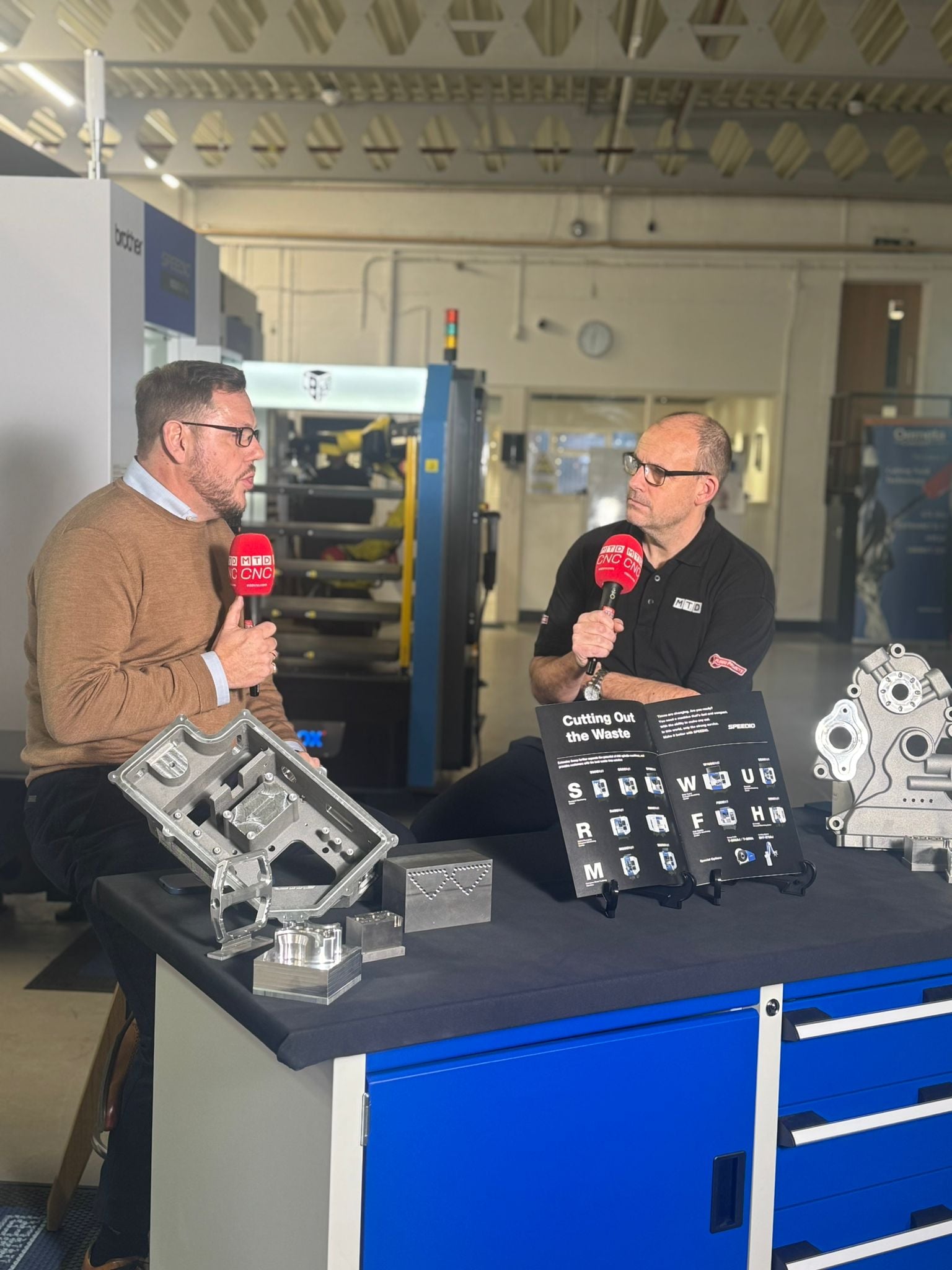
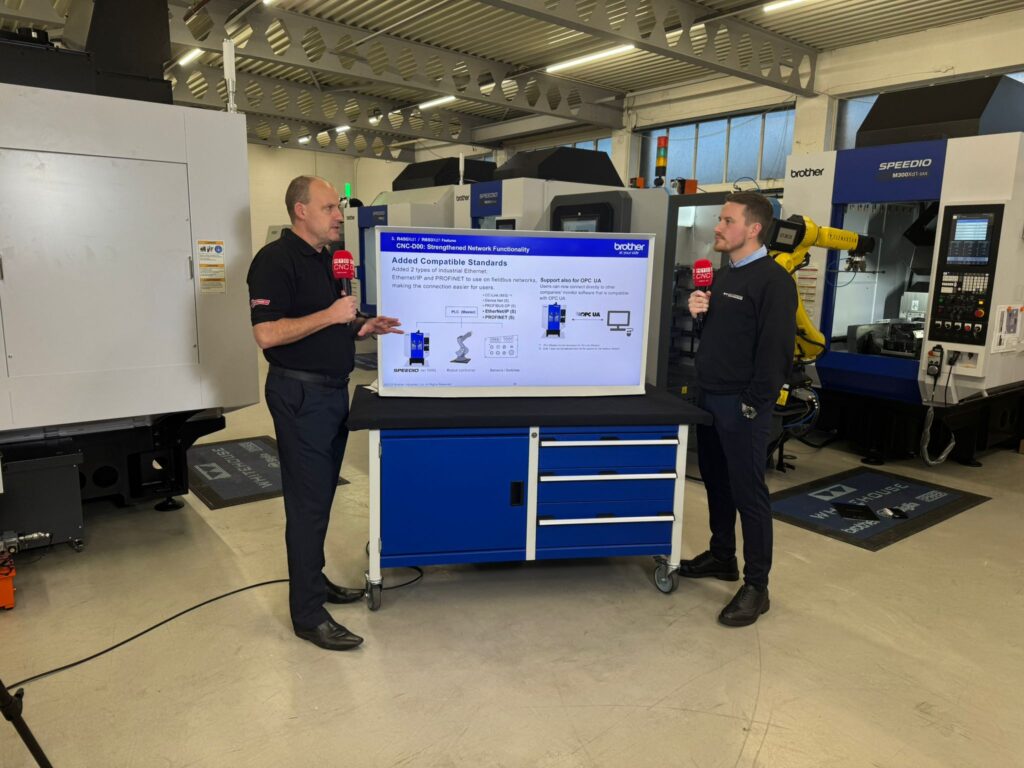
The manufacturing landscape is shifting as energy costs and environmental responsibility become as important as speed and quality. Brother’s Blue Technology leads this change, optimising machine design to minimise waste in time, resources, energy, and space. Peter Smith of Whitehouse Machine Tools, Brother’s UK distributor, says it marks a paradigm shift in machine tool investment evaluation. MTDCNC spoke to Peter to find out more…
Do your machine tools reduce energy consumption—benefitting manufacturers’ bottom line and the environment?
“The Speedio series of machining centres from Brother certainly do. They use patented motor technology to capture and redeploy power, and they use less air, a dual benefit of Brother’s Blue Technology approach.”
The Blue Technology Philosophy:
Eliminating Manufacturing Waste
Brother’s Blue Technology eliminates waste throughout manufacturing, focusing on efficiency across the entire machine cycle. It emphasises the importance of how efficiently a machine produces, recognising modern competitiveness depends on this.
The foundation of Blue Technology lies in Brother’s ‘low-mass, high acceleration’ design philosophy, which Smith describes as fundamental to achieving superior efficiency. “The machines use Sanyo Denki drives—the world’s fastest reacting servo motors. They have a very special design with IPM interior permanent magnet technology that essentially harness energy like you would get from an F1 car. It’s beautiful, really, the way that it works. So the acceleration and deceleration characteristics of the machine mean that the motors are creating lots of energy, but then they can harness that energy and redistribute it back into the machine.”
This energy regeneration technology marks a breakthrough in machine tool efficiency. During typical machining processes, the electrical energy produced during spindle and axis deceleration is usually converted into heat and lost. Brother’s IPM (Interior Permanent Magnet) servo motors recover this energy and redirect it back into the machine system to establish a regenerative cycle.
Real-World Energy Performance:
The 80% Reduction Achievement
Smith’s most compelling evidence for Blue Technology’s effectiveness comes from extensive real-world field testing conducted with wireless energy and air monitoring equipment measuring actual consumption. “Using the wireless monitoring technology on a customers 40 taper 5 axes, we’ve run the same program/parameters on a Brother, 5-axes. Running the same parts on both machines, the Brother actually achieved almost 90% energy saving.”
This extraordinary 90% energy reduction translates into substantial financial benefits. Smith calculates the economic impact with precision: “If you take an average energy tariff in the UK, the Brother over the other machine doing the same job saves between £5,500 to £6,000 per shift per year. So, if we’re operating a double shift, over a year, electricity savings will be £11,000 to £12,000. Over a five-year period, which is generally how people finance machines, manufacturers will save £55,000+.”
“These savings compound across multiple machines. For manufacturers operating five machines on double shifts, the annual energy savings rise to £275,000 over a typical five-year financing period. In an era of volatile energy prices, these reductions provide both immediate cost benefits and long-term economic stability.”
Brother’s own documentation supports this data, with official testing demonstrating 80% energy reductions in a variety of cutting applications compared to typical BT40 spindle machines. This performance stems from multiple on machine technological innovations working in collaboration, rather than any single efficiency improvement.
The Four Pillars of Blue
Technology Efficiency
Brother’s Blue Technology reduces waste in four areas, improving efficiency. The first focuses on eliminating time waste with high-acceleration / deceleration servo systems, optimised dynamics and rapid tool change times (0.7 seconds). Smith notes: “It’s not about the rapid rate. It’s about acceleration rates. Most machining centres operate around 0.6 to 0.8G axes acceleration, Brother Speedio’ are much faster at up to 2.2G.” These performance characteristics deliver healthy cycle time reductions, between 20% and 70% depending on the application, compared to 40 taper technologies.
The second pillar targets resource waste through efficient coolant systems, LED lighting, and reduced compressed air consumption. Brother’s mechanical tool change system exemplifies this approach, requiring minimal pneumatic assistance compared to traditional alternatives. “The whole tool change is mechanical using a linear cam mechanism. Air is only used briefly to clean the spindle taper. That’s a huge saving when you look at air consumption,” Smith notes.
Energy waste elimination forms the third pillar, incorporating IPM servo motor technology, energy regeneration systems, and optimised control algorithms. The fourth pillar addresses space waste through compact machine designs that deliver equivalent or superior capability within significantly smaller footprints.
Advanced Motor Technology:
The Heart of Energy Efficiency
Brother’s energy efficiency is founded on IPM motor technology. Smith states: “IPM interior permanent magnet servos respond quickly to rotation and stop, enabling efficient cutting with less power. Unlike normal induction motors, it starts instantly and efficiently.”
IPM motors incorporate permanent magnets embedded within the rotor, providing superior efficiency and responsiveness compared to induction alternatives. This design enables rapid acceleration and deceleration whilst minimising energy waste during speed transitions.
The energy regeneration capability represents perhaps the most innovative aspect of Brother’s motor technology. During deceleration cycles, the IPM motors function as generators, converting kinetic energy back into electrical energy. This recovered power is redistributed throughout the machine system, reducing overall grid consumption. The technology effectively transforms what was previously waste heat into useful energy, creating a regenerative cycle that compounds efficiency gains throughout extended operation periods.
Brother’s dedication to motor efficiency covers all machine axes. The Sanyo Denki servo drives for the linear axes offer quick response, ensuring energy efficiency benefits both positioning and cutting.
Control System Integration
Brother’s D00 control system plays a crucial role in Blue Technology implementation, incorporating specific features designed to minimise energy waste during non-productive periods. Smith highlights the system’s comprehensive approach: “A variety of functions such as auto coolant off, auto machine lights off, and auto power-off are installed to ensure power saving.”
The control system’s 1000-block look-ahead, sub-micron control capability enables optimised toolpath execution that minimises unnecessary acceleration and deceleration cycles. By analysing upcoming machining operations, the system can optimise spindle speeds and feed rates to maintain efficiency.
The D00 control incorporates an energy monitoring application that enables real-time visualisation of power consumption, helping operators identify opportunities for further efficiency improvements. This transparency allows manufacturers to understand exactly how their machining strategies impact energy costs.
Compressed Air Efficiency:
The Often-Overlooked Savings
While electrical energy consumption receives primary attention, compressed air efficiency represents another significant cost reduction opportunity. Smith emphasises this often-overlooked benefit: “It doesn’t use a great deal of it, but the bit that it does use is obviously critical.”
Brother’s mechanical tool change system exemplifies the compressed air efficiency approach. Unlike traditional tool changing systems that require significant air consumption for each operation, Brother’s mechanical system requires only minimal air for chip clearing.
The mechanical approach reduces air use during tool changes. While conventional systems need compressed air to stop the spindle quickly, Brother’s system keeps it moving, eliminating this energy waste.
For manufacturers operating multiple machines, compressed air savings can represent thousands of pounds annually. The efficiency gains also reduce compressor sizing requirements for new installations, providing capital cost savings beyond operational benefits.
The Hidden Economics
The total cost of ownership analysis shows advantages of Blue Technology adoption. Beyond energy savings, manufacturers see reduced maintenance. The mechanical tool change system wears less than pneumatic options, and IPM motors’ efficiency decreases heat and bearing stress.
Factory costs compound the economic benefits of Brother’s compact designs. Smith calculates that Brother machines typically require 25 to 30% less floor space than equivalent BT40 systems. In high-value manufacturing, this can save thousands.
The reliability benefits further enhance the total cost of ownership (TCO). “Brother machines are built for lights-out three-shift running. So our advice is run them flat out.”
Environmental Responsibility
Brother’s Blue Technology addresses rising corporate environmental standards by reducing CO2, supporting sustainability goals, and offering cost savings.
Smith recognises the growing importance of environmental performance: “Companies’ efforts to promote energy saving bring a variety of values for their business operations. Amid global calls for carbon neutrality, promoting energy saving and contributing to decarbonisation will lead to an increase in corporate value.”
For manufacturers pursuing environmental certifications or carbon trading schemes, the measurable efficiency improvements provided by Blue Technology offer valuable documentation.
Overcoming Traditional Thinking
Despite the compelling economic and environmental benefits, Smith acknowledges market perception of BBT30 Blue Technology, due to historical misconceptions and early adoption of 40 taper technologies, needs to be more open minded. “Engineers typically operate on personal experience or that or their peers and the UK market was an early adopter of 40 taper technology from manufacturers like Bridgeport & Cincinnati. Brother BBT30 Blue Technology has advanced so far in the last decade in efficiency and cutting capability, 40 taper users who have become uncompetitive now have the opportunity to regain a competitive edge with Brother”
Smith continues: “We get too carried away with brand loyalty. Not one machine tool manufacturer has all the answers, furthermore buyers become fixated on a deal rather than TCO. WMT CNC & Brother are developing a method of predicting TCO for machine investments so buyers can take a long-term investment decision at the point of purchase.
The journey to market transformation requires manufacturers to assess machine tool investments through thorough economic analysis rather than relying on past preferences. Smith’s approach stresses empirical testing: “Supply us with your ISO programme. We’ll run it, and we’ll give you our honest opinion about whether a BBT30 taper Brother could improve the ROI.”