Tata Motors Expands Alternate Fuel Commercial Vehicle Portfolio with Launch of New Intra V40 Bi-Fuel Pickup!
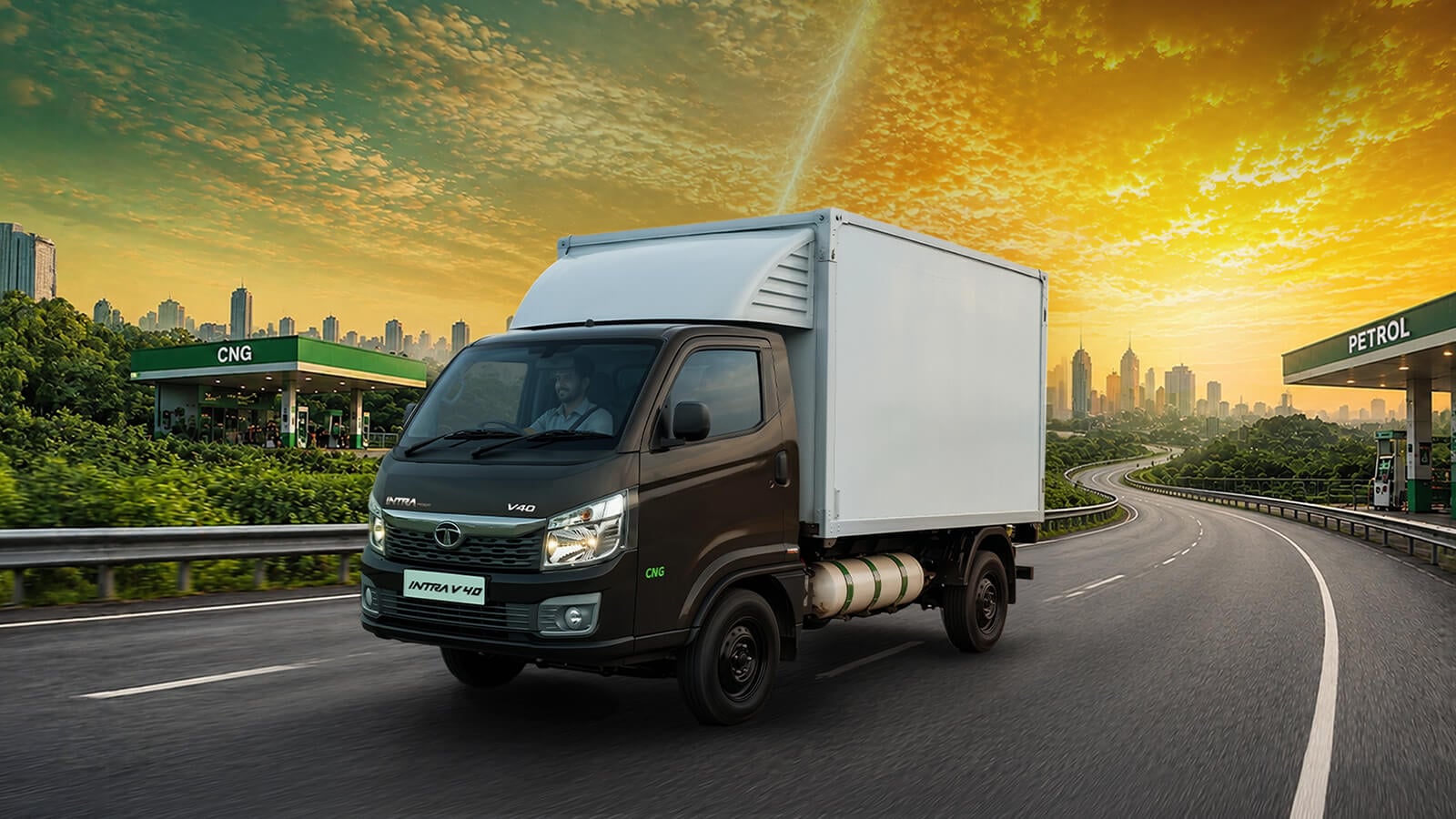
Tata Motors has strengthened its presence in India’s rapidly growing small commercial vehicle segment with the launch of the all-new Intra V40, a bi-fuel pickup truck designed to deliver enhanced efficiency, operational flexibility, and sustainable transportation solutions for businesses. The latest addition to the company’s Intra range reflects Tata Motors’ continued focus on expanding its alternate fuel vehicle portfolio while addressing the evolving needs of fleet operators, logistics providers, and small business owners.
As the commercial transportation industry increasingly seeks cost-effective and environmentally responsible mobility solutions, demand for alternative fuel vehicles continues to rise. Rising fuel costs, stricter emission standards, and the need for improved operating economics are driving businesses to adopt vehicles that offer greater fuel flexibility without compromising performance or payload capability. The Intra V40 has been developed specifically to meet these requirements, combining the benefits of compressed natural gas (CNG) and petrol operation in a single vehicle platform.
The new pickup is powered by a 1.2-litre engine that delivers 58 bhp of power and 106 Nm of torque, providing reliable performance for a wide range of cargo transportation applications. Designed to support demanding last-mile delivery operations, urban logistics networks, and intra-city distribution activities, the vehicle offers the versatility required by modern commercial fleet operators.
A key feature of the Intra V40 is its dual-fuel capability, which allows operators to switch seamlessly between CNG and petrol depending on operating conditions and fuel availability. This flexibility helps ensure uninterrupted operations, particularly in regions where access to CNG infrastructure may vary. By enabling drivers to continue their journeys using petrol when necessary, the vehicle reduces the risk of downtime and enhances route planning flexibility.
To further improve operating efficiency, Tata Motors has equipped the Intra V40 with a large 110-litre CNG tank that provides extended driving range between refueling stops. The increased range helps reduce operational interruptions while improving productivity for businesses that rely on continuous vehicle utilization throughout the day.
One of the standout attributes of the Intra V40 is its best-in-class payload capacity of 1,525 kilograms. This high carrying capability allows operators to transport larger loads in a single trip, improving fleet efficiency and reducing transportation costs. Complementing the payload capacity is a spacious 2,960 mm cargo deck that offers ample room for a variety of goods, making the vehicle suitable for industries such as retail distribution, e-commerce logistics, agricultural transportation, construction materials delivery, and small-scale manufacturing supply chains.
The vehicle has been built on Tata Motors’ proven commercial vehicle architecture and incorporates a hydroformed chassis designed to provide enhanced structural strength, durability, and stability. Hydroforming technology allows for improved load distribution and chassis rigidity while maintaining overall vehicle robustness, contributing to better handling characteristics and long-term reliability under demanding operating conditions.
Driver comfort has also been a major consideration in the vehicle’s design. The Intra V40 features a walk-through cabin layout that improves accessibility and convenience for drivers who spend long hours on the road. The spacious cabin environment supports greater comfort during daily operations, helping reduce driver fatigue and enhance overall productivity.
Safety and vehicle control have been further enhanced through the inclusion of front disc brakes, which provide improved braking performance and more effective stopping power. This feature contributes to safer vehicle operation, particularly when carrying heavy payloads or operating in congested urban environments.
According to Pinaki Haldar, Vice President and Business Head of the Small Commercial Vehicle Pickup Unit at Tata Motors, the company remains focused on expanding its alternate fuel mobility offerings to help customers improve fleet economics while supporting cleaner transportation solutions. He noted that demand for environmentally responsible and cost-efficient commercial vehicles continues to grow across the industry, creating opportunities for innovative bi-fuel technologies.
The introduction of the Intra V40 further strengthens Tata Motors’ growing lineup of alternate fuel commercial vehicles. The company’s portfolio now includes models such as the Ace Pro Bi-Fuel, Ace CNG 2.0, and Intra V20 Gold, alongside an expanding range of electric commercial vehicles. This diversified offering enables customers to select vehicles that best align with their payload requirements, operational environments, route structures, and business objectives.
Beyond the vehicle itself, Tata Motors is enhancing the ownership experience through its Sampoorna Seva 2.0 service ecosystem and Fleet Edge connected vehicle platform. Fleet Edge provides real-time telematics capabilities, enabling operators to monitor vehicle performance, track utilization, receive predictive maintenance alerts, and gain actionable operational insights. These digital tools help improve vehicle uptime, optimize maintenance planning, and maximize overall fleet productivity.
As India’s logistics and transportation sectors continue to evolve, businesses are increasingly seeking solutions that combine operational efficiency, lower running costs, and sustainability. With the launch of the Intra V40, Tata Motors is reinforcing its commitment to delivering innovative commercial vehicle solutions that address these priorities while supporting the transition toward cleaner and more economical mobility.
The new Intra V40 represents another important step in Tata Motors’ strategy to lead the alternate fuel commercial vehicle market, providing customers with greater choice, enhanced productivity, and improved long-term value in an increasingly competitive transportation landscape.