
Seoul Semiconductor Expands Automotive Footprint with Advanced High-Voltage Opto-Semiconductor Technology!
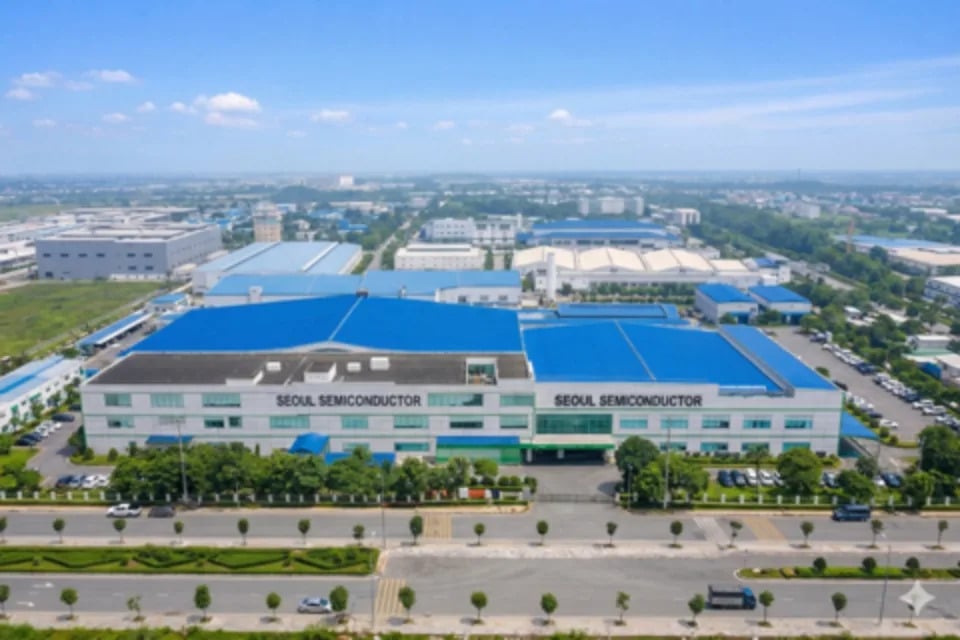
Seoul Semiconductor has announced a significant milestone for its proprietary High Voltage (HV) opto-semiconductor technology, as the innovative solution enters mass production programs with four major global automotive manufacturers across North America, Europe, and Asia. The company expects the technology to be integrated into ten vehicle models by the end of 2026, reinforcing its position as a key technology provider in the rapidly growing electric and hybrid vehicle market.
The achievement reflects the increasing demand for advanced semiconductor solutions that can improve vehicle efficiency, reduce system complexity, and support the next generation of intelligent automotive technologies. As automakers continue to accelerate the transition toward electrification, suppliers capable of delivering innovative and energy-efficient electronic components are becoming increasingly important to the automotive ecosystem.
At the heart of Seoul Semiconductor’s latest advancement is a proprietary high-voltage LED architecture capable of operating at 12 volts on a single semiconductor chip. This technology is paired with an advanced high-voltage driver system that differs significantly from conventional automotive LED solutions, which typically rely on 3-volt LED configurations and require additional voltage conversion components.
By enabling higher-voltage operation directly at the chip level, the technology allows vehicle manufacturers to simplify electrical system design, reduce component counts, and improve overall energy efficiency. According to the company, the solution can reduce driver-related components by more than 10 percent while lowering overall power consumption by approximately 10 percent compared to conventional LED systems.
These efficiency gains are particularly valuable in electric and hybrid vehicles, where energy management remains a critical design priority. Every reduction in power consumption contributes to improved vehicle efficiency, helping manufacturers maximize battery performance and driving range while minimizing energy losses throughout the electrical system.
A key innovation behind the technology is its multi-junction P-N semiconductor structure, which integrates high-voltage functionality into a single chip. Traditional automotive lighting systems often require extensive voltage conversion and additional circuitry when connected to the high-voltage battery systems commonly found in electric and hybrid vehicles. These conversion processes can create inefficiencies, generate excess heat, and increase system complexity.
Seoul Semiconductor’s HV technology addresses these challenges by operating at significantly higher voltages, reducing the need for multiple conversion stages and minimizing associated energy losses. The simplified architecture enables more streamlined printed circuit board designs, fewer supporting components, and a more compact overall system.
In addition to improving energy efficiency, the reduced component count contributes to lower manufacturing costs and enhanced reliability. Fewer components mean fewer potential failure points, helping improve long-term durability and system performance. The company estimates that the technology can reduce driver-related costs by approximately 20 percent compared to conventional LED solutions while simultaneously delivering improved operational efficiency.
Heat management is another area where the new technology provides advantages. By reducing energy losses and simplifying circuitry, the system generates less heat during operation, which can contribute to longer component life and improved overall vehicle reliability. Effective thermal management is becoming increasingly important as modern vehicles incorporate greater numbers of electronic systems and advanced lighting functions.
The technology arrives at a time when automotive lighting is evolving beyond traditional illumination functions. Modern vehicles increasingly incorporate adaptive lighting systems, intelligent headlamps, dynamic signaling technologies, and vehicle-to-vehicle communication capabilities that rely on advanced semiconductor components. These systems require highly efficient, compact, and reliable electronic solutions capable of supporting increasingly sophisticated functionality.
According to Matthew Fras, Chief Operating Officer of North America Sales at Seoul Semiconductor, the continued growth of electric and hybrid vehicle sales is creating significant opportunities for advanced opto-semiconductor technologies. As vehicle electronics become more complex, semiconductor content per vehicle is expected to increase substantially over the coming years, driven by the adoption of intelligent lighting systems, advanced driver assistance technologies, and connected vehicle features.
Industry forecasts indicate that electric and hybrid vehicles will continue to capture a growing share of global automotive sales throughout the remainder of the decade. This shift is expected to accelerate demand for innovative semiconductor technologies that can improve efficiency, support advanced functionality, and help manufacturers meet increasingly stringent performance and sustainability requirements.
For Seoul Semiconductor, the successful adoption of its HV opto-semiconductor technology by multiple global automakers represents a significant validation of its engineering capabilities and innovation strategy. By addressing critical challenges related to efficiency, cost, thermal management, and system complexity, the company is positioning itself to play an increasingly important role in the future of automotive electronics.
As the automotive industry continues its transformation toward electrified, connected, and intelligent mobility solutions, advanced semiconductor technologies such as Seoul Semiconductor’s HV platform are expected to become key enablers of next-generation vehicle performance, safety, and energy efficiency.