

Hitachi Energy Invests INR 2,000 Crore in New Transformer Manufacturing Facility to Support India’s Energy Transition!
Hitachi Energy has announced a major investment of approximately INR 2,000 crore to establish a new Large Power Transformer (LPT) manufacturing facility in Karjan, Vadodara, further strengthening its commitment to India’s rapidly expanding power sector. The investment reflects growing demand for advanced grid infrastructure as the country accelerates renewable energy integration, industrial electrification, and large-scale transmission network development.
The new facility represents one of Hitachi Energy’s most significant manufacturing investments in India and aligns with the company’s long-term strategy of expanding local production capabilities to support the nation’s evolving energy requirements. The announcement follows expansion plans highlighted during the company’s FY26 fourth-quarter results and underscores confidence in India’s position as one of the world’s fastest-growing energy markets.
India is currently undergoing a transformative shift in its energy landscape. As the country pursues ambitious sustainability goals and works toward significantly increasing the share of renewable energy in its power mix, substantial investments in transmission and distribution infrastructure are becoming essential. According to projections from the Central Electricity Authority, India will require major upgrades and expansion of its transmission network to accommodate more than 900 GW of non-fossil-fuel energy capacity by 2035.
This rapid expansion is driving unprecedented demand for large power transformers, which serve as critical components in electricity transmission and distribution systems. These transformers play a vital role in integrating renewable energy sources, supporting industrial growth, enabling long-distance power transmission, and ensuring reliable electricity supply across increasingly complex power networks.
The new manufacturing plant in Karjan is scheduled for completion by FY28 and will significantly enhance Hitachi Energy’s domestic production capacity for large power transformers. Once operational, the facility will complement the company’s existing manufacturing operations in Gujarat and Karnataka, creating a stronger production network capable of supporting utilities, renewable energy developers, industrial customers, transportation projects, and digital infrastructure operators.
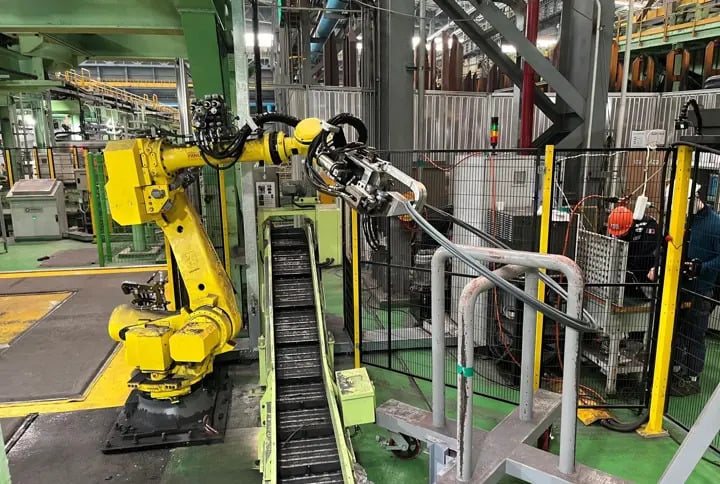
A key feature of the new plant will be its fully digital manufacturing environment. Hitachi Energy plans to integrate advanced automation systems, smart factory technologies, and digital production platforms throughout the facility. These technologies are expected to improve manufacturing efficiency, optimize production workflows, enhance quality control, and increase overall operational productivity.
The company is also placing a strong emphasis on sustainability in the design and operation of the facility. The plant is planned as a LEED-certified manufacturing center, incorporating energy-efficient systems, responsible resource management practices, and environmentally conscious operational processes. This approach aligns with both Hitachi Energy’s global sustainability objectives and India’s broader environmental goals.
Beyond expanding production capacity, the investment is expected to deliver significant economic benefits. The project is projected to create more than 1,000 direct and indirect employment opportunities, supporting workforce development and contributing to local economic growth in the region. These opportunities will span manufacturing, engineering, operations, maintenance, technical services, and supply chain functions, helping strengthen India’s advanced manufacturing ecosystem.
The transformers produced at the new facility will support a wide range of critical infrastructure applications. These include high-voltage transmission networks, High Voltage Direct Current (HVDC) projects, conventional and renewable power generation facilities, industrial operations, transportation systems, and the rapidly growing data center sector. As digitalization accelerates and energy demand continues to rise, the need for reliable, high-capacity power infrastructure is expected to increase significantly.
India’s energy transition is creating new opportunities for equipment manufacturers capable of delivering advanced technologies that support grid modernization and renewable integration. Large power transformers are particularly important as utilities expand transmission networks to connect renewable energy projects located far from major population centers and industrial hubs.
The investment also supports broader national initiatives focused on strengthening domestic manufacturing capabilities and reducing dependence on imported energy infrastructure equipment. By increasing local production capacity, Hitachi Energy will help enhance supply chain resilience while supporting India’s ambitions to become a global manufacturing and export hub for advanced power technologies.
N Venu, Managing Director and CEO of Hitachi Energy India Ltd., stated that the investment reflects the company’s strong confidence in India’s long-term energy growth trajectory. He emphasized that expanding local manufacturing capabilities will not only support critical infrastructure development but also contribute to job creation, skills development, and the strengthening of the country’s energy ecosystem.
As India continues its journey toward a cleaner, more resilient, and digitally enabled energy future, investments in advanced grid infrastructure will play a pivotal role in ensuring reliable power delivery. Through the establishment of its new transformer manufacturing facility, Hitachi Energy is positioning itself as a key contributor to this transformation while reinforcing its role as a strategic partner in the development of India’s next-generation power network.
The project represents an important step toward meeting the growing demand for high-capacity transmission equipment and supporting the infrastructure required to power India’s economic growth, renewable energy expansion, and digital transformation for decades to come.