🎧Hexagon advances digital manufacturing with AI-powered solutions
0:00 / 0:00
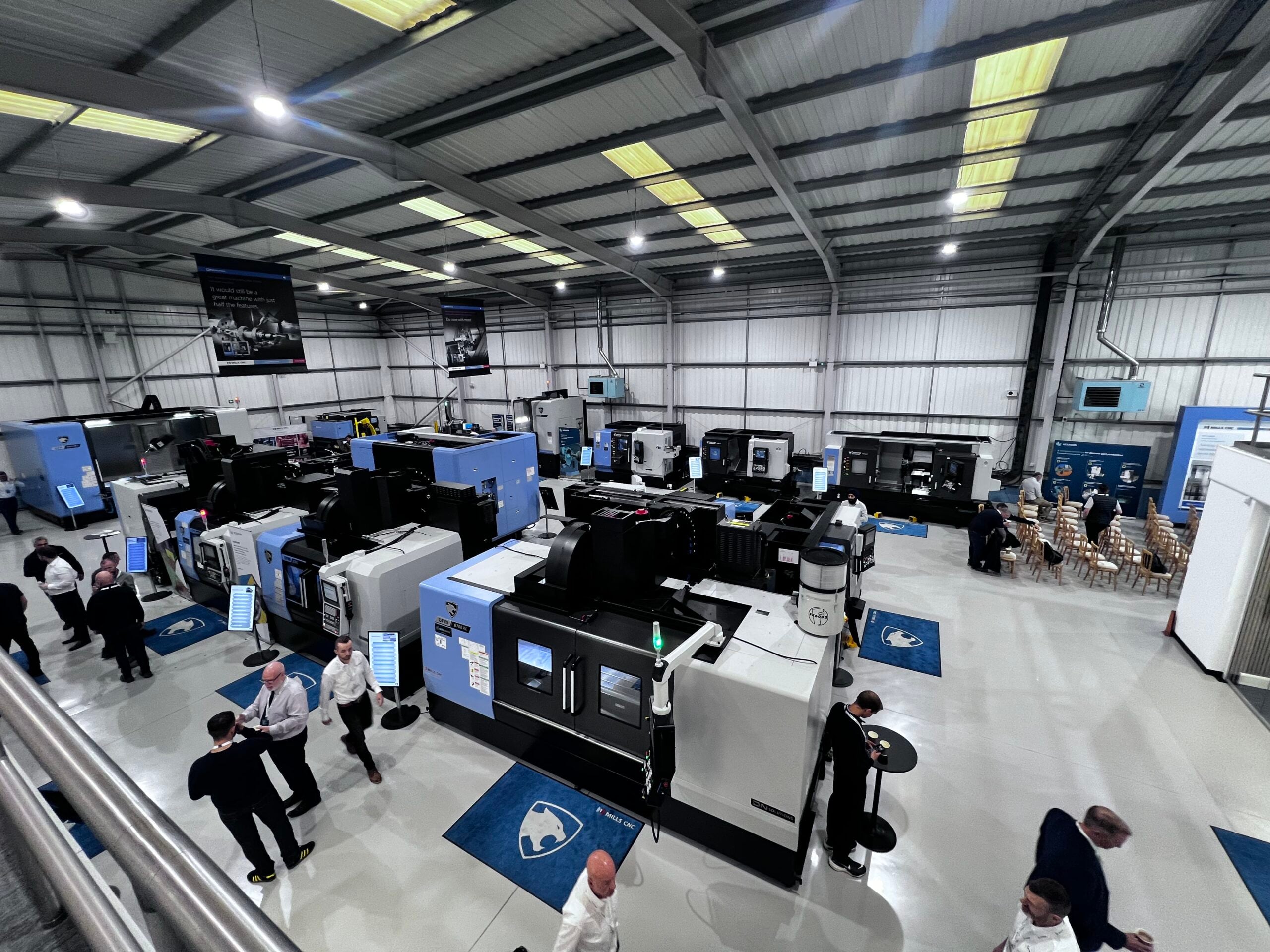
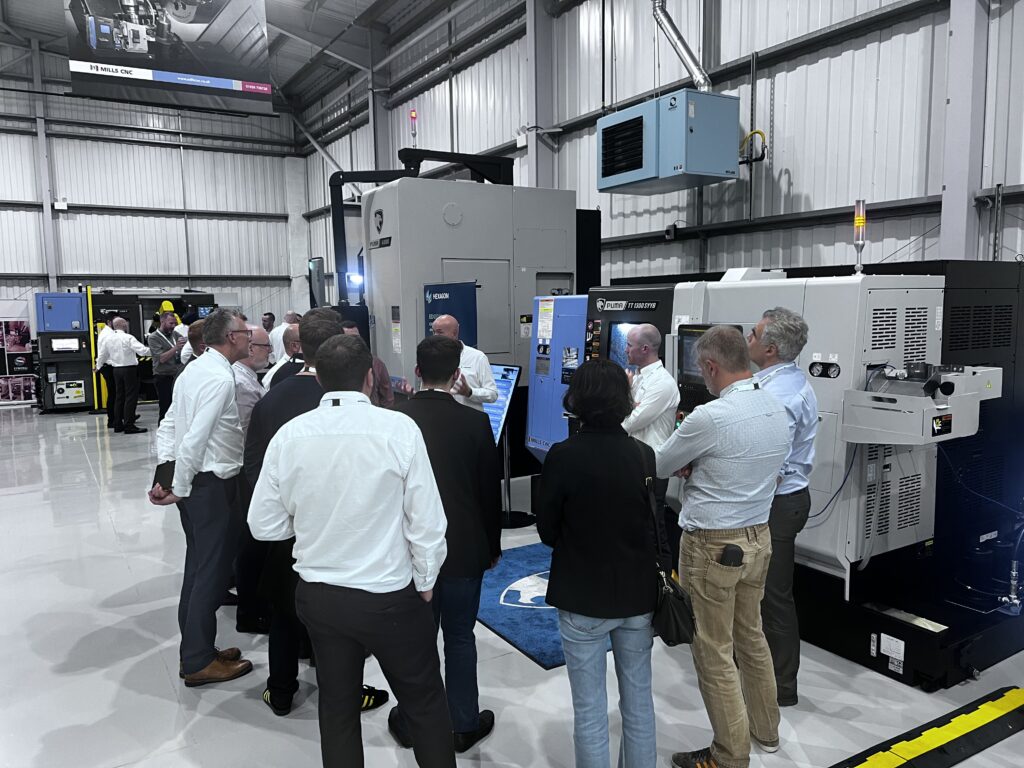
The future of manufacturing is increasingly digital, collaborative, and intelligent. This was the clear message at Hexagon’s recent ‘The Future of Shop Floor’ event, held in partnership with Mills CNC at their Technology Campus. The event demonstrated how artificial intelligence, cloud-based platforms, and data-driven insights transform traditional manufacturing operations, resulting in measurable improvements in productivity and profitability.
Opening the event by introducing Nexus, the company’s cloud-based platform designed to tackle the collaboration crisis in manufacturing, Jason Walker, Hexagon’s VP of General Manufacturing, stated: “An independent Forrester report we commissioned, surveyed around 500 manufacturers from small, medium, and large-sized organisations worldwide and 97% across all those different kinds of organisations, agreed that collaboration is the key challenge that manufacturers face.”
Nexus addresses this challenge through comprehensive connectivity. “Nexus is fundamentally about connectivity. It’s about joining all these different tools together within a specific function, across different functions, departments, sites, and organisations,” Walker explained. “Nexus connects to third-party tools as well, even if they are competitors of Hexagon, it builds workflows to encourage collaboration between engineers.”
The platform’s design philosophy emphasises integration rather than disruption. “Nexus is designed to meet you where you are. If you’ve got a process, a tool, or a particular place where you store your data today, Nexus won’t disrupt any of that. Just join the dots to encourage and enable collaborations,” Walker emphasised.
The Pro Plan Revolution
Stephen Graham, Executive Vice President and General Manager for Nexus at Hexagon, revealed Pro Plan AI’s impressive performance metrics during its pilot phase. For readers unfamiliar with Hexagon’s Pro Plan AI suite, see the January 2025 issue of MTD magazine. “We’ve got ten customers engaged in a formal piloting programme at the moment, and the feedback has been stunning,” Graham announced. “Even at this early Beta Test stage, we can demonstrate something like a 70 to 75% improvement in productivity. A task that may have taken a couple of days could take just a few minutes using this powerful tool.”
Pro Plan AI’s approach differs fundamentally from that of existing automation tools. “There are tools out there attempting to automate CAM programming, but they’re either trying to identify features in a CAD model using a rules-based system, or we’ve seen people trying to use generative AI,” Graham explained. “Our machine learning approach is looking through the history of programs, figuring out how you program, and replicating that based on the new geometry.”
The tool’s knowledge capture capabilities will address critical workforce challenges. “Pro Plan AI captures tribal knowledge. When it’s first installed, it learns how users program CNC machines. It will program in the style of what it sees in the organisation’s history,” Graham noted.
Discussing one of the early test customers, Graham adds: “This feature proved particularly valuable in a North American pilot. The company has a relatively new programmer in his early 20s who joined the company two or three months ago. Once he started working with Pro Plan AI, he suddenly contributed programmes directly to the shop floor that were on par with anything from any of the guys who have been there programming for 20 or 30 years. This not only speeds up programming times, but also demonstrates how it is closing the ‘skills gap’.”
Pro Plan AI also enables new business capabilities. “You can programme a machine in a few seconds, then for a given part, you can programme every single machine on the shop floor. You can program every machine on the shop floor for every combination of tools; you can then use that to interact with your production planning systems. You can also use it to create much more accurate quotations before starting a job in the first place,” Graham explained.
The improvement in quoting accuracy addresses a fundamental business challenge. “One of the big ones we heard from customers is regarding quoting. Quite a lot of guesswork goes into quoting, because nobody’s got the time to do the proper engineering work to find out how long it takes. With Pro Plan AI, even if it’s not 100% accurate, you get a pretty good idea of how long it will be on a particular machine,” Graham revealed.
Transforming Quote-to-Cash Processes
Hexagon recognises that efficient and accurate quoting is essential for business success—and this is one reason why ‘Paperless Parts’ has been added to the portfolio. A strategic partnership that delivers measurable business transformation for manufacturers, Jason Walker provided an extensive analysis: “Paperless Parts is Boston-based, and they are primarily in the US for now, although we are just in the process of helping them expand internationally.” The platform addresses critical inefficiencies in manufacturing’s front-end processes through comprehensive automation of the quoting workflow.
The quoting challenge directly impacts manufacturers’ competitiveness. “I have asked a couple of customers exactly how long it took to get a quote out of the door before you implemented Paperless Parts. And on average, they would say about a week. So, you get an RFQ on Monday, you might only get to it by the end of the week,” Walker detailed. “The problem is that another manufacturer is getting their quote back quicker. They’re probably going to win the work, because most of the OEMs just want to fulfil their order.”
Paperless Parts delivers dramatic improvements in turnaround times that directly impact business outcomes. “With Paperless Parts, most manufacturers are doing turnaround within 24, sometimes 48 hours. So that’s the difference,” Walker noted. The business impact extends far beyond speed enhancements: “One customer that is already reducing quote time from a week to 24 hours claims to be already winning 25% more work.”
The platform’s functionality includes comprehensive quote management capabilities that eliminate traditional bottlenecks. “It’s an interesting space because it focuses solely on quoting, but the platform also allows for internal collaboration at a large company, which you might need when compiling a quote. You might need the engineer’s input on ‘Can we manufacture this?’ So the platform itself enables that real-time collaboration,” Walker explained. This collaborative approach ensures that technical feasibility is assessed during the quoting process rather than after the work is won.
Automation features remove the burdens of manual data entry that have traditionally hindered quote generation. “It configures everything for you and automates the quoting setup process; it syncs back with your ERP system. Many customers will be using Excel spreadsheets or their ERP, but mostly the ERP’s quoting functionality is like an Excel spreadsheet. You still have to put everything in manually. So that’s where Paperless Parts is automating much of that,” Walker detailed.
The integration capabilities extend throughout the manufacturing workflow. “Engineers have all that information, from the design to the integrations with our CAM software and then into Paperless Parts,” Walker explained. This smooth data flow eliminates multiple manual handoffs that traditionally delay quote generation and introduce errors.
“Not only is it allowing businesses to get quotes out quicker, but it’s reducing the burden. A lot of the time, it’s the owner or the manager who’s doing the quotes, because it’s such a crucial process. You don’t want to be under-quoting. This is buying them their time back,” Walker observed. This liberation of time enables leadership to focus on strategic business development rather than administrative tasks.
The European expansion is proceeding with pilot customers demonstrating similar transformative results. “We’ve been in partnership since the beginning of last year, but we focused primarily on the US last year. There will be a European launch later in the year. At the moment, we’re finding a few pilot customers,” Walker confirmed. “Early European feedback mirrors US success, it’s completely transformative to the way that they were doing things before.”
Innovation and Strategic Partnership
Tony Dale, CEO of Mills CNC, offered insights into the strategic partnership with Hexagon as well as the company’s forthcoming product innovations. Tony Dale says: “Our strengths are that we are an independently owned business, which makes us agile and allows us to respond to customers’ requests.”
The company’s inventory management reflects its customer-focused approach. “We’ve got about 80 machines here now, but we’ve normally got around 200 machines in stock. So, the availability of machines is key for customers these days; nobody wants to wait. So that agility and stock holding enables us to support customers when they need that technology for that new contract,” Dale explained.
“The relationship with Hexagon is effective. It enables us to provide a solution to the end user, not only supplying the machine tool but also programming it, reverse engineering it, and inspecting components, all of which contribute to our automation for end-to-end production,” Dale explained.
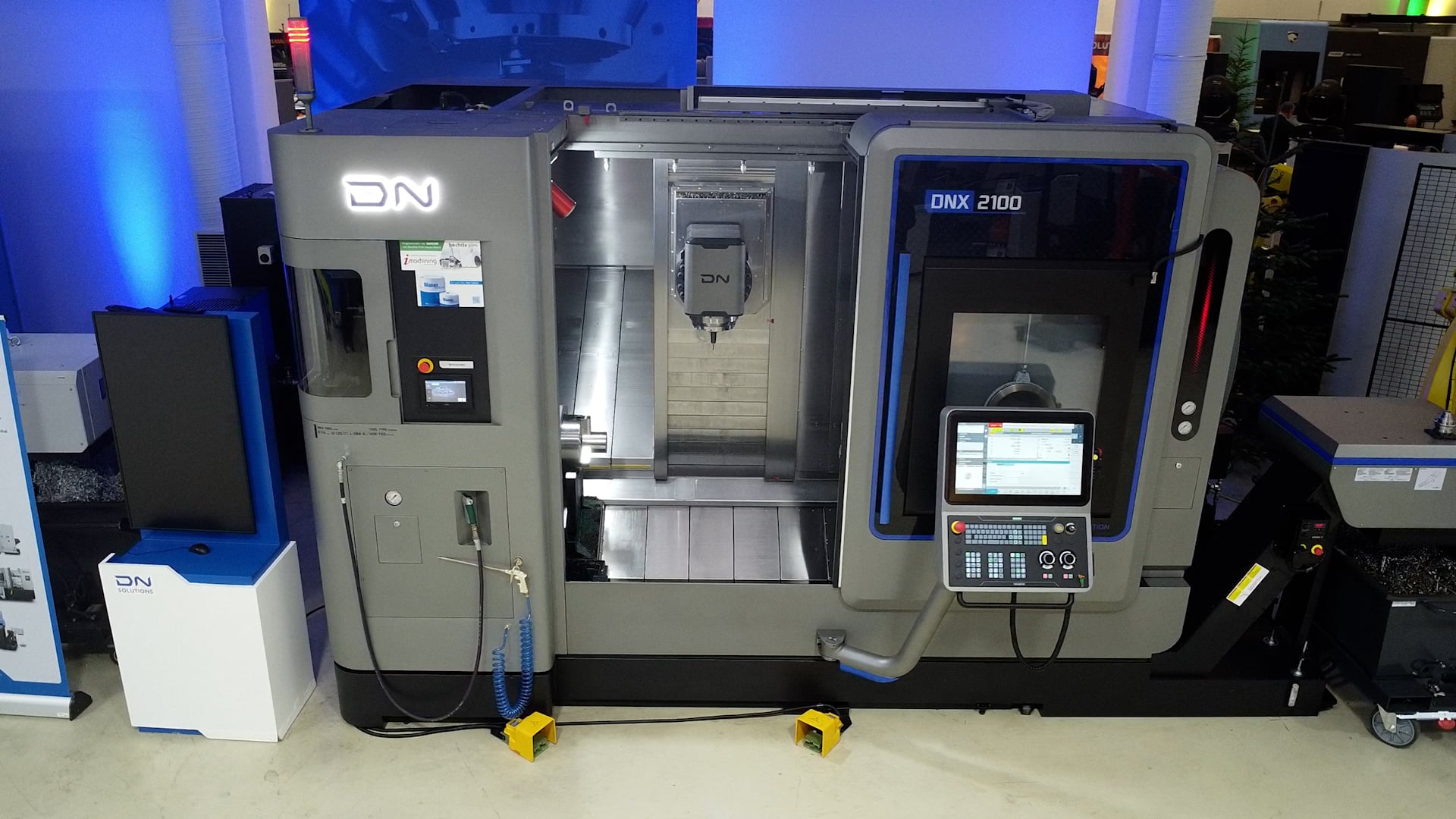
Looking ahead, Mills has significant product launches planned. “Key focuses for us this year are launching two brand new models. We’ll be holding an event later in October. We’ve got the DNX 2100 entry-level multi-tasking machine, and it’s quite a big launch for us because we’re seeing how customers want to leave tools set up on the machines to reduce setup and changeover times,” Dale announced.
The DNX 2100 addresses specific market evolution. “If you can quickly change your jaws and programme, with your tools already set up in that carousel, this is faster than traditional block tools on a turret. We already do 5-axis mill/turn machines, but this is more entry level for customers upgrading from a traditional turret lathe to get into the realms of multitasking,” Dale explained.
Dale linked the new machine to broader industry trends that Hexagon is also tackling: “With the skill shortages of engineers these days, we’re finding that this is a growing part of our business offering.”
The second major launch involves an evolution of existing technology. “We also have the second generation of the DVF 5000, which will launch simultaneously. It is a high-speed, high-accuracy 5-axis machine,” Dale noted.
We will publish the second instalment of this event in the September issue of MTD Magazine. It will highlight the new Datanomics production monitoring suite and provide an update on the success of Hexagon’s Benchmarking tool, a year after we first discussed the tool at MACH 2024.