08:24
🎧Automation delivers results
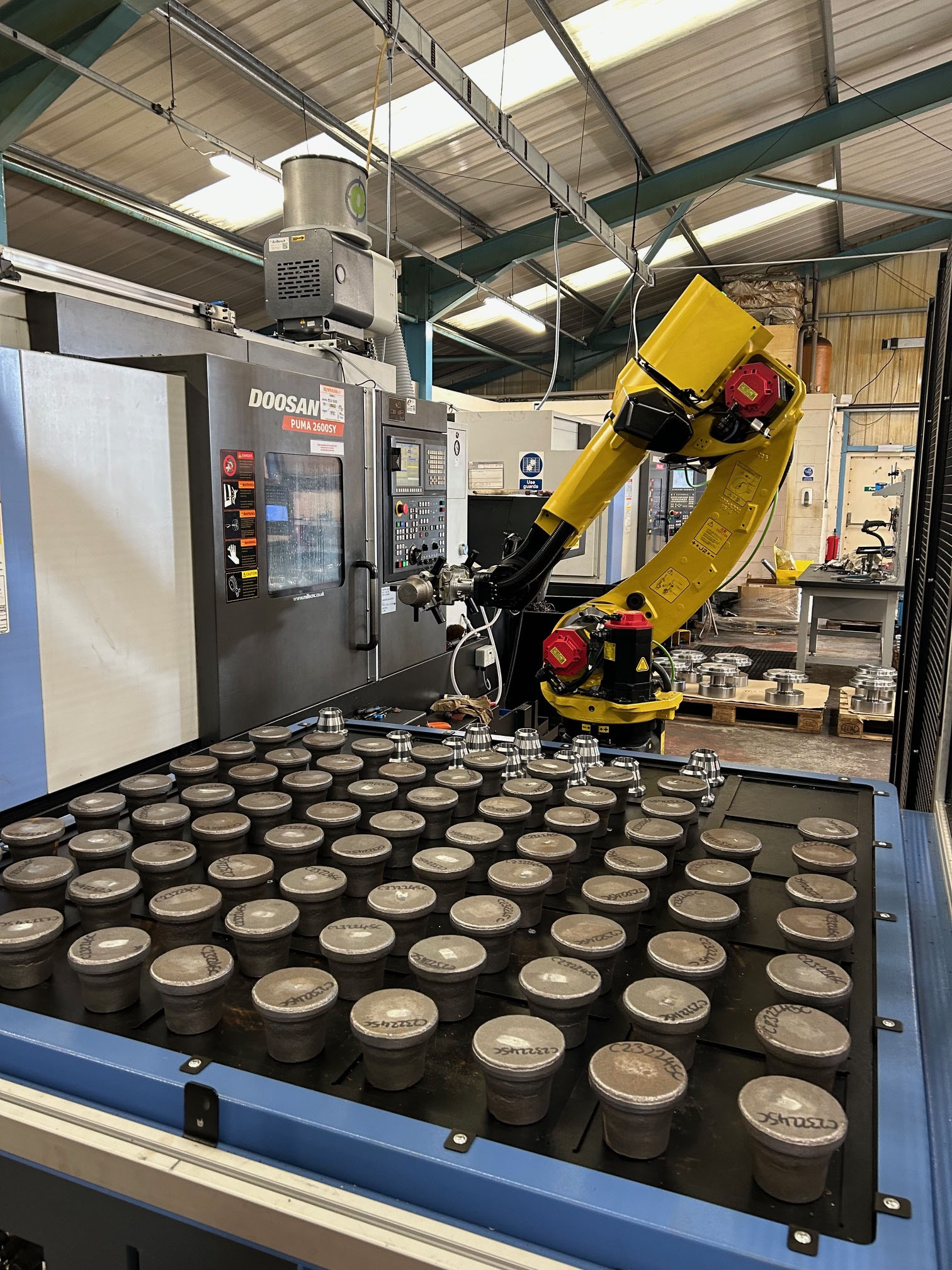
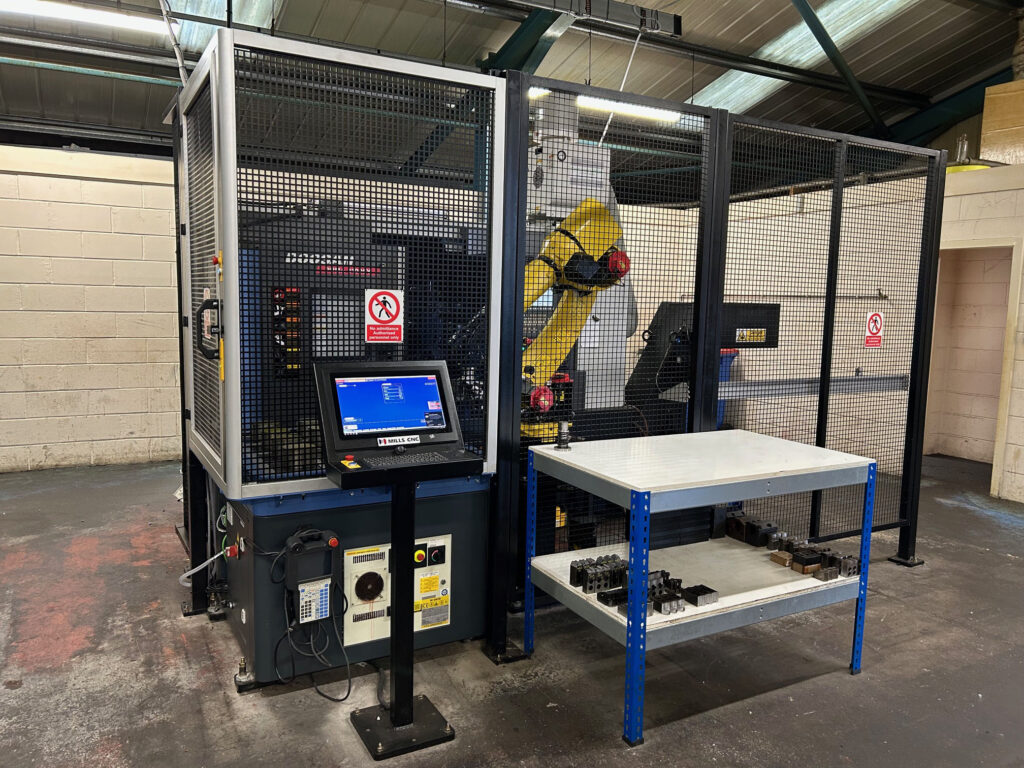
Mills CNC has recently supplied Ayrshire Precision, a subcontract specialist based in Ayrshire, with two new SYNERGi systems. The systems, both derivations and highly customised versions of Mills’ standard SYNERGi ‘SPRINT’ solutions, were installed at Ayrshire Precision’s 14,000sq/ft site. In 2023, the first system was retrofitted to a Puma 2600SY lathe, and six months later, the second was retrofitted to a Puma 2100SY.
SYNERGi Sprint automation systems are compact, flexible, and cost-effective. Mills’ dedicated automation experts can integrate them with DN Solutions’ lathes, machining centres, and mill-turn machines to create high-productivity automated manufacturing cells.
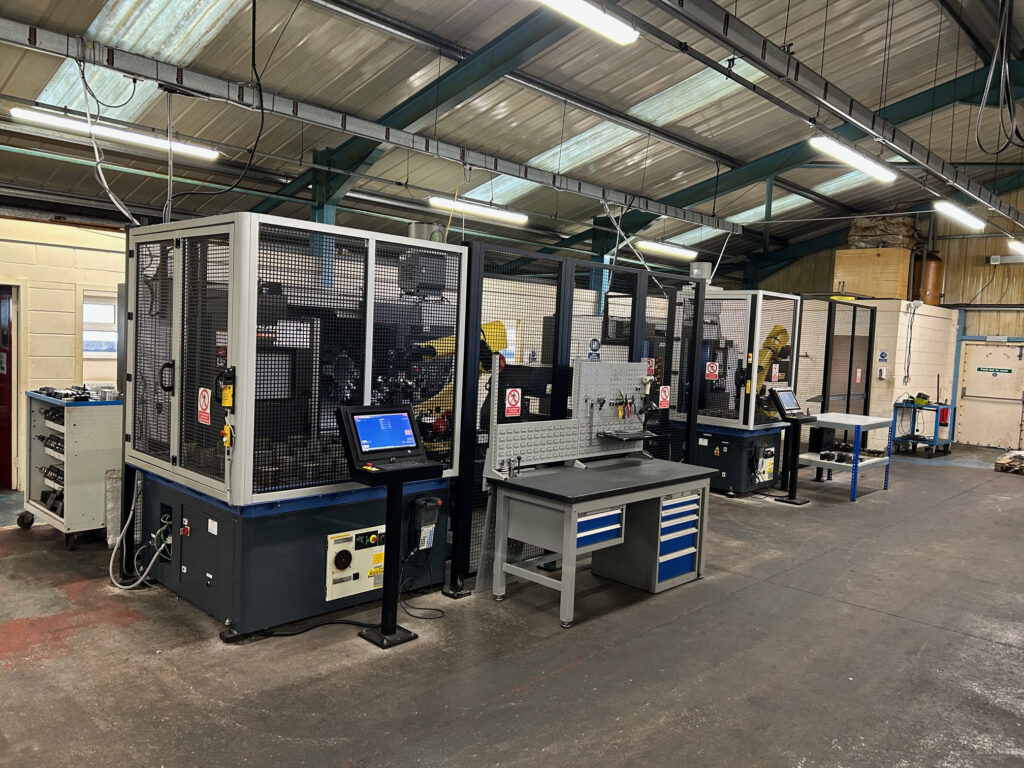
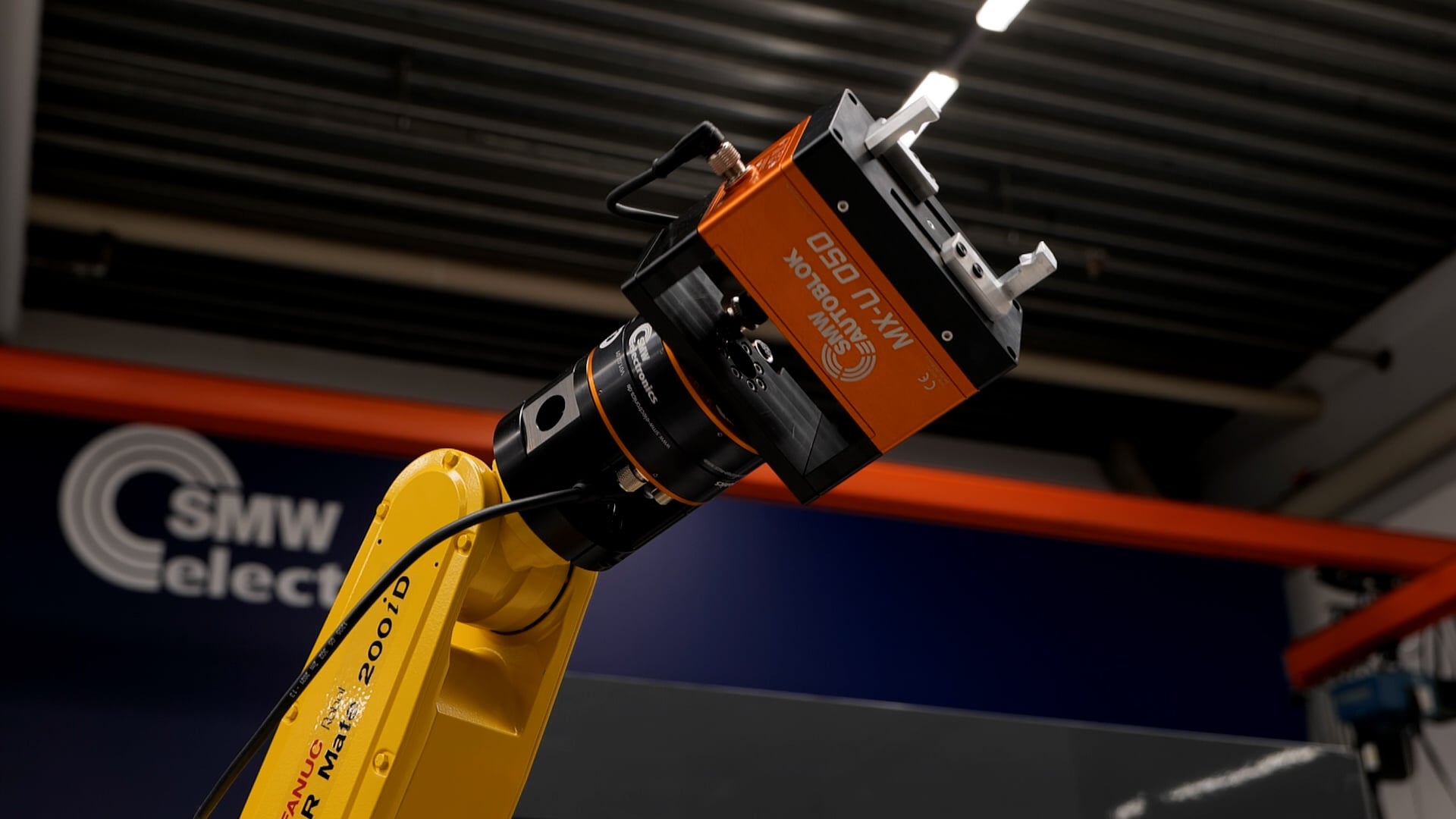
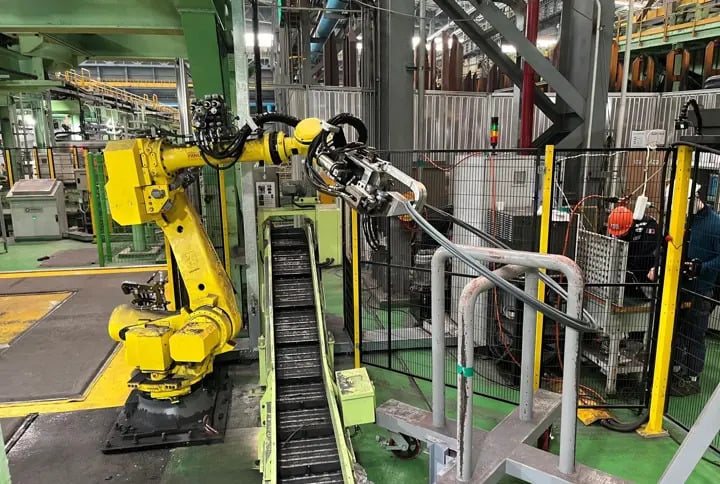
The essential elements of a SYNERGi Sprint system comprise an industrial FANUC robot with varying payloads and reaches, a two- or three-jaw pneumatic gripper, a 900 by 900mm part loading/unloading grid plate, and industrial safety guarding positioned around the system. Mills can also supply customers with multi-socket inserts to optimise each system’s capacity. These are sheet metal fabrications that customers can also choose to manufacture for themselves.
Ayrshire Precision serves customers in the oil and gas, subsea, renewables, power generation, and aerospace sectors. It has a well-resourced machine shop and regularly invests in its people, plant and equipment, processes, and systems as part of its ongoing continuous improvement programme. Since 2012, Ayrshire Precision has invested in various Doosan machines, from two-axis and multi-tasking lathes to large-capacity, heavy-duty vertical machining centres and horizontal borers.
“We rely on machine tools from Mills. They are powerful, fast and accurate and enable us to meet the highly-regulated, tight-tied up tolerances and exacting surface finishes that characterise a majority of the components we machine,” says Chris Hepburn, Ayrshire Precision’s Managing Director.
Ayrshire Precision’s decision to invest in automation was made for several reasons. The volatility of the markets served by the company and, as a consequence, fluctuating customer demand for the company’s machining services, combined with difficulty recruiting and retaining skilled labour, all contributed to Ayrshire Precision’s decision to ‘think outside the box’ and begin its automation journey.
“It’s either feast or famine in the markets where we operate. We can either be swamped or, due largely to external macro-economic factors that impact our customers’ business, can experience order cancellations and/or postponements that make it difficult to match our production capabilities and resources with changing customer requirements,” explains Chris Hepburn.
Rather than be at the mercy of market forces and to protect the company’s long-term viability and profitability, Ayrshire Precision decided in 2020 to explore new ways to improve its flexibility, performance, and competitiveness. The company’s focus was initially on its small part-turning operation, which, at that time, comprised two Puma lathes, running over two shifts and operated by four staff members.
To increase the productivity of its Puma lathes, the company had previously considered integrating a bar feeder into each machine. However, the diameters of the machined drop forged parts, the batch sizes required, and the limited diameter capacity of the bar feeders prevented this approach.
Ayrshire Precision discussed its requirements with several automation system suppliers, focusing on the proposed system’s configuration, availability, and cost. As part of its decision-making process, Ayrshire Precision visited Mills CNC, which had previously supplied it with eight Doosan machines.
After discussing its plans further with Mills’ automation application specialists and seeing a couple of different SYNERGi systems in action at Mills’ Technology Campus facility in Leamington, it was confirmed that two separate SYNERGi Sprint systems would better meet Ayrshire Precision’s manufacturing requirements.
“We liked the design and build of the SYNERGi Sprint system,” remembers Chris Hepburn. “It was simple.”
“We asked Mills to put forward their plans and proposals for two SYNERGi Sprint cells – one incorporating our existing Puma 2600SY for larger parts, and the second incorporating our Puma 2100SY for smaller components.”
Says Chris Hepburn: “Mills’ approach was responsive and helpful. They worked with us to tailor-make the SYNERGI Sprint systems and offered useful advice. We placed the business with Mills, not just because of their technical and automation expertise, but also because they had originally supplied the two Puma lathes and knew the machines inside out. We also thought that dealing with one supplier for our machine tool and automation system requirements would be easier and would simplify communications, servicing, training, etc.”
Ayrshire Precision’s first manufacturing cell was installed in March 2023. The cell comprises a Puma 2600SY multi-tasking lathe and a FANUC 35kg industrial robot with dual Schunk 3-jaw grippers. Other elements include Renishaw probing systems, safety caging, and the system’s HMI control driven by Mills’ proprietary SYNERGi software.
With individual part cycle times of approximately 10 minutes, Ayrshire Precision is now benefiting from up to an additional 16 hours of unmanned operation of its Puma 2600SY lathe. Since installation, the company has manufactured different sheet metal pocket inserts to accommodate larger parts and different batch volumes.
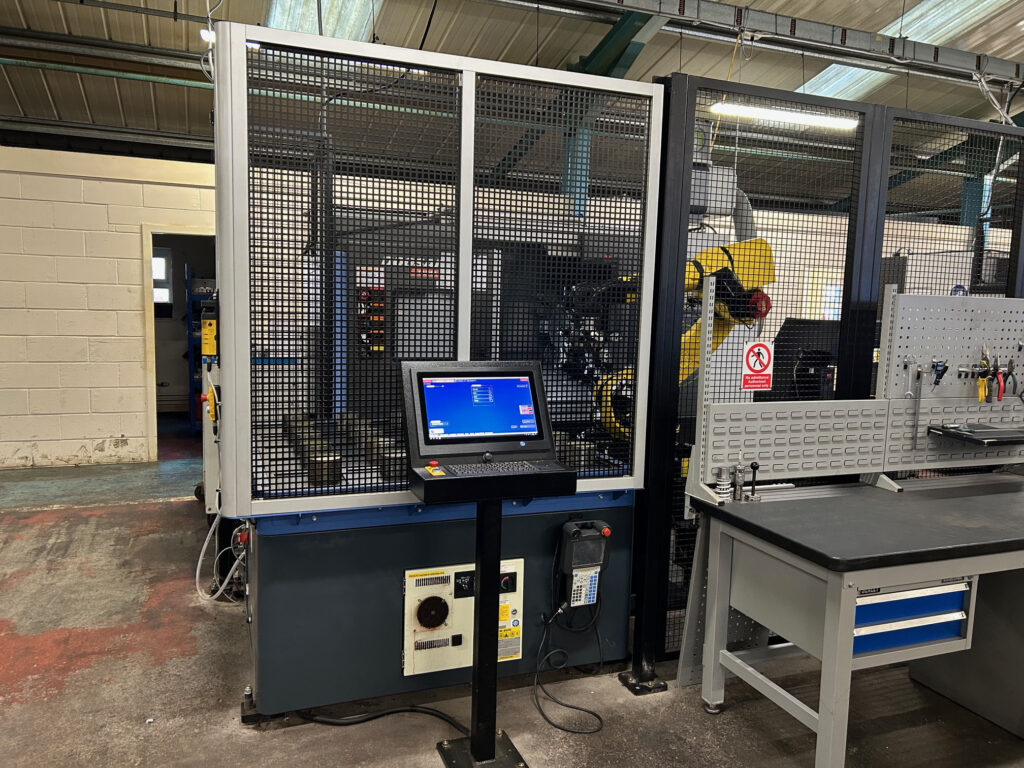
Ayrshire Precision’s second SYNERGi cell was installed in September 2023. This cell incorporates the Puma 2100SY lathe, a 20kg payload industrial robot and a 900 by 900mm table for processing smaller components. The automation process for both cells involves the robot picking up a workpiece from the grid plate in a programmed sequence and, using the lathes’ auto door opening facility, loading the part into the machine’s main spindle. The door closes to enable the machining of the part’s front end.
After all machining operations are finished, the robot picks up the next sequenced workpiece from the table and, in one continuous movement, loads it into the main spindle. Then, it removes the finished part from the sub-spindle and returns it to its designated position on the table.
Says Chris Hepburn: “Every time the auto door opens, a completed part is removed from the sub-spindle and a new part is loaded into the main spindle. The process is fast, seamless and continuous. Furthermore, one staff member can operate both cells simultaneously.”
With less labour intervention required, Ayrshire Precision’s small part turning operation is now more efficient and profitable. Creating its two cells has also helped free up a couple of its operators, enabling them to be deployed to other machine shop areas.
Chris Hepburn concludes: “The investment in our two SYNERGi cells is paying dividends. We have two inherently flexible automated cells that have not only helped us future-proof our small-turned-part operations but have also increased our overall capacity. Although there was initially some anxiety concerning our move towards automated production, the results exceeded our expectations.”