
20:21
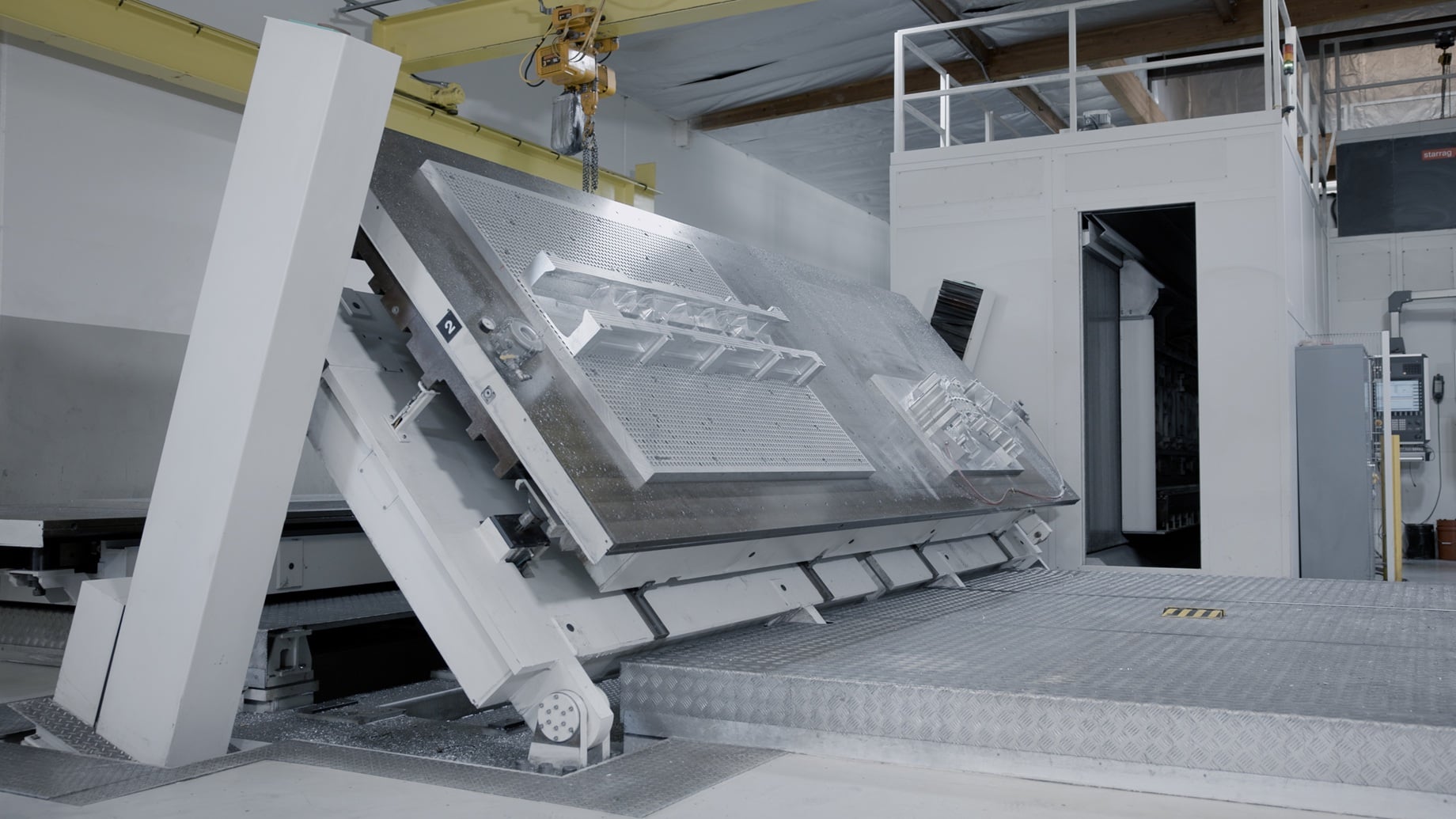
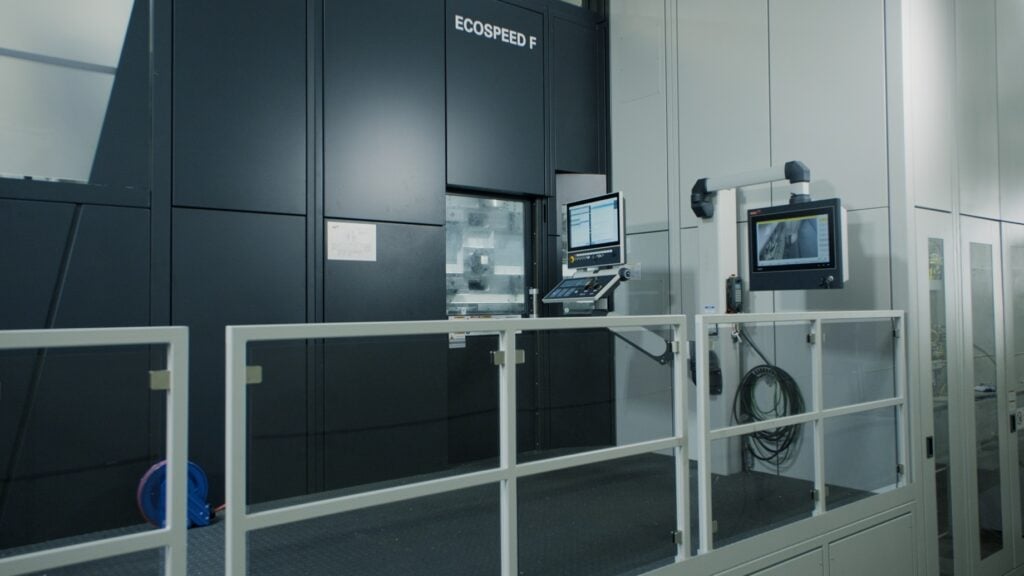
From its origins as a World War II job shop to its evolution into a specialist in high-speed structural aerospace machining, Notthoff Engineering has consistently recognised that the right equipment is key to turning potential into performance. Guided by this forward-thinking mindset, the California-based manufacturer invested in its first Starrag Ecospeed F 2060 horizontal machining centre in 2013. More than a decade later, building on that successful experience, the company has further expanded its capabilities by adding a second Ecospeed F — the more compact F 1540 — reinforcing its ongoing commitment to innovation, precision, and growth.
Founded in 1941 as a wartime job shop, Notthoff Engineering has grown steadily over eight decades to become a highly specialised aerospace subcontractor. As CEO Kelly Kaller explains: “Notthoff Engineering is a small, family-owned machine shop that has grown over the years, and we produce high-speed, monolithic structural aeroplane parts as well as helicopter components.”
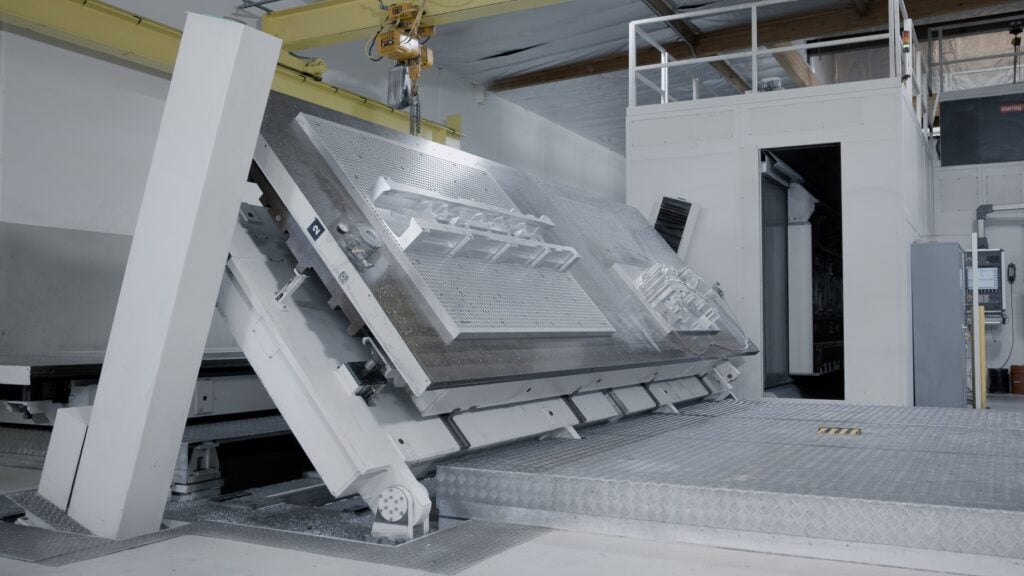
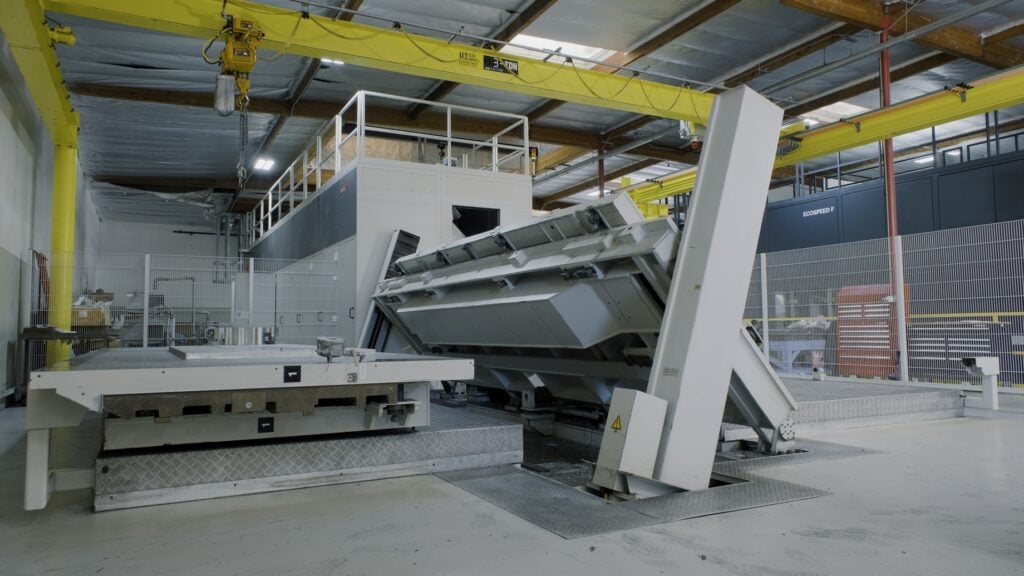
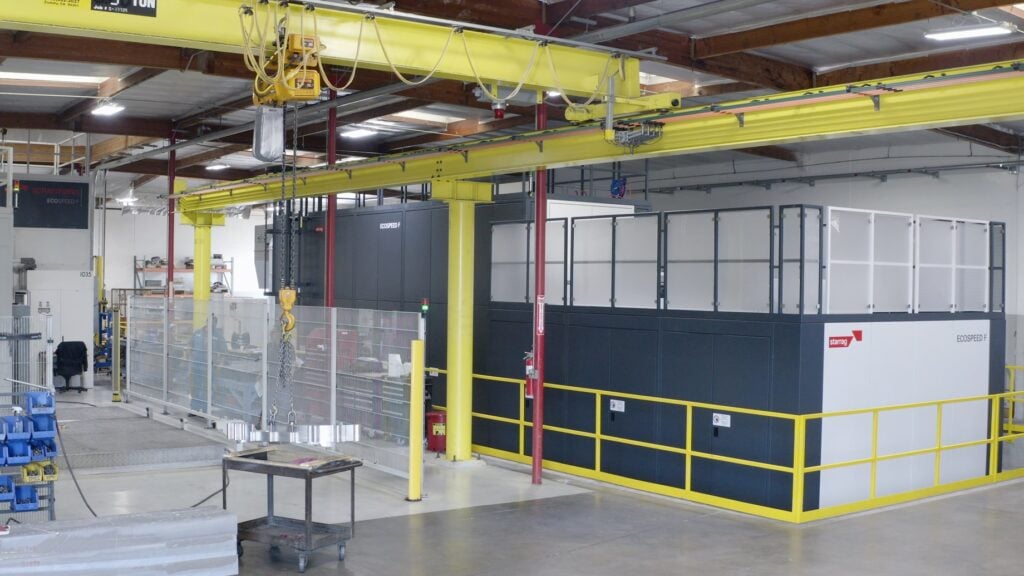
Production is around 80% aluminium, with titanium, Inconel, and other hard metals making up the balance. The parts span a wide range of structural aerospace components, from ribs, stringers, and formers to fuselage sections. As COO Arnie Juarez illustrates: “To give you an example, we recently had a billet that weighed about 6,800 lbs, but when we shipped the part out, it weighed 190 lbs. That is 95% material removal, and that is common for us.”
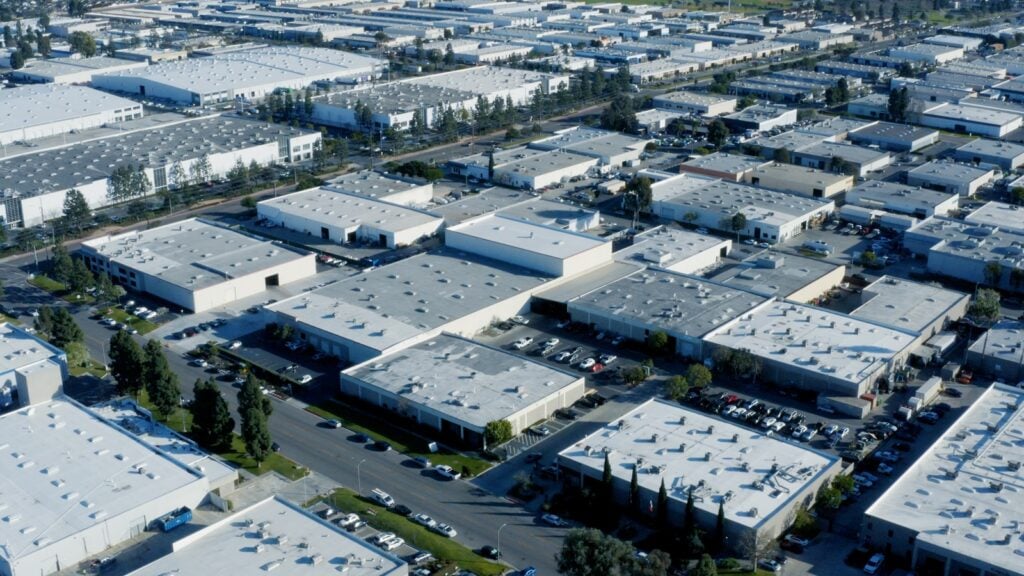
Operating from a four-building facility covering approximately 65,000sq/ft in Huntington Beach, the company’s programme portfolio features some of the most significant U.S. defence aircraft from recent generations. “Most of the work we do is military. We work on the F-35 and F-47, and we did a lot of work on the F-18 back in the day. The F-16 also still has a lifespan that we support — we’re involved in a lot of programmes,” says Juarez. As a next-generation fighter, the F-47 project highlights the company’s expanding role in cutting-edge U.S. defence manufacturing.
Starrag – A Decision Based on Evidence
When Notthoff assessed horizontal machining centres in the early 2010s, Juarez was meticulous, visiting reference customers across Europe to observe different machines in real production settings. What he discovered was compelling.
“The Starrag sales team invited me to Ireland to see another company where some of their machines were in operation. We spoke to everyone at the company, and they all praised Starrag. They were even installing two additional machines. We then visited another machine tool manufacturer in France, but upon arrival the machine was undergoing maintenance. I spoke to a few individuals there, and they mentioned numerous problems with the machines. Our decision was almost made,” says Juarez.
But the decision was not simply about reliability. By contrast, the more Juarez investigated the Ecospeed’s technical architecture, the more convinced he became. The key differentiator was the patented Sprint Z3 parallel-kinematic head.
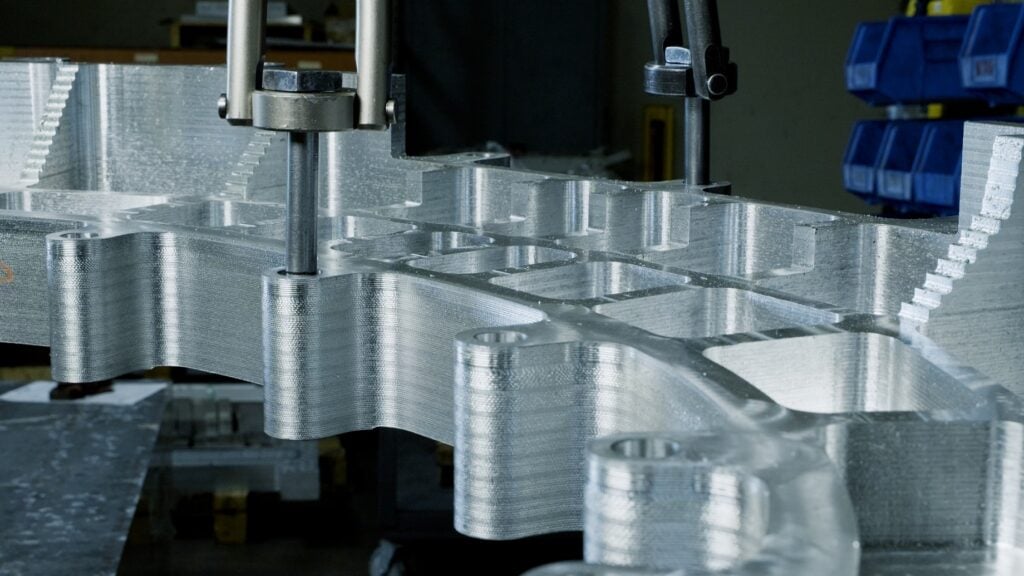
“What I really liked about the Starrag was the kinematics. Most of the big horizontals from other manufacturers have large, heavy rotating heads, and they’re really slow. They wind and unwind, and you lose a lot of cycle time. With the Z3 Sprint head on the Starrag, it goes from zero to 40 in a split second. The machine just keeps running. The acceleration and
deceleration are excellent, so we can produce parts much faster with this machine than with any other on the market.”
The Technology Behind the Performance
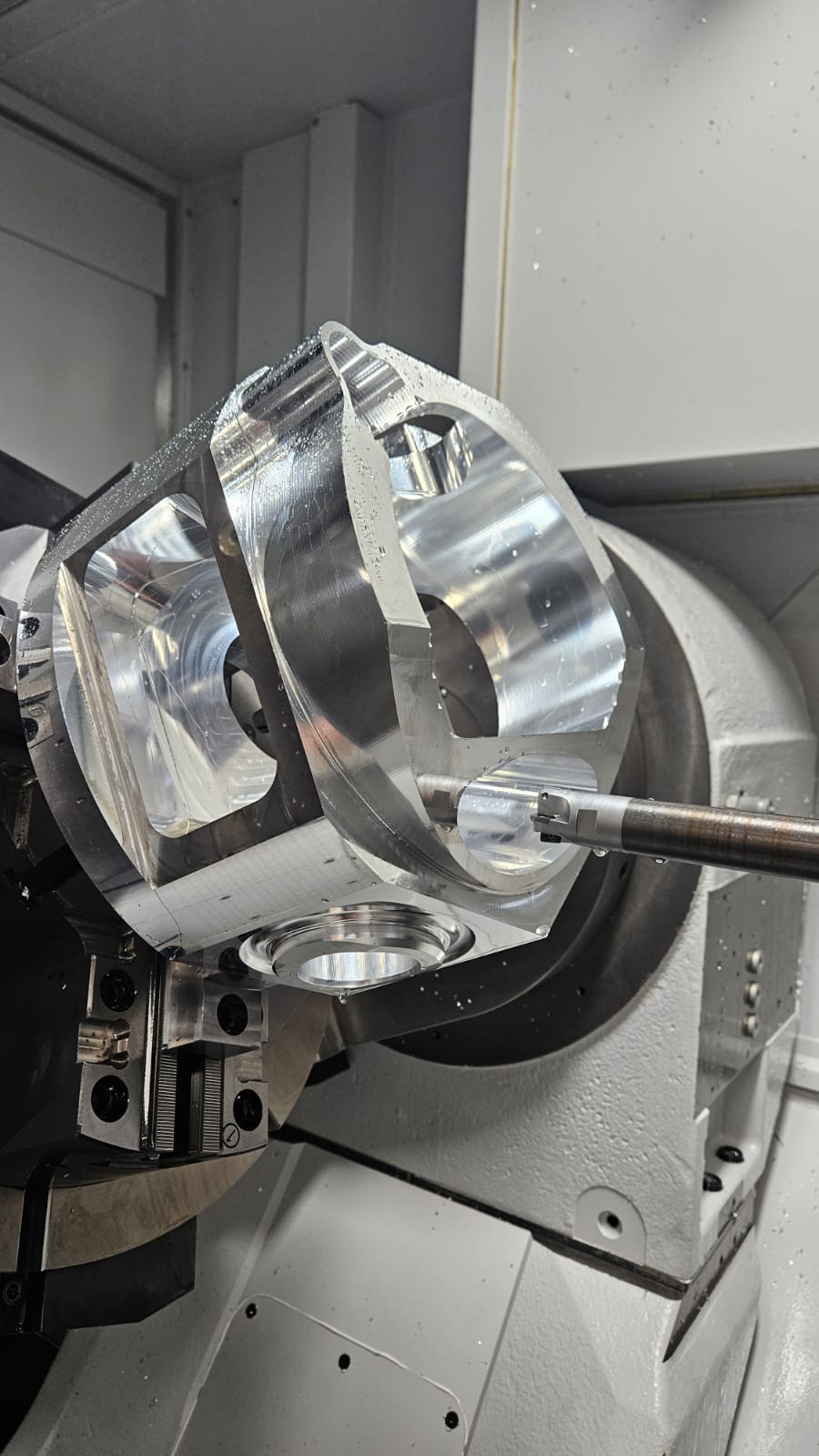
The Ecospeed F Series is Starrag’s specialised solution for high-speed milling of aluminium and soft-metal structural parts. Both the 2060 and 1540 models feature the Z3 Sprint head, a parallel-kinematic system that delivers 1G acceleration across all five axes, with jerk values up to 200m/s³, enabling rapid positioning without compromising accuracy.
Tim Mooney, Starrag’s National Sales Manager and aerospace specialist, describes the machine in his characteristic direct style: “It’s the fastest, most powerful machine out there — 30 to 40% more efficient than every other machine because of the Z3 head.”
The spindle specification underpins that claim. The Ecospeed runs at 30,000 rpm, with a 161-horsepower spindle and a base speed of 13,800 rpm — the speed at which full horsepower is available. Mooney explains why this matters:
“Cutting aluminium structures is all about horsepower. If you achieve full horsepower at a lower RPM, you can use a much larger tool, which means a wider and deeper cut, and your maximum hourly metal removal rate increases. None of our competitors can match that.”
The Z3 head covers ±45° of travel, encompassing approximately 95% of aluminium structural part requirements. When the right-angle head is loaded via the automatic tool changer, the machine effectively becomes a 6-axis platform, extending the stroke to 135° and enabling undercuts, side drilling, and other challenging geometric features to be completed in a single setup.
For thin-walled aluminium structures, the Z3 head’s low mass — approximately 441 lb (200 kg) for the spindle assembly, compared with two to three tons for a traditional fork-head spindle — provides a decisive advantage.
“With a very light mass to control, thin walls don’t become a problem because we can accelerate through them,” says Mooney. “We can control the cut throughout and get through the corners quickly, eliminating vibration.”
Two Machines, One Strategy
The Ecospeed F 2060, installed in 2013, has a work envelope of 2m by 6m, enabling Notthoff to machine some of the largest structural components in aerospace production. More than a decade later, the original machine continues to perform to specification.
“This machine was installed in 2013, so 13 years later we’re still producing good parts,” says Juarez. “We haven’t had any major overhauls, and it still holds tolerances to within a thousandth of an inch.”
The newer Ecospeed F 1540 has a work envelope of 1.5 m by 4 m. Rather than duplicating capability, the two machines form a complementary pair. “Rather than tie up the big machine with smaller workpieces, it allows us to move that work over to the 1540 and keep them both running, using them in the most efficient way possible,” explains Juarez.
There are also technical differences that make the pairing particularly practical. The 2060 uses minimum-quantity lubrication (MQL) with a biodegradable oil mist delivered through the spindle, while the 1540 uses flood coolant. This enables the West Coast company to optimise each machine for different parts and conditions.
The dual-pallet configuration on both machines guarantees maximum spindle uptime.
“We have one pallet in the machine, running parts, while the engineers prepare the other pallet for the next job,” says Juarez. “They load the tools into the tool changer while the machine is running, update the programme, and return the machine to cycle immediately.”
The pallet change takes just 120 seconds, and both machines run 24/7, powered by the Siemens 840D Solution Line control, with all programs validated using Vericut simulation before reaching the shop floor.
Delivering on Quality, Time, and Cost
For Kaller, the value of the Starrag investment comes down to spindle time, efficiency, and competitive capability.
“This new machine gives us a nice edge by being very efficient. It adds a lot more capability and capacity to our shop,” he says.
For Juarez, the competitive advantage lies in production speed. “The machine allows us to deliver on time with excellent quality, and customers get parts at a really good price because we can machine parts much faster than our competitors.” Ecospeed’s self-calibration feature also supports quality assurance, reducing reliance on operators.
“The new machine has a feature that allows it to self-calibrate, which takes a lot of responsibility away from my operators because it’s built into the machine.”
The machines also directly support compliance with the latest Boeing manufacturing specifications.
“The new requirements from Boeing and other customers specify that you have to do everything in the same setup. We have a 90° head on these machines that is stored in the tool carousel and automatically loaded, which effectively makes the machine 6-axis and allows us to drill all the holes at the same time without secondary operations,” explains Juarez. “We have a leg up because we know we can deliver parts that meet the most stringent requirements in a timely manner.”
Service & Support: The Partnership Difference
For Juarez, the quality of after-sales support was central to the purchasing decision and remains the main reason Notthoff chose Starrag again for the 1540.
“There’s nothing worse than buying a machine and finding out afterwards that there’s no service support,” he says. “Starrag has always been really good, which is why we bought the second machine. They’ve always stood behind their product. They’re very involved and very responsive. They genuinely understand that when your machine is down, you’re not making money, so they’re on top of it straight away.”
The service infrastructure includes remote diagnostic capability, allowing Starrag’s engineers in Germany to log directly into the machine control and diagnose issues in real time. When on-site attendance is required, response times are rapid.
“If there’s nothing they can do remotely, they send a service technician, and he’s usually here within 24 to 48 hours at most. A lot of things can be fixed over the phone,” says Juarez.
Starrag currently has more than 850 machines installed across the U.S. market, supported by a team of service engineers from its factories, positioned strategically throughout the country, as well as approximately US$2 million in spare parts held at its Hebron parts facility.
Mooney summarises this approach: “We’re a solution provider, not a company that drops a machine off and walks away. Whether it’s the service aspect of keeping the machine at 95% technical availability or the applications team programming it correctly to maximise material removal, the people are really important.”
Defense Growth & What Comes Next
With U.S. defence spending increasing and build rates on major programmes accelerating, Notthoff Engineering is well positioned for growth. The company already has work scheduled for both machines and is evaluating options to add capacity.
“We like to grow organically,” says Juarez. “We’re kind of out of space. We have four buildings fully occupied with equipment. We’ve either got to dispose of some of the older equipment or invest in another building, which is a very real possibility.”
Mooney confirms that around 90% of Starrag’s U.S. aerospace clients focus on defence applications and that the Ecospeed meets all stringent government specifications as standard.
The relationship between Notthoff and Starrag, which has lasted more than 12 years, exemplifies the partnership philosophy Mooney describes: “When Starrag sells a machine to a customer, it’s not just about selling a machine. It’s about building relationships and supporting each other over the years — we’re in it for the long haul.”
Opt in today to our newsletter